Air system · Stealth
nEUROn
Stealth UCAV Technology Demonstrator
Also known as: Dassault nEUROn / European UCAV demonstrator
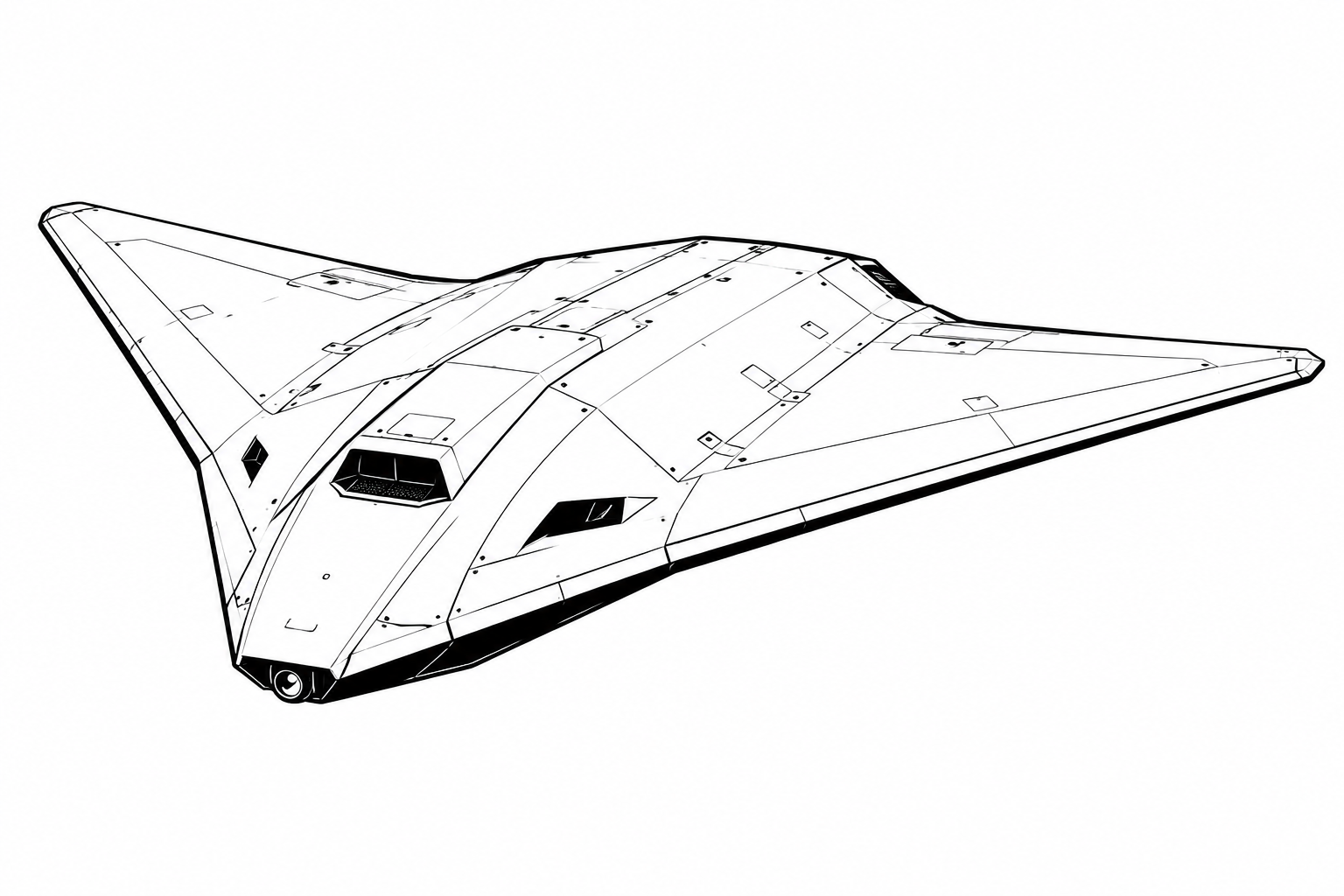
nEUROn overview
Last reviewed:
nEUROn is a European unmanned combat-aircraft technology demonstrator led by Dassault Aviation. It was built to test difficult technologies and industrial cooperation, not to equip an operational squadron under the nEUROn name. That distinction is central to understanding the aircraft. Its achievements concern flight control, low-observable design, sensing, weapons-bay functions, and how several national aerospace companies can deliver a complex shared demonstrator.
The program brought together France, Italy, Sweden, Spain, Greece, and Switzerland, with Dassault acting as prime contractor, industrial architect, and system integrator. Participating companies contributed different structural and systems elements. This cooperative model was itself a program objective, alongside the flight technology. A multinational development partnership does not imply that six countries ordered operational combat fleets or that the demonstrator was intended for export as a ready-made weapons system.
Public descriptions show a tailless flying wing with a jet engine and an internal weapons bay. Commonly reported dimensions are a wingspan around 12.5 m and a length around 9.5 m, with total mass around seven tonnes. These are demonstrator figures, not a specification for a future production UCAV. Range and endurance figures are less useful without a test configuration and mission profile, and its shape alone cannot establish an operational stealth-performance guarantee.
The first flight occurred on December 1, 2012. Dassault's program chronology records the 100th flight in February 2015 and a 250 kg bomb release in September 2015 during the Swedish test campaign. The latter is an important demonstration of payload-release integration, but it is not combat employment. Tests in partner countries assessed different objectives and built a shared knowledge base without turning the experimental airframe into a frontline weapons inventory.
The manufacturer's chronology describes further campaigns from 2019 onward and, in its current account, more than 170 flights. It does not date that total specifically to 2019. In October 2024, Dassault announced development of a future stealth combat drone to complement the Rafale F5 standard, drawing on its unmanned-aircraft experience. That follow-on is relevant to nEUROn's legacy, but it is a separate future program. It should not be described as proof that the original nEUROn entered production or acquired an operational customer.
Through October 2026, the best-supported description remains a demonstrator with a substantial test record and influence on later aircraft development. Its value lies in reducing technical risk and preserving European design expertise rather than generating an operational combat record. Readers comparing it with CH-7, GJ-11, or proposed collaborative aircraft should compare program maturity and purpose as well as dimensions. A weapons release, a low-observability test, and a service-entry decision represent different kinds of evidence.
Armament
Internal-bay test payload; documented 250 kg bomb-release demonstration
Development and operational timeline
- France initiates the European UCAV technology-demonstrator effort
- The multinational development arrangement establishes Dassault's lead role and partner contributions
- nEUROn completes its first flight
- Dassault records the demonstrator's 100th flight
- The Swedish campaign includes a 250 kg bomb-release demonstration
- Dassault's chronology records tests with Charles de Gaulle and describes subsequent Istres operational-scenario campaigns
- Dassault announces a future stealth combat drone to complement Rafale F5, distinct from production of nEUROn itself
- Status review: nEUROn remains a technology demonstrator in the public manufacturer record, not a fielded combat fleet