Air system · Counter-UAS Kinetic Interceptor
Anvil
Small-Drone Interception
Also known as: Anduril Anvil / Anvil interceptor / Anvil-M (munition variant)
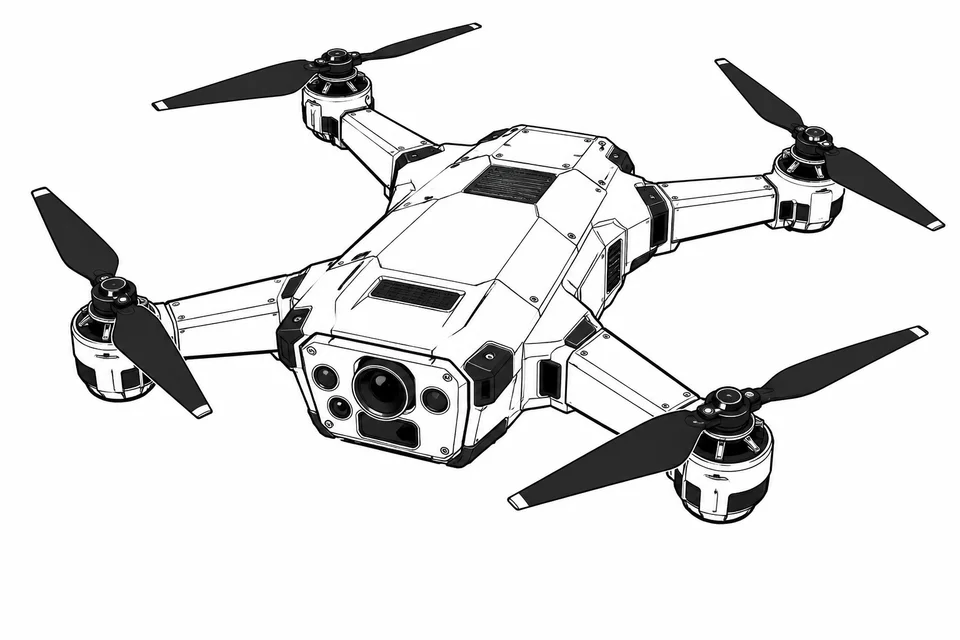
Anvil overview
Last reviewed:
Anvil is Anduril's rotary-wing counter-drone interceptor, designed to defeat hostile small uncrewed aircraft through a kinetic engagement. It is part of a wider defensive system rather than a stand-alone search radar or a long-range strike drone. The original Anvil uses impact against the target; Anvil-M is a distinct munition variant with an explosive payload and fire-control module. Keeping those versions separate prevents a common misunderstanding in which the baseline aircraft is described as carrying the munition variant's warhead.
Anduril describes Lattice software as the coordination layer that cues the interceptor toward a potential threat. The aircraft then provides visual information for identification and navigates toward an engagement under operator authorization. Sensors, tracking, communications and rules of engagement are therefore as important as the small aircraft itself. A complete counter-UAS installation must distinguish hostile drones from legitimate aircraft and allocate an appropriate response. Supplier descriptions of autonomy do not establish unrestricted authority to attack every object detected by the network.
The baseline concept uses the interceptor's motion and structure to deliver destructive impact, avoiding the need to fit every vehicle with a large warhead. That is a different approach from radio-frequency jamming, directed energy or a conventional surface-to-air missile. It should not be confused with a promise of zero collateral risk, nor does 'reusable' mean an aircraft survives every collision. Recovery, replacement and safe employment depend on the engagement and configuration. Anduril's public material does not establish a complete current speed, range, endurance or aircraft-mass table suitable for precise numerical comparisons.
On October 5, 2023, Anduril announced Anvil-M, describing a munition-equipped response to Group 1 and Group 2 drone threats. The company associated the variant with operational feedback and an integrated Launch Box for storage and deployment. The explosive configuration is intended to improve effectiveness against more demanding targets, but the announcement is a manufacturer's account, not an independently measured universal probability of kill. Neither Anvil nor Anvil-M should be assigned the jet performance or mission profile of Anduril's separate Roadrunner family.
A substantial procurement milestone followed in November 2024, when Anduril announced a $200 million contract to develop and deliver a counter-UAS engagement system for the Marine Air Defense Integrated System, or MADIS. Its release explicitly included Anvil within the proposed capability. The contract value describes a wider development and delivery effort, not the price of one interceptor or proof that an entire fleet was already operational. Through the November 2026 review, the strongest public account combines the original impact-interception role, the named Anvil-M distinction and dated program evidence without filling undisclosed specifications with guesses.
Armament
Original Anvil: kinetic impact; Anvil-M: explosive munition and fire-control module
Development and operational timeline
- Original Anvil impact-interceptor concept becomes public; this is a public-debut reference, not a complete fleet-service certification
- Anduril announces Anvil-M with a munition payload and fire-control module for Group 1 and Group 2 drone threats
- Anduril announces a $200 million MADIS counter-UAS engagement-system contract and names Anvil as an included effector
- Editorial status review: original impact interceptor and explosive Anvil-M remain distinct; undisclosed performance and fleet totals are not inferred from contract value