Air system · Autonomous Interceptor
Roadrunner
Counter-UAS / Counter-Cruise Missile / Autonomous Air Defense
Also known as: Roadrunner / Roadrunner-M / Anduril interceptor / counter-drone interceptor
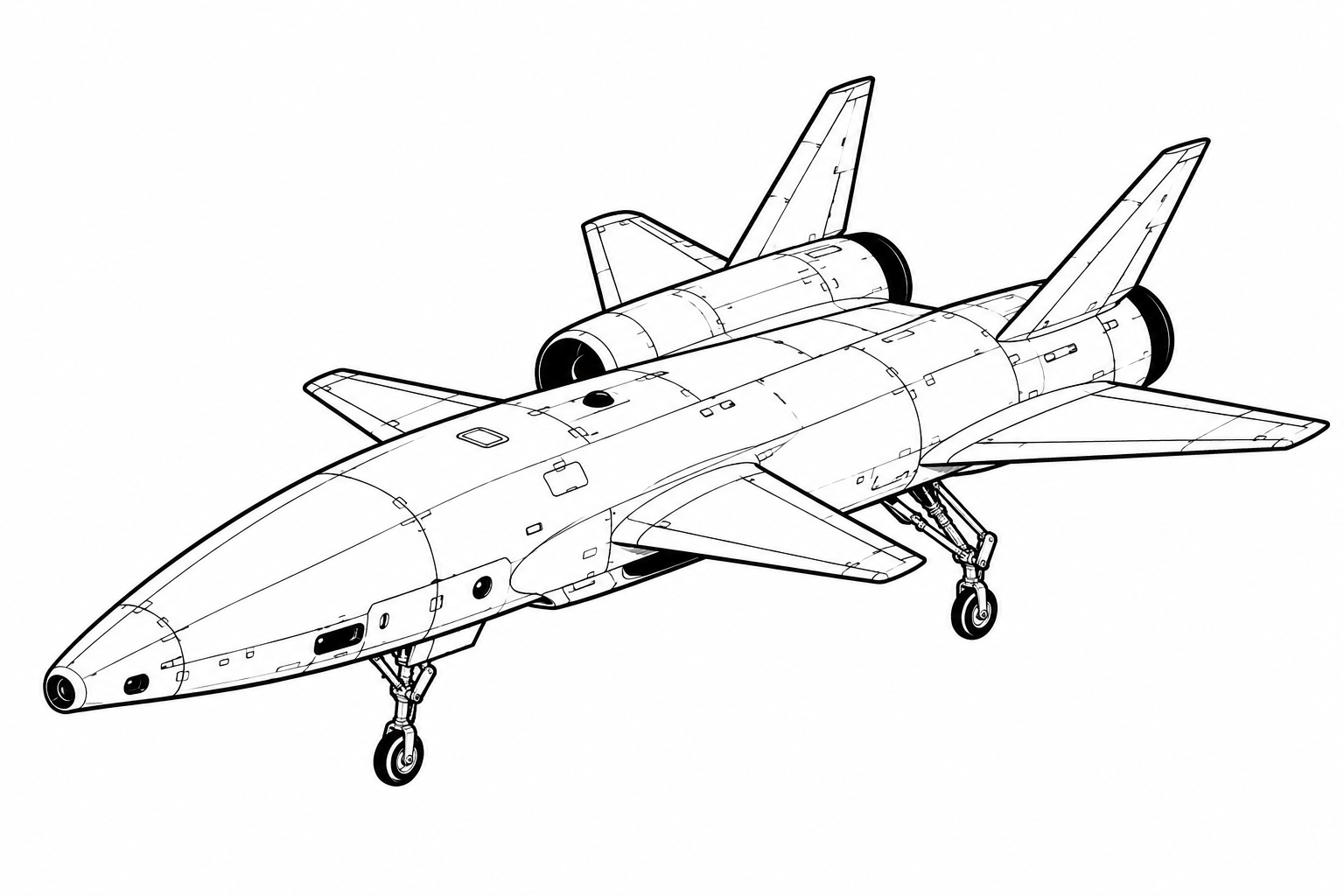
Roadrunner overview
Roadrunner is a reusable, twin-turbojet vertical-takeoff-and-landing air vehicle developed by Anduril Industries for autonomous air missions. Anduril says the modular base aircraft can launch from a compact ground station and return for reuse when a mission does not require its loss. Those are manufacturer-described capabilities and an intended operating concept, not evidence that every advertised mode has been independently demonstrated. Anduril publicly announced Roadrunner and Roadrunner-M on December 1, 2023.
Anduril distinguishes the reusable base Roadrunner air vehicle from Roadrunner-M, the variant equipped with a high-explosive payload for intercepting aerial threats including larger drones and cruise missiles. The company also presents the system as part of its Lattice command-and-control network. Public references to USSOCOM, the U.S. Navy, and expeditionary air-defense requirements indicate interest or evaluation discussions; they do not establish a service selection, operational deployment, or production quantity.
The strategic rationale for Roadrunner is an affordability and magazine-depth argument: a recoverable air vehicle could, in principle, reduce the cost of some missions compared with expending a conventional missile. Claims about rapid turnaround, mass-attack capacity, or particular cost ratios are program goals or illustrative comparisons rather than independently verified fleet results. Public sources through 2025–2026 do not establish that Anduril is delivering a defined number of Roadrunners to Navy, SOCOM, or allied units, so those potential customers and the scale of any production activity remain qualified.
Anduril's public product material and defense reporting through early 2026 continue to describe Roadrunner-M as an actively developed counter-UAS and cruise-missile interceptor. Public sources do not establish a service-wide initial operational capability, a confirmed fleet size, or the outcome of every reported evaluation. The defensible recent update is continued manufacturer promotion, testing, and reported customer interest—not a confirmed broad operational rollout—so Roadrunner remains best described as a development and field-evaluation program in the 2026 public record.
Armament
Roadrunner-M: integrated explosive warhead; base variant: kinetic intercept via controlled collision
Development and operational timeline
- Anduril is reported to begin Roadrunner development as part of an autonomous air-defense initiative
- Anduril reports flight trials of a Roadrunner demonstrator; the public record does not establish the full test program
- Anduril publicly announces Roadrunner and the high-explosive Roadrunner-M interceptor variant on December 1
- Public reporting describes USSOCOM interest or evaluation of Roadrunner; a formal production decision is not established here
- Anduril reports Roadrunner-M intercept testing; the public record does not establish the full test conditions or an operational qualification
- Anduril public material describes Roadrunner integration with its Lattice network; contract scope is not independently established here
- Public reporting discusses possible naval Roadrunner-M applications; no Navy fielding decision is publicly confirmed
- Public 2026 status remains development and customer evaluation; reported production activity is not a confirmed fleet quantity or service-wide IOC