Air system · Reconnaissance / Target Designation UAV
Geran-4 Seeker
ISR / Artillery Target Acquisition / Battle Damage Assessment
Also known as: Geran-4 / Shahed-238 / Russian reconnaissance drone / Seeker UAV
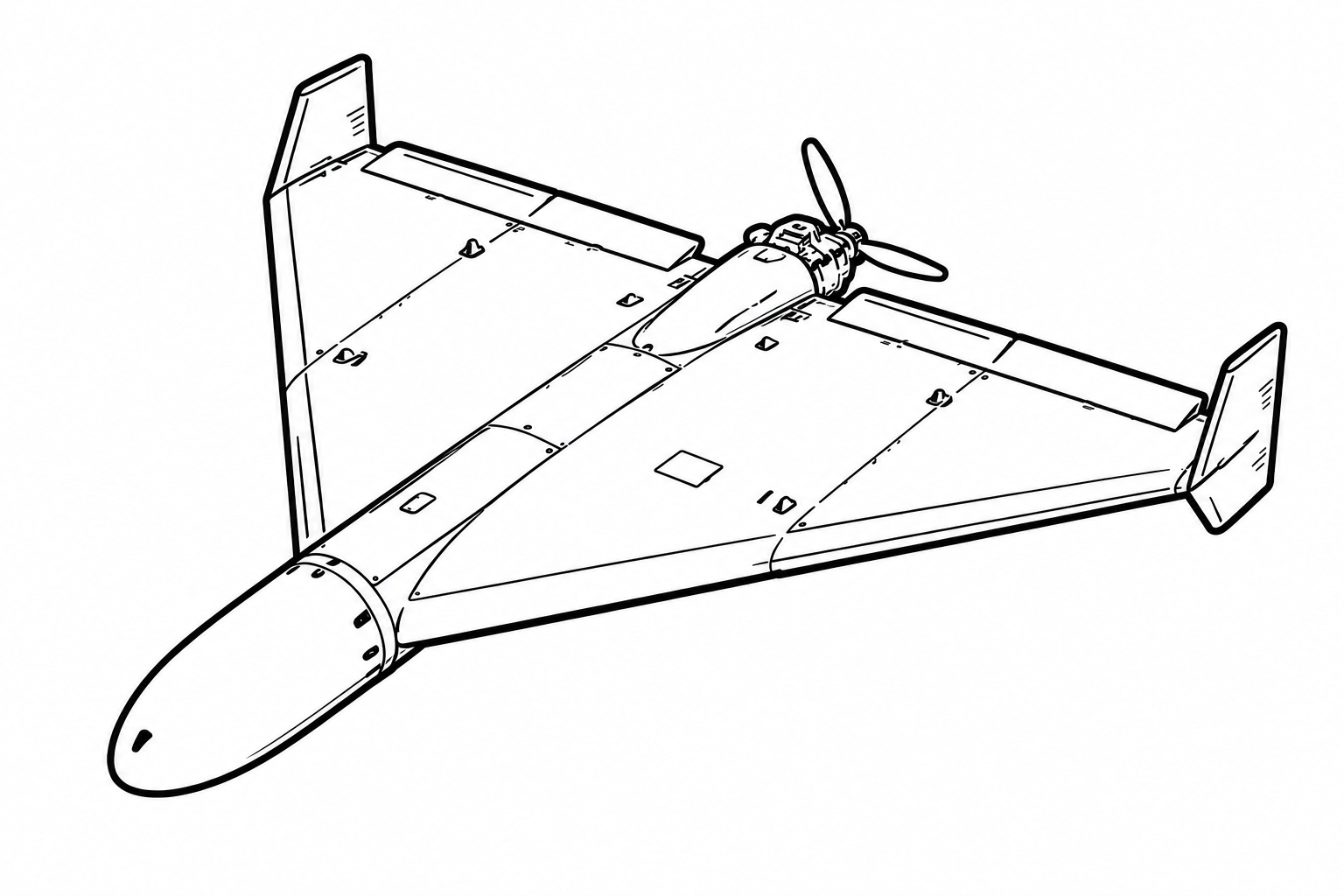
Geran-4 Seeker overview
The Geran-4 (NATO reporting assessment: 'Seeker') is a Russian-operated reconnaissance and target-acquisition unmanned aerial vehicle believed to represent the latest derivative in the Iranian-Russian Shahed/Geran drone family tree, adapted specifically for persistent ISR and battle damage assessment rather than the one-way attack mission of the Geran-2 (Shahed-136). While the Geran-2 struck Ukrainian cities and infrastructure with lethal effect, Russian planners recognized early in the war that uncrewed persistent surveillance of the frontline — particularly in the GPS-contested, EW-saturated environment of eastern Ukraine — required a platform purpose-built for loiter and observation rather than terminal attack. The Geran-4 is believed to use the same delta-wing airframe family as the Geran-2 but with a modified nose section accommodating a multi-spectral sensor payload: an electro-optical camera, shortwave infrared imager, and laser rangefinder enabling day and night observation at altitudes above most man-portable air defense system engagement envelopes. Powered by a quieter, fuel-efficient engine variant, the Geran-4 is assessed to have an endurance of 12 to 18 hours — sufficient to provide continuous observation of a Ukrainian brigade-sized area of operations through a complete tactical cycle from assembly to movement to engagement.
The significance of the Geran-4 to Russian operational planning cannot be separated from the artillery-centric nature of the conflict. Russian ground forces operate within a fire doctrine premised on destroying enemy formations with massed artillery before committing maneuver elements, and that doctrine requires persistent, accurate target location that crewed aviation — suppressed by Ukrainian air defenses and MANPADS — cannot safely provide. The Geran-4 fills that gap: loitering at altitude while designating coordinates for Krasnopol laser-guided artillery rounds, Lancet loitering munitions, and Iskander ballistic missile strikes. Ukrainian signals intelligence units have detected Geran-4 datalink emissions operating on frequency-hopping patterns substantially more sophisticated than the Geran-2's control architecture, suggesting Russian engineers have invested significant effort in EW-hardening the platform against Ukrainian jamming systems. Ukrainian air defense forces have reported that the Geran-4's smaller radar cross-section and higher operating altitude make it significantly more difficult to engage than the Geran-2, and that a single Geran-4 coordinating Lancet strikes can destroy more Ukrainian armored equipment per sortie than five Geran-2 attack variants.
By 2025–2026, the Geran-4 has become one of the highest-priority targets for Ukrainian counter-UAS efforts precisely because of its force-multiplying effect on Russian fires. Ukraine has allocated significant Western-supplied electronic warfare assets — including systems derived from the U.S. VAMPIRE counter-UAS program and British RF-jamming packages — specifically to disrupting Geran-4 operations. Despite these efforts, Russia's production capacity — believed to now include domestic manufacturing of Geran-series airframes at facilities in Alabuga (Tatarstan) and Yelabuga — has allowed Geran-4 fleet size to grow throughout 2025. U.S. intelligence assessments released in early 2026 assess that Russia has operationally deployed over 200 Geran-4 airframes across the eastern and southern fronts, representing a persistent ISR threat that Ukrainian forces must suppress or accept losing tactical surprise in virtually every major ground operation.
Armament
None (sensor-only; designates targets for other strike systems)
Development and operational timeline
- Russian armed forces begin operational use of Geran-2 (Shahed-136); need for dedicated ISR variant identified by Russian planners
- First sightings of modified delta-wing drone with sensor pod assessed as Geran-4 prototype over Zaporizhzhia front
- Geran-4 confirmed by Ukrainian intelligence as dedicated ISR/target designation variant; EW-hardened datalink detected
- Domestic Russian production of Geran-series airframes confirmed at Alabuga special economic zone; Geran-4 production included
- Ukrainian forces attribute multiple Lancet-coordinated armor kills to Geran-4 designation; platform elevated to highest-priority counter-UAS target
- Western EW packages deployed specifically to counter Geran-4 loiter operations along eastern front
- Russia expands Geran-4 fleet; upgraded sensor payload with SWIR imager and improved laser rangefinder confirmed by wreckage analysis
- U.S. intelligence estimates 150+ Geran-4 airframes operational; assessed as primary Russian ISR platform for frontline target acquisition
- Geran-4 fleet exceeds 200 airframes per U.S. assessment; Ukraine dedicates significant air defense resources specifically to suppressing Geran-4 operations