Air system · Kamikaze
Lancet
Loitering Munition
Also known as: ZALA Lancet / Lancet-3 / Izdeliye 51 / Izdeliye 52
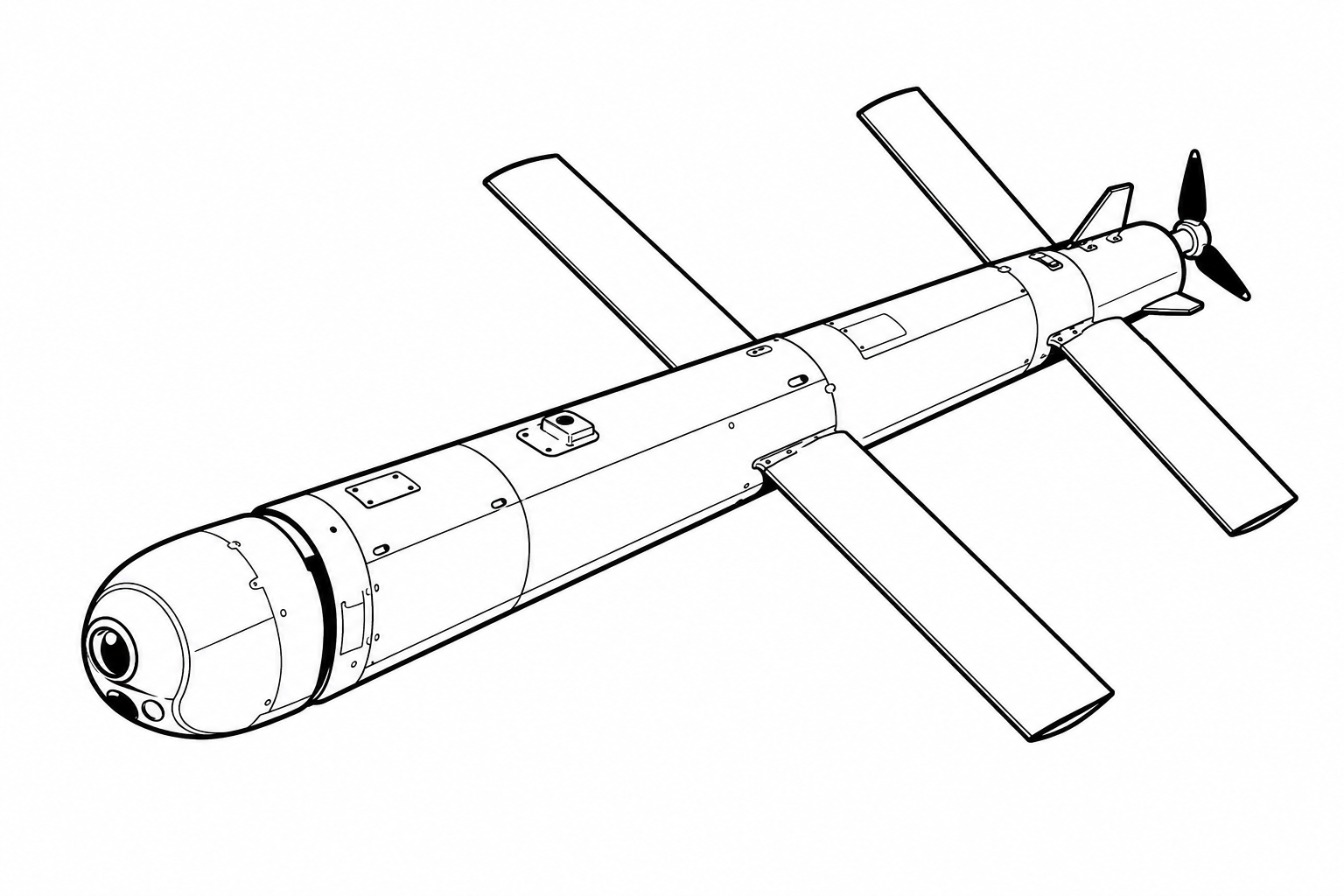
Lancet overview
Last reviewed:
Lancet is ZALA's Russian family of loitering munitions, widely associated with reconnaissance-and-strike teams during the war in Ukraine. Unlike a reusable armed drone, the strike vehicle is consumed in the engagement. Its purpose is to carry a sensor and explosive payload to a selected target while giving the operator a view of the final approach. Separate reconnaissance aircraft can help locate and monitor a target, so footage of the strike does not necessarily come from the attacking vehicle alone.
The original publicly described Lancet-1 and Lancet-3 differed in size, payload, and endurance, and later product designations such as Izdeliye 51 and 52 complicate comparisons further. Early Lancet-3 reporting commonly quoted roughly 40 minutes of endurance and a range around 40 km. Newer variants have been advertised with different figures. These should not be combined into a single best-case specification, particularly when payload mass and operating radius can change with the model.
Lancet's distinctive wing arrangement and electric propulsion support a compact expendable aircraft rather than a high-performance jet. Published speed figures often mix a relatively modest cruise speed with a much higher terminal-dive estimate. A quoted 300 km/h dive speed is therefore not the same as sustained cruising speed or a guaranteed impact speed in every engagement. The distinction is important for readers comparing it with other loitering munitions or short-range FPV attack drones.
The family's extensive use in Ukraine has made it a focus of both military analysis and wartime publicity. Videos document attacks on artillery, vehicles, radar equipment, and other military targets, but edited footage is an incomplete evidence set. Claims of destruction may exceed the visible result, and surviving targets or failed launches may not be shown. Defensive adaptations and changes in electronic warfare have also driven repeated modifications to sensors, links, and launch equipment.
June 2026 Russian reporting, attributing its information to ZALA, described improved night operation and a disposable launcher for Product 51. It framed the changes as part of a modular modernization process responding to battlefield feedback. Those are reported manufacturer developments, not independently verified performance results or proof that all deployed Lancets have the same upgrade. Public claims of automated recognition or resistance to interference should similarly be tied to a named configuration and source.
As of October 2026, Lancet is best treated as an evolving product family whose operational significance is well established but whose precise current technical envelope is not uniform. A useful assessment separates baseline published figures, newer product claims, and independently visible engagement evidence. The timeline does not assign speculative autonomous-targeting features to every airframe. The linked sources also make clear when the information comes from a manufacturer or a wartime reporting environment rather than neutral testing.
Armament
Integral one-way explosive payload; warhead type varies
Development and operational timeline
- ZALA publicly introduces the Lancet family
- Early reported operational activity establishes the loitering-munition role
- Lancet becomes increasingly visible in Russian reconnaissance-and-strike operations in Ukraine
- Public reporting describes revised product configurations and claims of improved sensors and targeting
- Russian reporting citing ZALA describes night-imaging improvements and a disposable Product 51 launcher
- Status review: baseline, Product 51/52, and later variants must be distinguished; manufacturer effectiveness claims are not independent test results