Air system · Counter-UAS Interceptor
Bullet interceptor
Shahed-Type Drone Interception
Also known as: General Cherry Bullet / General Chereshnya Bullet
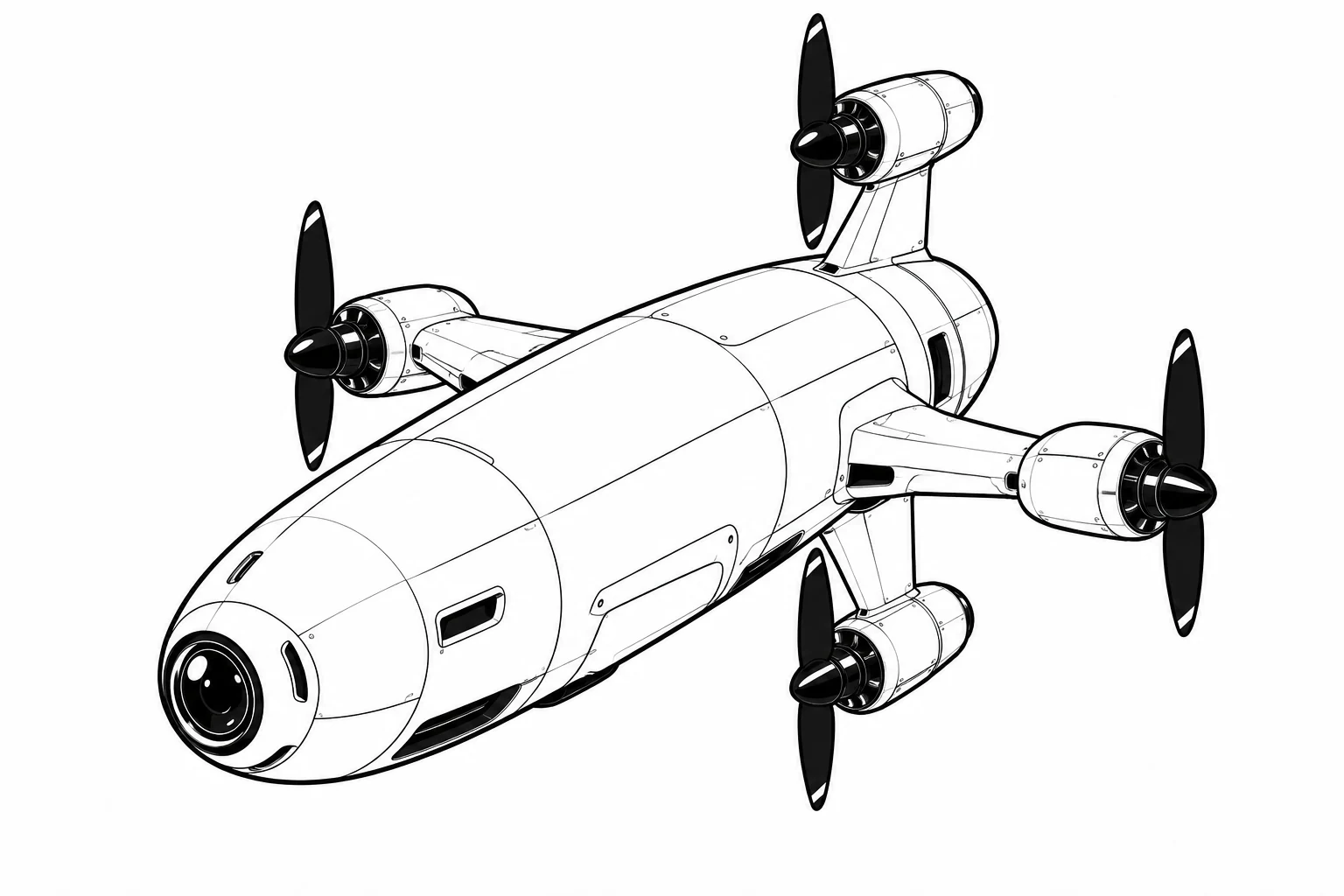
Bullet interceptor overview
Last reviewed:
Bullet is a Ukrainian electric interceptor developed by General Cherry, also transliterated as General Chereshnya, to engage Shahed-type one-way attack drones. It belongs to the growing category of relatively inexpensive, expendable counter-drone aircraft rather than the company's ground-attack FPV products. Public reporting traces its unveiling to late October 2025, combat-interception footage to November, and completion of Ukrainian codification to December 8. Codification opens a route to centralized procurement; it is not, by itself, evidence that every unit has received the system or that a particular production rate has been achieved.
The aircraft uses an elongated body and four electrically driven propellers arranged around an X-shaped wing layout. An optical camera supports the terminal interception, while ground-based detection and the broader air-defense network remain important to finding and assigning an incoming target. The manufacturer described an airframe optimized for short, fast engagements rather than persistent surveillance. Public images and illustrations are not a reliable basis for deriving airframe dimensions, and the catalog does not assign a measured length, span or takeoff mass where no dependable figure was found.
At UMEX 2026, General Cherry gave EDR Magazine a maximum speed of 310 km/h, a tactical range of roughly 17–20 km, and an effective flight altitude of 3,000 m. The company quoted up to 25 minutes at cruising conditions, but only two to four minutes in burst mode. These are manufacturer-provided figures under different operating conditions: the maximum speed, longest endurance and farthest reach should not be treated as a simultaneously demonstrated mission. The same briefing described a 0.4–0.8 kg warhead and a target-recognition distance of up to 600 m.
The economic argument is to reserve expensive surface-to-air missiles for threats that require them while adding another layer against mass drone attacks. EDR reported a company-indicated price of about US$2,100 in January 2026, but that is not a complete fielded-system cost: sensors, communications, launch support, training and repeated engagement attempts also matter. Camera recognition distance is likewise not the size of the air-defense coverage area. Weather, visibility, approach geometry and the time available after detection all influence whether a claimed speed advantage becomes a successful interception.
Bullet must not be confused with Octopus. General Cherry has also discussed manufacturing Octopus under a Ministry of Defence license, but the two are distinct designs with different ownership and published performance. In September 2026, Ukrainian reporting described a Bullet interception of a Geran-4 jet-powered drone. That is a reported individual engagement, not independent proof that Bullet can defeat every aircraft with a higher advertised top speed, nor a published fleet-wide success rate. Through the October 24 review, the strongest public record supports an adopted, combat-reported counter-UAS system with manufacturer-stated performance and still-limited independent effectiveness data.
Armament
Expendable interceptor with a manufacturer-reported 0.4–0.8 kg warhead; not a reusable armed ISR aircraft
Development and operational timeline
- General Cherry publicly unveils its own Bullet anti-Shahed interceptor, according to subsequent Defender Media reporting
- Company releases footage described as Bullet's first successful Shahed interceptions; public evidence remains engagement-specific
- General Cherry announces completion of Ukrainian codification, enabling centralized procurement pathways
- EDR's UMEX report publishes company-provided speed, range, endurance, altitude and warhead figures
- Ukrainian reporting attributes a Geran-4 jet-drone interception to Bullet; this is a reported engagement, not a universal performance guarantee
- Editorial status review: combat-reported Ukrainian interceptor; production totals and independently audited interception rates remain unverified