Air system · Counter-UAS Interceptor
Octopus interceptor
Shahed-Type Drone Interception
Also known as: Octopus / Octopus-100 / Project OCTOPUS
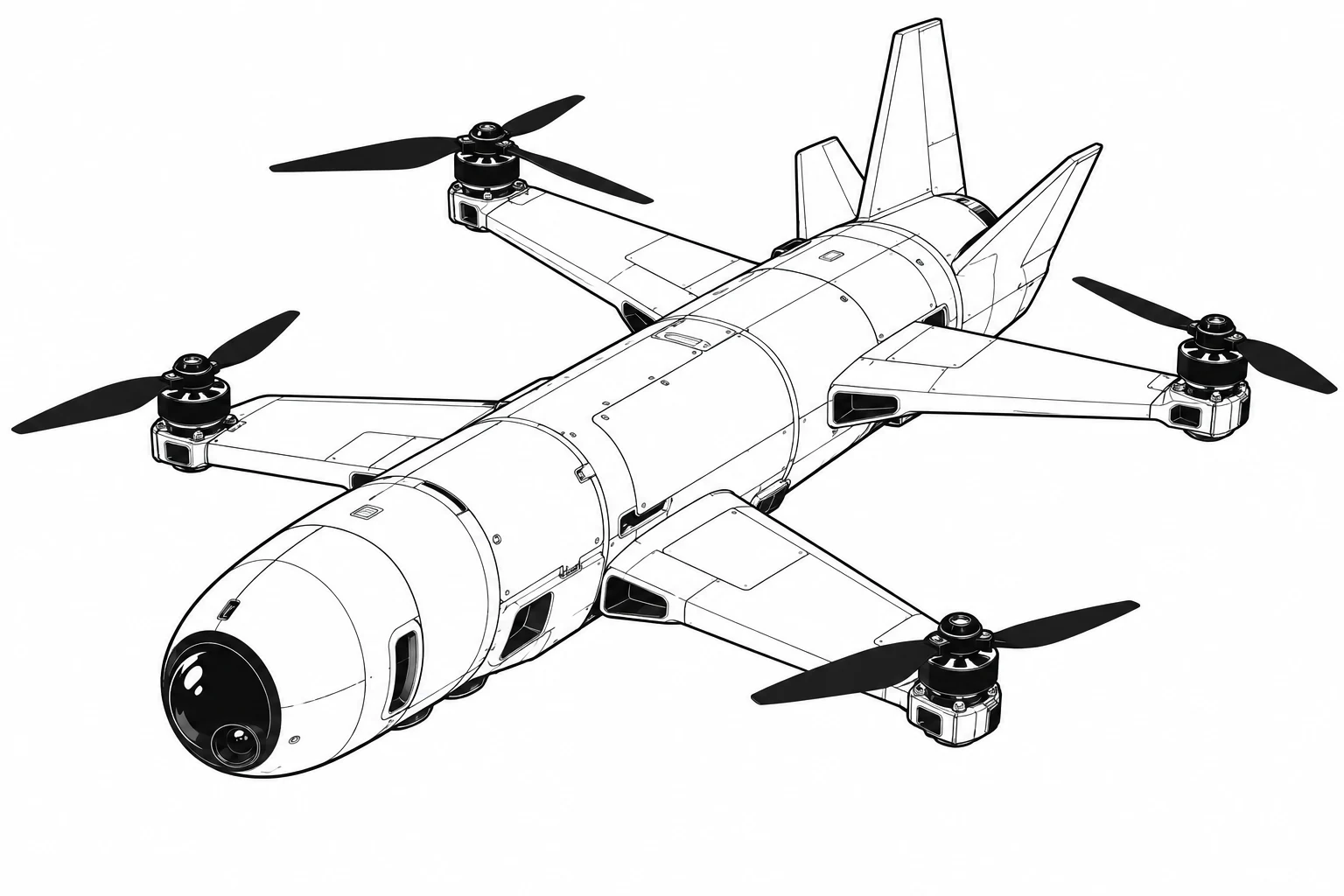
Octopus interceptor overview
Last reviewed:
Octopus is a Ukrainian-developed interceptor intended to destroy Shahed-type attack drones, with automatic guidance during the final approach. It originated within Ukraine's defense forces and became a significant UK–Ukraine technology-sharing project in 2025. Unlike a drone whose identity is tied to one private manufacturer's factory, Octopus is licensed to multiple producers. TAF Industries markets a version as Octopus-100, and General Cherry has separately announced participation in the licensing program. Ukraine remains the country of design origin; British industrial participation does not make it an unrelated British aircraft.
The concept combines an expendable interceptor with detection, cueing and command arrangements supplied by an air-defense organization. Ukraine's Ministry of Defence says Octopus has demonstrated combat effectiveness at night, at low altitudes and in an electronic-warfare environment. Those are official operator statements, not a published, independently audited probability of kill. Automatic terminal guidance should not be read as a claim that the interceptor independently searches an entire region, identifies every target and conducts an engagement without external support.
The TAF Industries product listing gives a maximum speed above 300 km/h, a 30 km combat radius, 15 minutes of flight, an altitude up to 4,500 m and a 1.2 kg payload. These are the advertised figures for that licensed offering. Defender Media's May 2026 survey of other Octopus suppliers instead reported around 300–305 km/h, 15–20 minutes, up to 25 km range and a 3,500 m ceiling. This profile preserves that distinction rather than creating an imaginary best-of-all-versions aircraft. TAF's term 'payload' also should not automatically be substituted for independently measured explosive fill.
The industrial timeline is unusually important. The UK announced Project OCTOPUS within a technology-sharing agreement in September 2025; a licensing agreement was signed in November. British statements in January 2026 said domestic production would begin that month and described an ambition to reach thousands per month. These statements establish a production program and targets, not verified delivery of the target quantity. A March 2026 joint declaration reaffirmed licensed UK production as a defense-industrial collaboration.
On April 30, 2026, Ukraine's Ministry of Defence announced procurement of 8,000 Octopus interceptors. It said 29 Ukrainian companies had obtained licenses, that the UK government was involved, and that four manufacturers had signed state supply contracts. Those are separate measures: a license is not a completed production line, a contract is not a delivered interceptor, and a procurement quantity is not a combat-use count. TAF opened immediate procurement orders in June. Through the October review, Octopus is best understood as a combat-reported Ukrainian design being scaled through a distributed licensing network, with configuration-specific claims and no single public consolidated delivery ledger.
Armament
Expendable anti-drone interceptor with automatic terminal guidance; payload configuration depends on the licensed offering
Development and operational timeline
- UK announces Project OCTOPUS as the first project under a new UK–Ukraine technology-sharing agreement
- Ukraine reports technology transfer to initial domestic manufacturers for serial production
- Ukrainian and British defense delegations sign an Octopus production licensing agreement
- UK says British-built production will begin in January, with thousands per month an intended scale rather than a confirmed delivery total
- UK–Ukraine joint declaration reaffirms the licensed interceptor-production collaboration
- Ukraine announces procurement of 8,000 interceptors, 29 licensed domestic companies and four manufacturers with state supply contracts
- TAF Industries opens immediate procurement orders for its licensed Octopus-100 offering
- Editorial status review: distributed licensed production and combat-reported use; supplier-specific specifications are not interchangeable
Sources & further reading
- UK government — Project OCTOPUS technology-sharing announcement
- Ukraine MoD — November 2025 licensing agreement
- UK government — January 2026 production announcement
- UK–Ukraine — March 2026 industrial collaboration declaration
- Ukraine MoD — procurement of 8,000 Octopus interceptors
- TAF Industries — current Octopus-100 specifications
- Defender Media — specifications across licensed suppliers
- TAF Industries — June 2026 procurement availability