Air system · Multi-Role UAV Platform
Saturn-30
ISR / Strike / Electronic Warfare / Relay
Also known as: Saturn 30 / KRET multi-role UAV / Russia MALE drone
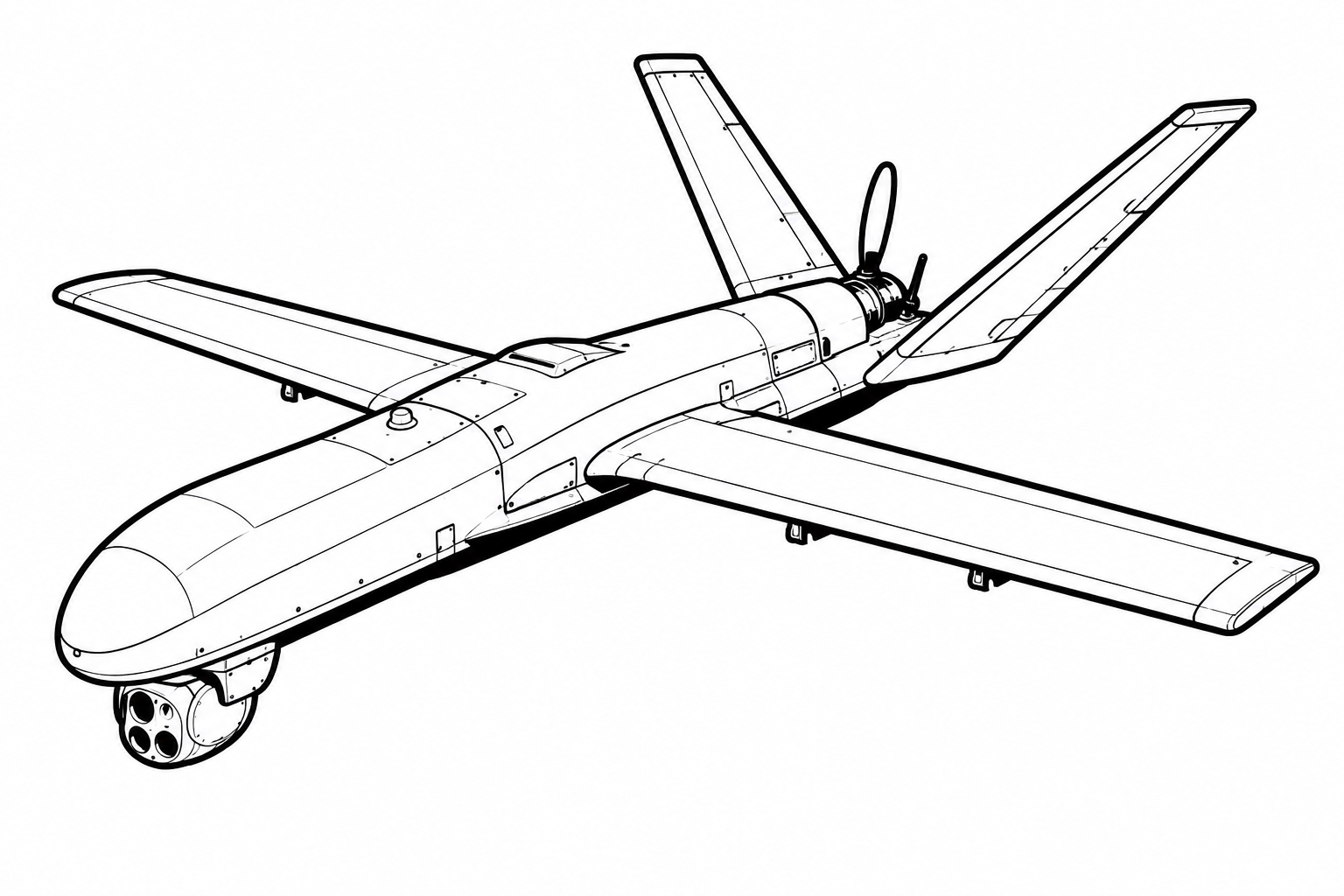
Saturn-30 overview
The Saturn-30 is Russia's answer to the medium-altitude long-endurance gap in its drone inventory — the operational tier between small tactical FPVs and the larger Orion MALE platform that has proven difficult to produce in quantity. Developed by KRET (Concern Radio-Electronic Technologies), a major Russian defense electronics concern, the Saturn-30 draws on KRET's deep expertise in electronic warfare systems to integrate ISR and EW capabilities in a single airframe that Russia's fragmented drone ecosystem has struggled to produce elsewhere. Its unveiling at Drone Expo-2026 in Kazan represented a public commitment by the Russian defense industry to field a capable medium-class platform domestically.
The Saturn-30's modular design centers on interchangeable payload bays in the nose and lower fuselage. For ISR missions, these bays accept EO/IR gimbals, synthetic aperture radar, and SIGINT collection antennas. For electronic warfare missions, they carry active jamming transmitters capable of disrupting UHF/VHF communications, GPS receivers, and drone control frequencies. For light strike missions, they carry guided munitions or dispensers. The ability to reconfigure the same airframe for fundamentally different mission types reduces logistical complexity — a problem that has hampered Russian drone operations when specialized platforms require specialist ground equipment, qualified operators, and dedicated spare parts chains.
Russia's drone program suffered severe setbacks in the early years of the conflict due to Western sanctions cutting off access to Western microelectronics — the same components that powered Orion's avionics. The Saturn-30 is designed from the outset with domestically-available or China-sourced components, a design constraint that created engineering challenges but ultimately produced a platform less vulnerable to supply chain disruption. KRET's production facilities in Ryazan and associated partner plants were expected to begin series production of the Saturn-30 in late 2026, with the platform positioned as a workhorse for Russian air and naval aviation surveillance requirements.
Armament
Modular: up to 4 × guided munitions, EW jamming pod, or ISR sensor suite
Development and operational timeline
- KRET begins Saturn-30 development under Russian MOD funding; modular multi-role design approach selected
- Saturn-30 prototype completed; first ground engine runs and systems integration testing
- First flight; autonomous navigation, payload bay, and datalink systems validated
- ISR payload integration tested; EO/IR and SAR sensor packages demonstrated in flight
- Electronic warfare payload tested; Saturn-30 demonstrates GPS jamming and comms disruption capabilities
- Light strike payload tested; guided munition delivery from Saturn-30 validated against ground targets
- State acceptance trials begin; Russian MOD test and evaluation commission reviews Saturn-30 performance
- Saturn-30 publicly unveiled at Drone Expo-2026 in Kazan; specifications and capabilities disclosed for first time
- State acceptance concluded; production contract awarded; KRET Ryazan facility begins manufacturing