Air system · Tactical Reconnaissance UAV
Orlan-10
Artillery Correction / ISR / Electronic Warfare / SIGINT
Also known as: Orlan 10 / Russian recon drone / Орлан-10
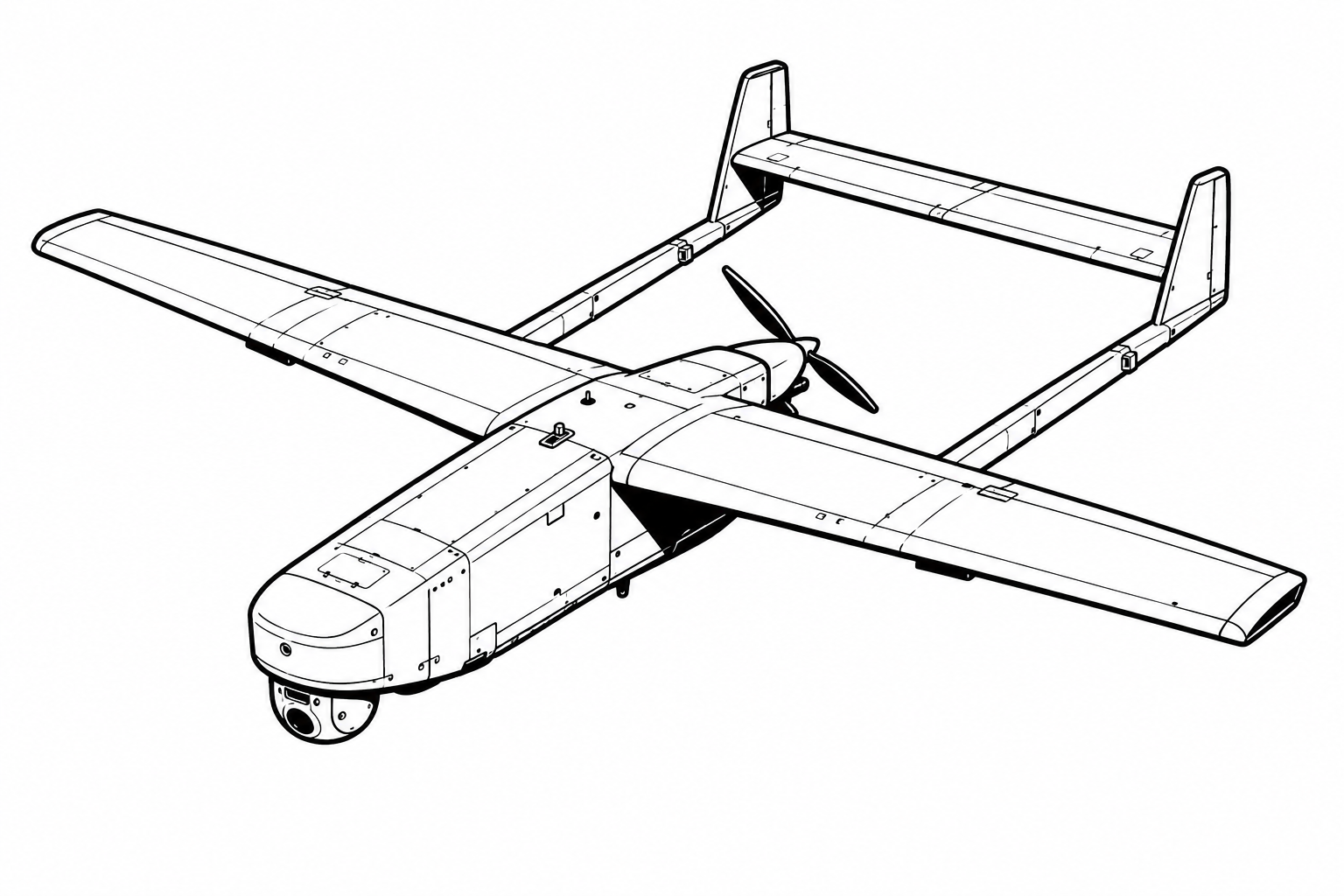
Orlan-10 overview
The Orlan-10 is Russia's most widely-deployed tactical reconnaissance UAV and one of the most consequential unmanned systems of the 21st century's first major interstate war. Developed by the Special Technology Center (STC) in St. Petersburg, the Orlan-10 is a propeller-driven, catapult-launched, parachute-recovered platform that entered Russian service in 2013 and proved indispensable from the outset of the Donbas conflict in 2014. Its reliability, simplicity, and ease of manufacture in quantity made it Russia's tactical UAV backbone in a way that more sophisticated systems never achieved, and its continuous combat use through the full-scale 2022-2026 invasion accumulated more operational hours in intense combat than almost any other drone system in history.
The Orlan-10's primary mission is artillery correction: flying above a target area and transmitting live video to ground stations where artillery battery commanders use the imagery to observe shell impacts and adjust fire. This capability — which in NATO armies required expensive reconnaissance aircraft or satellite intelligence — was provided cheaply and persistently by Orlan-10 units operating at the battery level, dramatically improving Russian artillery accuracy during the early phases of the invasion. Beyond artillery spotting, Orlan-10 variants carry SIGINT collection equipment — including IMSI catchers that harvest Ukrainian soldier cellular data by impersonating mobile network base stations — and electronic warfare payloads that jam GPS and drone control frequencies in the vicinity of Russian positions.
Despite being repeatedly captured, reverse-engineered, and described in exhaustive detail by Western intelligence services, the Orlan-10 continued to serve effectively through 2026. Analysis of recovered units revealed significant use of Western commercial components including Canon cameras, Futaba radio control equipment, and various Western-manufactured electronic components — a finding that contributed to intensified export control enforcement through the years of the conflict. Russia responded to the resulting component shortages by sourcing alternatives through intermediaries and gradually domesticating component production, but Orlan-10s recovered in 2026 still showed evidence of foreign electronics in their sensor payloads.
Armament
None (reconnaissance); EW variant carries SIGINT/IMSI-catcher payload and GPS spoofing system
Development and operational timeline
- Orlan-10 development begins at Special Technology Center, St. Petersburg
- Orlan-10 enters Russian military service; initial deployment with ground forces artillery brigades
- First combat use in Donbas; Orlan-10 provides artillery correction for separatist and Russian forces
- SIGINT variant with IMSI catcher deployed; collection of Ukrainian military cellular communications begins
- Western intelligence publishes analysis of Western commercial components found in Orlan-10 wreckage
- Full-scale invasion begins; Orlan-10 deployed across all front sectors from Kharkiv to Kherson
- Ukraine begins systematic Orlan-10 interception program using modified air defense systems and anti-drone technology
- GPS jamming variant documented; Orlan-10 equipped with payload disrupting Ukrainian drone navigation near front
- 500th Orlan-10 reportedly shot down in Ukraine; STC ramps production to replace losses
- Component sourcing analysis of 2024 Orlan-10 reveals continued Western electronics despite sanctions
- Orlan-10E export variant marketed at ARMY-2025 exhibition; potential buyers in Africa and Middle East briefed
- Orlan-10 production estimated at 200-300 units per month; continuous front-line deployment sustained through attrition