Air system · Fixed-Wing Loitering Munition
Nagastra-1
Tactical Surveillance / Precision Strike
Also known as: Nagastra 1 / Nagastra–1
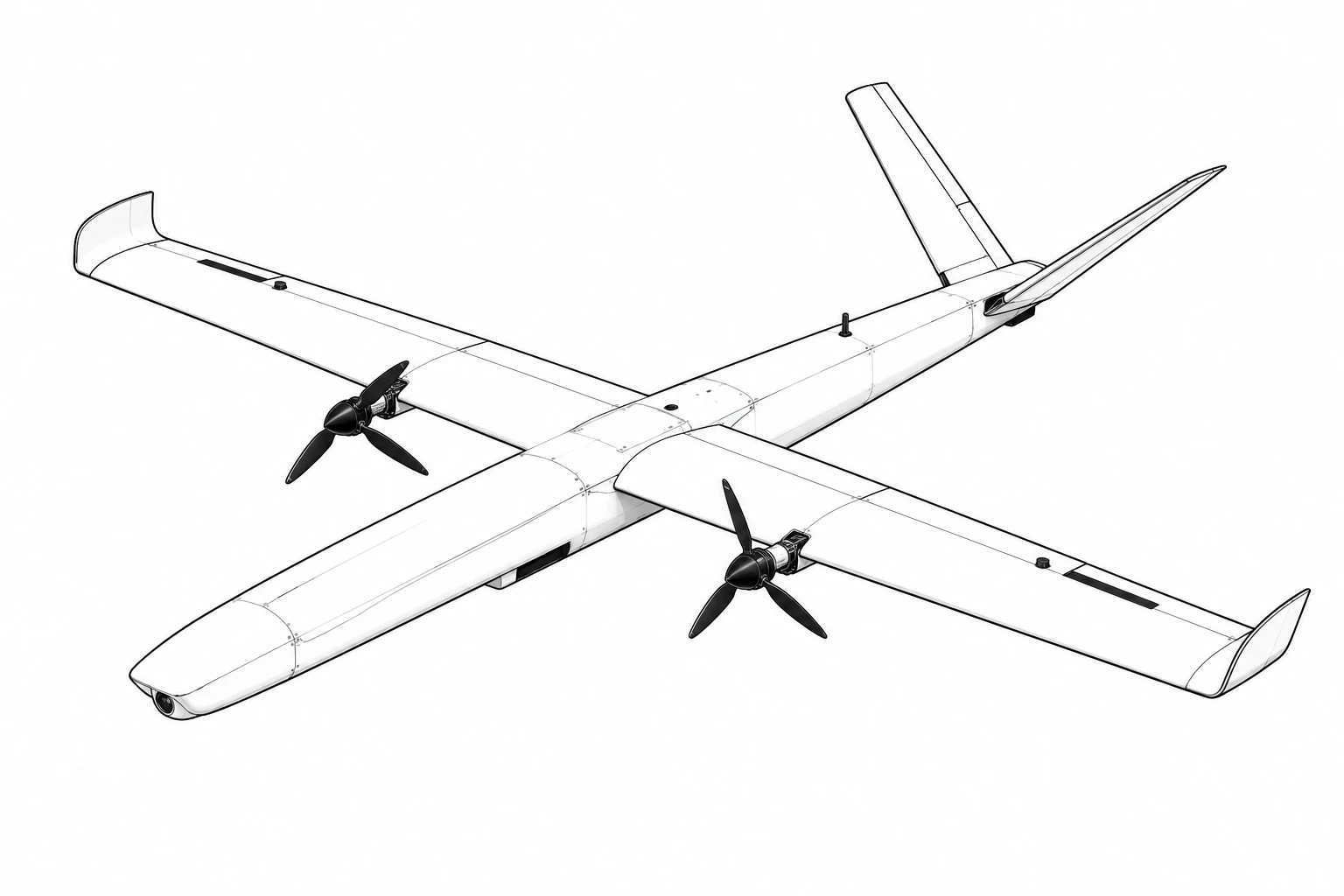
Nagastra-1 overview
Last reviewed:
Nagastra-1 is an Indian man-portable, electrically powered fixed-wing loitering munition produced by Economic Explosives Limited, part of Solar Industries, in collaboration with Z-Motion Autonomous Systems. It combines local surveillance and an integrated explosive payload for tactical attack. Its mission-abort and parachute-recovery arrangement is intended to permit recovery when an engagement is not completed. This does not make a detonated munition reusable, and recovery is a conditional capability rather than a guarantee that every aborted flight returns undamaged.
June 2024 delivery reporting describes a 9 kg aircraft with approximately 30 minutes endurance, a 15 km man-in-the-loop range and a 30 km autonomous-mode range. The same account lists a 1 kg high-explosive fragmentation warhead and day/night cameras. These are attributed industry figures, not independent test results. The two range figures describe different operating modes and must not be merged into a 30 km live-control radius. A complete field package was reported as around 30 kg in two rucksacks, including control, communications and launch equipment, distinct from the aircraft's own mass.
The initial procurement record is unusually specific. ANI reported on June 14, 2024 that the Army ordered 480 munitions under emergency procurement arrangements, that pre-delivery inspection took place May 20–25, and that the first 120 were delivered to the Pulgaon ammunition depot. December 2024 reporting subsequently described supply of 480 systems under the order. The initial batch is part of that procurement sequence, not evidence for adding 120 and 480 together to invent a 600-unit order. Delivery, induction and operational combat expenditure are also different measures.
Some introductory coverage repeats strong claims about precision, acoustic signature and detectability. This profile does not turn those statements into guaranteed two-meter battlefield accuracy or invisibility above a particular altitude; conditions, navigation interference and engagement circumstances matter. It also keeps later Nagastra upgrades separate from the original Nagastra-1 configuration. At the November 2026 review, the baseline has a documented Army delivery history, but the reviewed sources do not establish an audited combat success rate, a complete current inventory or a new baseline performance envelope for 2026.
Armament
Integrated fragmentation warhead; mission abort and parachute recovery described for unexpended aircraft
Development and operational timeline
- Pre-delivery inspections reported for May 20–25 ahead of the initial Army shipment
- ANI reports initial delivery of 120 Nagastra-1 munitions from a 480-unit emergency procurement order
- Subsequent reporting describes supply of 480 Nagastra-1 munitions; the earlier 120 are not automatically an additional separate order
- Editorial status review: baseline delivery history documented; later upgrades, combat claims and total current stocks are not substituted for original-variant evidence