Land system · Logistics / Multi-Role UGV
Maul UGV
Autonomous Resupply / Casualty Evacuation / Forward Support
Also known as: Мол УГВ / Ukrainian logistics robot / Maul resupply drone
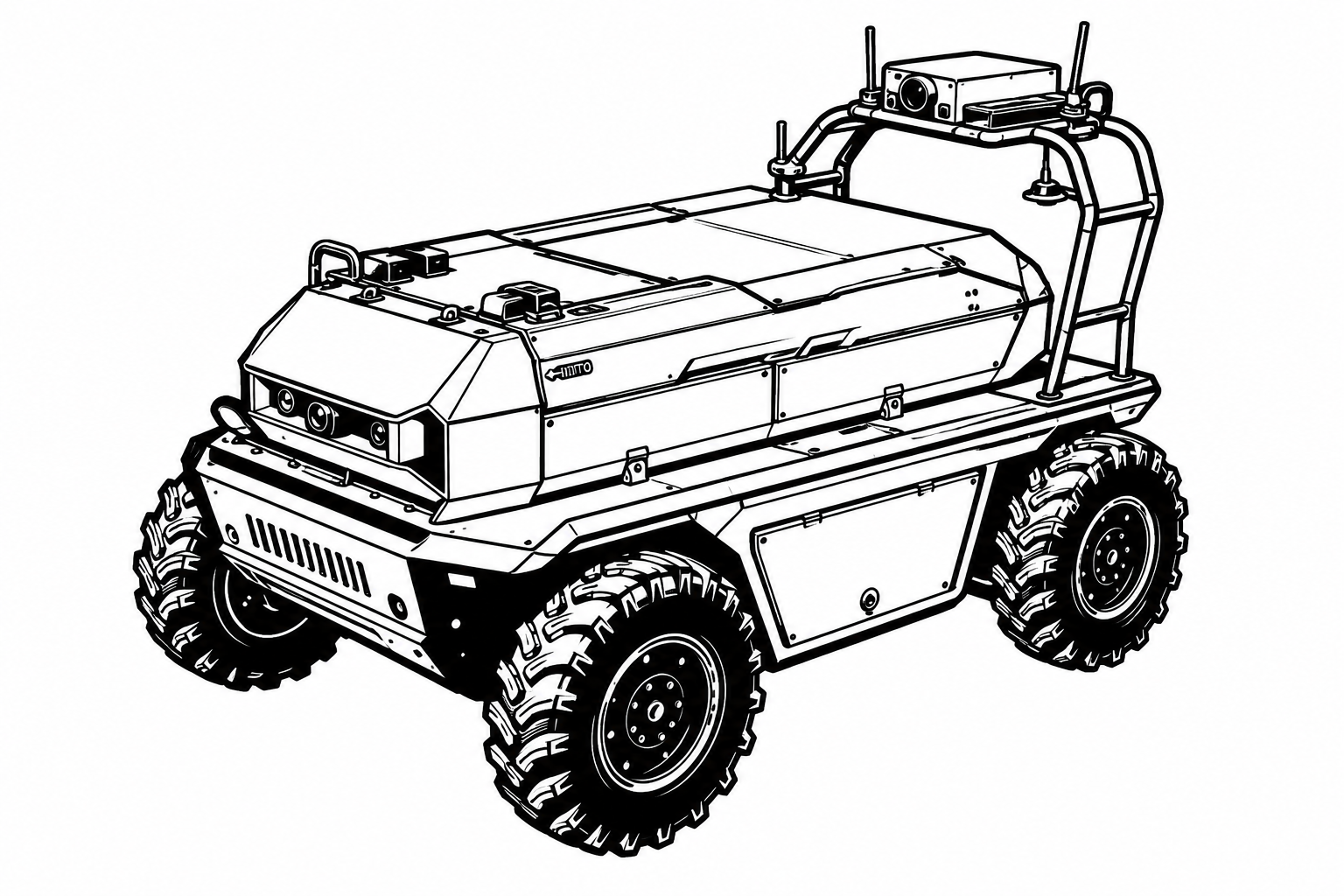
Maul UGV overview
The Maul UGV is a Ukrainian autonomous ground vehicle developed to address one of the most dangerous and persistent challenges of modern warfare: the resupply and casualty evacuation of frontline units under fire. Built on a wide-stance four-wheeled all-terrain chassis, the Maul features oversized off-road tires that allow it to traverse churned-up fields, forest tracks, and the shattered terrain typical of the Donbas front. Its large enclosed cargo module can be loaded with ammunition crates, medical equipment, water, rations, or a wounded soldier on a stretcher, enabling forward-area logistics without exposing drivers and medics to direct fire and artillery during the most dangerous phase of a supply run.
The Maul is operated via encrypted radio link from a hardened command position, with a roof-mounted sensor and communications mast providing real-time situational awareness for the remote operator. The vehicle can navigate pre-planned routes semi-autonomously, reducing the cognitive load on operators managing multiple assets simultaneously. Ukraine's battlefield experience has consistently demonstrated that supply lines to forward positions are among the most lethal operating environments, and the Maul directly addresses this by taking humans out of that equation. The platform has attracted attention from NATO logistics planners studying how autonomous ground vehicles can reduce support echelon casualties in high-intensity conflict, and an armed escort variant with a remote weapon station has been proposed to protect supply convoys operating in contested corridors.
Armament
Unarmed CASEVAC variant; DevDroid armed variant mounts KT-7.62 machine gun with AI-assisted target detection
Development and operational timeline
- Maul UGV concept initiated by Ukraine's 1st Separate Medical Battalion to extract wounded soldiers from contested terrain without risking medics
- Four-wheeled all-terrain prototype completed; armored personnel capsule with solid metal mine-resistant wheels finalized — designed so a wounded soldier can close himself inside
- Field trials conducted in rear areas; encrypted radio control link, onboard cameras, and sensor mast system tested under simulated combat conditions
- First operational CASEVAC missions behind contested positions in Donetsk sector; internal combustion engine confirmed capable of 70 km/h on open ground
- DevDroid, a Ukrainian defense startup, acquires license from the 1st Medical Battalion to manufacture and sell the Maul commercially at approximately $19,000 per unit
- Maul UGVs integrated into brigade-level logistics operations; 3rd Assault Brigade reports UGVs conducting 80% of forward supply missions in the most exposed sectors
- Landmark rescue: after six failed attempts over 33 days, a Maul UGV successfully extracts a wounded soldier from deep behind Russian lines — covering 64 km total, surviving a landmine blast that destroyed one wheel, and withstanding a direct Russian FPV drone attack. The armored capsule saves the soldier's life. Mission duration: under six hours. President Zelenskyy publicly credits the 1st Medical Battalion. (CBS News, Ukrainska Pravda)
- 11th-attempt rescue: a soldier wounded in a small-arms engagement in the grey zone is extracted after ten prior failures — including the loss of two Maul platforms to mines and drone strikes. The 1st Medical Battalion deploys a third unit that successfully reaches the casualty and returns. Ukrainska Pravda reports.
- Private 'Spartak' rescued: Maul UGV evacuates a soldier who stepped on a mine more than 15 miles (24 km) inside Russian-held territory while under sustained Russian FPV drone attack throughout the return journey. Footage published by the 1st Separate Medical Battalion. Ukrainian forces complete over 9,000 ground robot missions in March alone — up from fewer than 3,000 five months earlier.
- Ukrainian General Staff reports robotic platforms have reduced frontline personnel casualties by up to 30 percent; 167 military units now operate UGVs as standard equipment. Maul recognized internationally as a breakthrough in autonomous CASEVAC doctrine.