Air system · Interceptor / Counter-UAS Drone
P1-SUN
Drone Interception / Counter-UAS / Air Defense
Also known as: SUN interceptor / Ukrainian counter-drone interceptor / P1 SUN
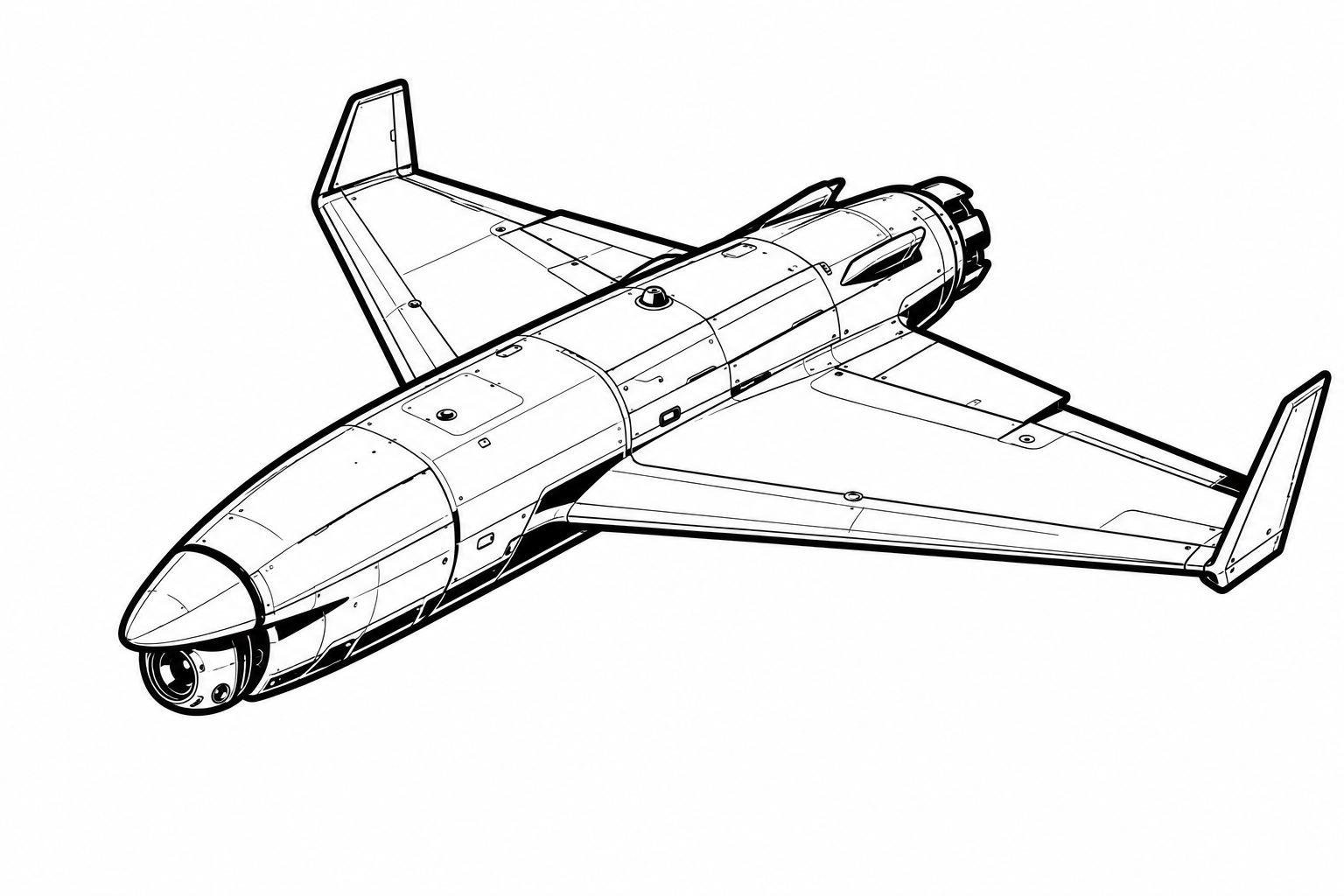
P1-SUN overview
The P1-SUN is Ukraine's answer to one of the most pressing tactical challenges of the drone war: how to destroy incoming Shahed loitering munitions, Russian FPV drones, and reconnaissance UAVs at a cost dramatically lower than firing expensive surface-to-air missiles. The economics of counter-drone warfare became brutally apparent early in the conflict — Russia was spending $20,000-$50,000 per Shahed-136 while Ukraine was expending $500,000+ Patriot or IRIS-T missiles to intercept them. The P1-SUN was designed to shift that equation by creating an autonomous interceptor that costs a fraction of the threats it destroys.
The P1-SUN works in conjunction with a ground-based detection layer — typically short-range radars or acoustic sensor arrays — that identifies incoming aerial threats and cues interceptors to their location. Once launched, the P1-SUN autonomously homes on the target using onboard computer vision and radar homing, closing at speeds sufficient to catch subsonic drones and loitering munitions. Its proximity-fused kinetic warhead destroys targets without requiring a direct hit, compensating for the inherent accuracy limitations of chasing a maneuvering target. Critically, its unit cost is designed to be comparable to or below that of the cheapest incoming threats it intercepts.
By mid-2026, the P1-SUN had achieved more than 1,000 confirmed aerial intercepts, including more than 700 Shahed-class vehicles — a record that made it one of the most cost-effective air defense assets in Ukraine's arsenal. Ukrainian air defense planners integrated it as a first-tier response layer below their more capable SAM systems, using P1-SUN to handle the high-volume, lower-altitude threat and reserving Patriot and IRIS-T missiles for ballistic missiles and aircraft. The operational success of the P1-SUN drew significant international interest from NATO members developing their own counter-drone strategies.
Armament
Proximity-fused kinetic fragmentation warhead; autonomous terminal homing
Development and operational timeline
- P1-SUN development initiated by SkyFall in response to escalating Shahed-136 mass attack campaign
- First P1-SUN prototype tests; autonomous interception of quadcopter targets demonstrated
- Integration with Ukrainian ground-based radar and acoustic detection network completed
- First live-fire intercepts against Shahed-136 targets; 80%+ single-shot intercept probability validated
- P1-SUN operational deployment begins; first units issued to Kyiv air defense layer
- 100th confirmed intercept achieved; P1-SUN declared operationally effective by Ukrainian Air Force
- Production scaled; P1-SUN units deployed across multiple oblasts to protect critical infrastructure
- 500th intercept milestone; 350 of 500 are Shahed-class vehicles
- FPV interceptor variant developed; P1-SUN modified to engage smaller, faster FPV strike drones
- 1,000th intercept achieved; 700+ are Shahed variants — equivalent to $50M+ in intercepted Russian ordnance
- Ukraine begins discussions with NATO members on P1-SUN technology transfer and co-production