Air system · FPV Strike Drone
F-CAPTAIN
Precision Strike / Anti-Armor / Anti-Personnel
Also known as: F-CAPTAIN / F-Captain drone / Ukrainian FPV attack drone / Captain FPV
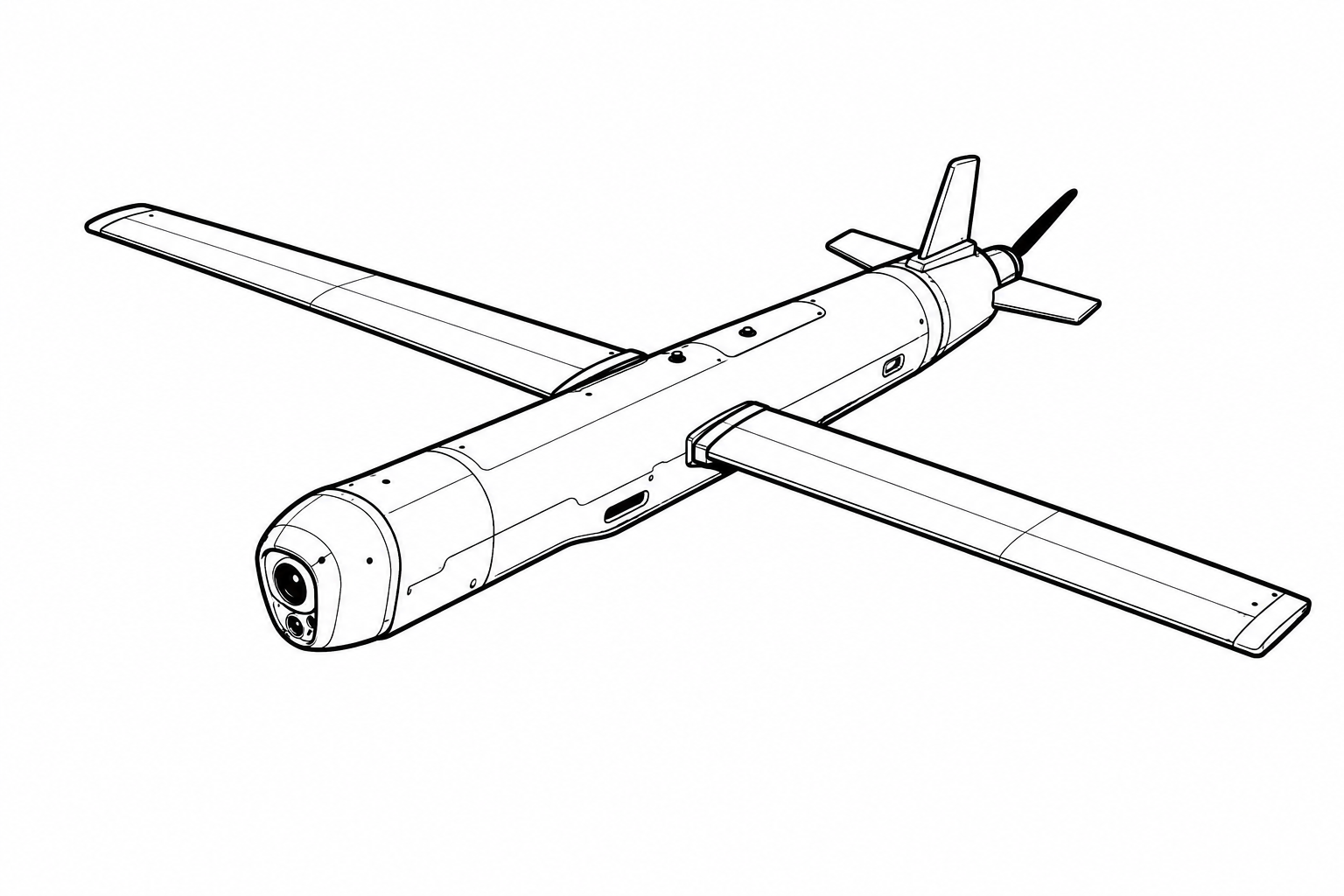
F-CAPTAIN overview
The F-CAPTAIN is a Ukrainian-developed first-person-view attack drone produced by a domestic defense firm within the Brave1 ecosystem, designed specifically to address the survivability gap that has made single-use FPV drones highly effective but individually unreliable in heavily jammed frontline environments. Unlike the ubiquitous commercial-derived FPV drones that have dominated Ukrainian tactical drone use since 2022, the F-CAPTAIN was engineered from conception as a military system: its control system operates on frequency-hopping encrypted communications protocols resistant to the broadband jamming systems Russia has deployed along the contact line, its structural airframe is manufactured from domestic Ukrainian composite materials rather than Chinese commercial drone components subject to export restrictions, and its guidance architecture supports both operator-controlled and autonomous terminal homing modes. The platform weighs approximately 3.5 kilograms at mission weight and carries a shaped-charge warhead effective against light armored vehicles and personnel in prepared positions, with a flight endurance of approximately 25 minutes enabling effective attack ranges of 8 to 12 kilometers from the launch point — significantly beyond the 3 to 5 kilometer effective range of standard commercial FPV systems that Russian jamming can reliably suppress.
The F-CAPTAIN's development was driven by front-line Ukrainian operators who documented the failure modes of commercial FPV drones with extraordinary precision: jamming intercepts that caused uncontrolled crashes kilometers from the target, image transmission dropout that made terminal guidance impossible in the last critical seconds, and Chinese supply chain restrictions that periodically halted production of the core electronic speed controllers and video transmitters. Each of these failure modes was systematically addressed in the F-CAPTAIN's design: the flight controller uses domestically manufactured electronics that cannot be remotely deactivated, the video and control links operate on separate frequency bands with independent encryption, and the airframe can be assembled from subcomponents manufactured at multiple dispersed Ukrainian facilities, eliminating single points of supply chain failure. Ukrainian special operations forces units that transitioned from commercial FPV platforms to the F-CAPTAIN in 2024 field trials reported a mission completion rate (defined as confirmed warhead detonation within 5 meters of the intended target) approximately double that of commercial systems in heavily jammed environments.
By 2025–2026, the F-CAPTAIN has entered serial production with multiple Ukrainian firms, with monthly output estimated in the hundreds of units. A naval variant capable of autonomous water-skimming approach to maritime targets was tested in late 2025, combining the F-CAPTAIN's EW-resistant guidance with a buoyant airframe enabling a hybrid air-surface attack profile that Russian ship-based point defense systems are not optimized to counter. A coordinated attack package pairing F-CAPTAIN strike drones with electronic warfare suppression assets — using a preceding wave of EW drones to temporarily blind Russian jamming nodes before the F-CAPTAIN strike waves arrive — has been documented in multiple 2025 Ukrainian operations, demonstrating a level of tactical drone integration doctrine that Western observers assess as approaching the sophistication of crewed combined-arms operations.
Armament
1.5 kg shaped-charge warhead (anti-armor or fragmentation variants)
Development and operational timeline
- F-CAPTAIN development initiated following Ukrainian operator documentation of commercial FPV failure modes under Russian jamming
- F-CAPTAIN prototype completed; frequency-hopping encrypted control link and domestically manufactured flight controller validated
- F-CAPTAIN field trials with Ukrainian special operations forces; mission completion rate double that of commercial FPV systems in jammed environments
- F-CAPTAIN enters serial production at multiple dispersed Ukrainian facilities; supply chain independence from Chinese components confirmed
- Coordinated EW-plus-F-CAPTAIN attack packages documented in multiple Ukrainian frontline operations
- Naval variant tested: buoyant airframe enabling hybrid air-surface water-skimming attack against maritime targets
- Monthly F-CAPTAIN production reaches several hundred units; system issued to infantry brigade UAS units across multiple fronts
- F-CAPTAIN attack integrated with autonomous terminal homing mode; EW-denied environment performance validated in combat conditions
- F-CAPTAIN doctrine formally incorporated into Ukrainian joint drone warfare manual; cited as model for sovereign EW-resistant FPV development