Air ·
Anduril's YFQ-44A Takes Flight: A New Era for US CCA Program
The first YFQ-44A unmanned aircraft has been produced by Anduril, marking a significant milestone in the U.S. military's Collaborative Combat Aircraft program.
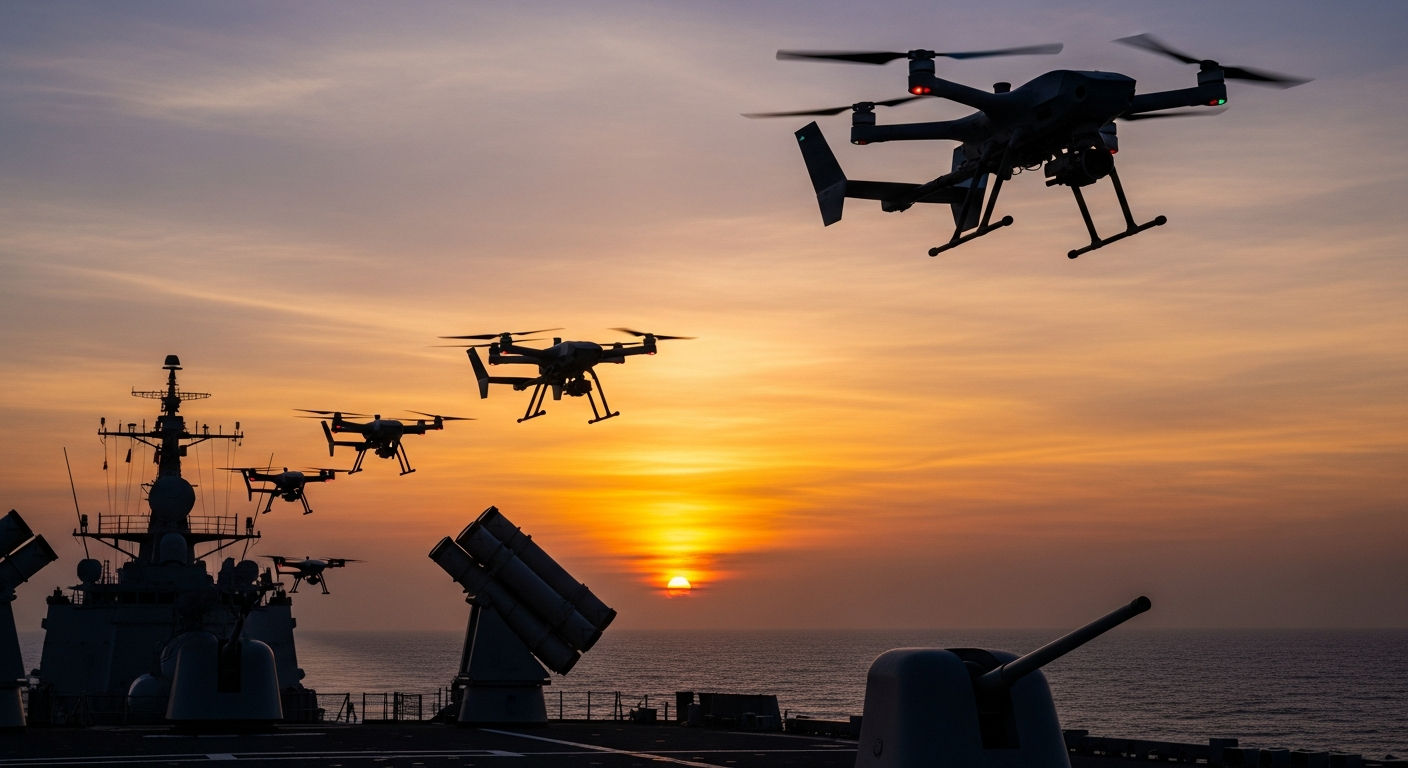
Anduril Industries has successfully rolled off the production line its first YFQ-44A, an unmanned, semi-autonomous aerial vehicle designed specifically for the U.S. military's Collaborative Combat Aircraft (CCA) program. This development is expected to enhance the capabilities of U.S. forces by integrating advanced technologies and artificial intelligence, allowing for improved combat efficiency in various scenarios.
The YFQ-44A represents a shift towards more autonomous systems in military aviation, providing capabilities that can support manned aircraft and ground forces. The design emphasizes adaptability, with features that allow for rapid deployment in diverse mission profiles, from reconnaissance to direct engagement. As militaries around the world increasingly rely on drones, the YFQ-44A positions the U.S. to maintain its competitive edge.
The CCA program aims to develop a fleet of unmanned systems that can work in tandem with traditional fighter jets, such as the F-35 and F-22. The YFQ-44A is designed to operate in complex environments, leveraging AI for real-time data analysis and decision-making. This integration not only enhances situational awareness for human operators but also allows unmanned systems to execute missions with greater precision and speed.
As production ramps up, Anduril's YFQ-44A will undergo rigorous testing to validate its performance and reliability. The successful implementation of this aircraft could lead to significant changes in tactical operations, allowing U.S. forces to execute missions with reduced risk to personnel. The implications of this technology could reshape the future of air combat, with potential applications in both offensive and defensive operations, thereby redefining the landscape of aerial warfare.
With the first aircraft now produced, the focus shifts to integrating the YFQ-44A into existing military frameworks and preparing it for operational deployment. This development not only signifies a step forward in drone technology but also highlights the U.S. military's commitment to enhancing its capabilities through innovative solutions. The future of air combat may very well hinge on systems like the YFQ-44A, capable of operating alongside human pilots to achieve operational superiority.