Air system · Cruise Missile / Strike UAV Hybrid
S8000 Banderol
Long-Range Infrastructure Strike / Precision Strike
Also known as: Banderol cruise drone / S8000 / Russian jet strike UAV
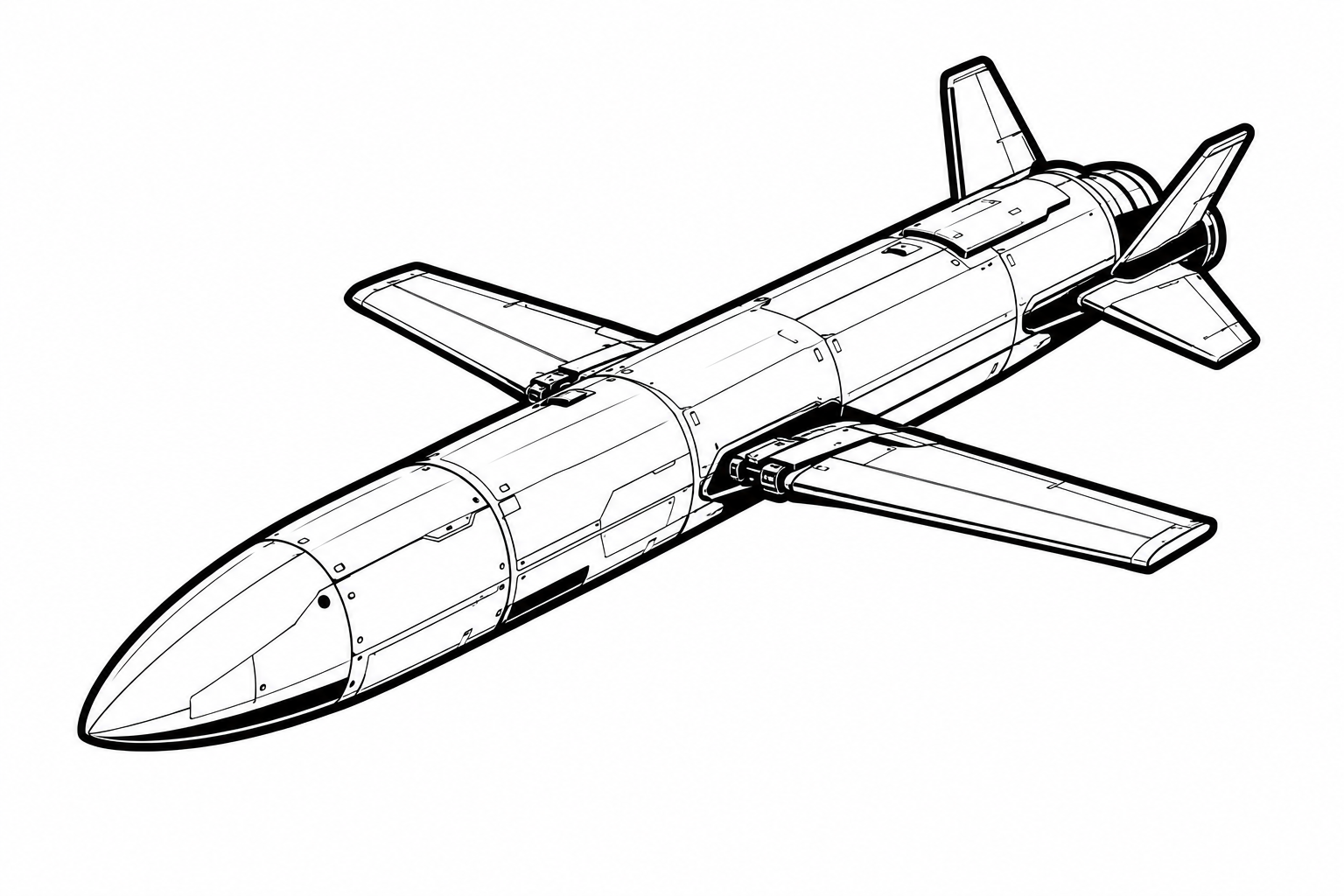
S8000 Banderol overview
The S8000 Banderol represents a significant qualitative step in Russian strike drone capability: the shift from propeller-driven loitering munitions to turbine-powered cruise missile hybrids that are dramatically harder to intercept. The Shahed-136's propeller drives it at approximately 185 km/h — well within the engagement envelope of shoulder-fired missiles, light cannons, and even some heavy machine guns. The Banderol's small turbojet engine pushes it to 500 km/h, matching the speed of many conventional fighter aircraft at low altitude and dramatically compressing the time available for an air defense system to detect, track, compute a firing solution, and engage. At 500 km/h, a target crosses from maximum radar range to impact in minutes rather than the tens of minutes that propeller-driven systems allow.
The Banderol's design philosophy reflects lessons absorbed from watching Ukraine systematically improve its Shahed interception rate as crews became more proficient. Russia's response was not simply to produce more Shaheds — though it did that too — but to develop complementary systems that exploit the weaknesses of each air defense method. Short-range systems like the Gepard and Vulcan cannot engage fast targets reliably. Missile systems consume expensive interceptors. By mixing slow Shahed waves with fast Banderol strikes, Russia forces Ukrainian air defense planners to manage multiple threat bands simultaneously and drains expensive missiles faster.
The S8000 Banderol completed testing and moved to serial production in July 2026, entering the inventory during an ongoing escalation in Russian infrastructure strike campaigns targeting Ukrainian energy generation, transmission, and storage. Its 1,000 km range from Russian territory covers all of Ukraine, and its precision guidance allows it to be directed against specific infrastructure components — transformer stations, generator halls, fuel storage tanks — rather than just general target areas. Western air defense planners tracking its operational debut expressed concern that existing short-range interceptor systems would need to be augmented or replaced to address the Banderol's speed regime.
Armament
50 kg unitary or cluster warhead; GPS/INS terminal guidance
Development and operational timeline
- S8000 Banderol development confirmed; Russian MOD funds turbine-powered cruise drone as complement to Shahed family
- First flight tests; turbojet propulsion and terrain-following navigation system validated
- Range validation test; Banderol completes 900 km autonomous navigation trial
- Precision guidance testing; CEP measured against fixed target at full mission range
- State acceptance testing begins; Russian MOD evaluation committee conducts formal review
- Banderol completes electronic countermeasures resistance testing; GPS anti-spoofing validated
- State acceptance testing concluded; MOD approves Banderol for series production
- Production contracts awarded to two Russian aerospace manufacturers
- Serial production confirmed; first production units delivered to Russian Aerospace Forces
- First suspected Banderol strikes against Ukrainian energy infrastructure reported; Ukrainian air defense identifies new high-speed target