Air system · Jet-Powered Aerial Target Drone
MQM-178 Firejet
Air Defense Training / Threat Simulation / Test and Evaluation
Also known as: Firejet / Kratos aerial target / MQM-178
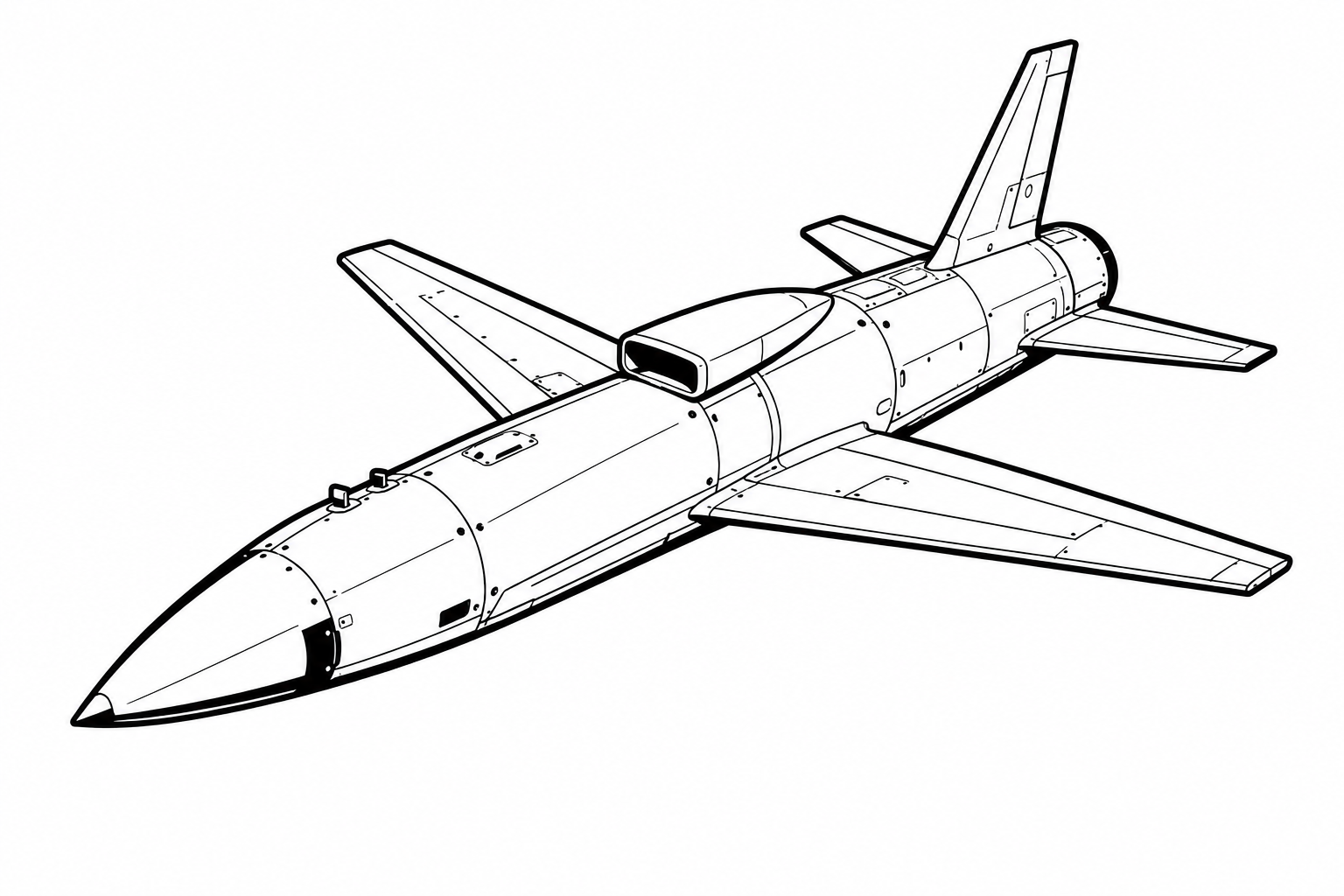
MQM-178 Firejet overview
The MQM-178 Firejet is Kratos Defense's answer to the growing requirement for realistic high-performance aerial targets that allow air defense systems and crews to train and certify against threats that actually match the performance envelope of modern adversary weapons. Older piston-powered and turbojet target drones from the 1970s-90s replicated the speed of legacy threats, but modern advanced cruise missiles, maneuvering reentry vehicles, and low-observable strike aircraft present target characteristics — radar cross-section, thermal signature, speed, altitude, maneuver profiles — that these systems cannot realistically replicate. The Firejet's turbofan engine allows it to match the speed and altitude of modern cruise missiles and fourth-generation fighter aircraft.
The Firejet's role is not to be shot down — though it routinely is — but to provide the realistic training environment in which an air defense crew or weapons system can practice the full engagement sequence against a target that behaves like the real threat. This means flying at realistic speeds and altitudes, presenting realistic radar cross-sections through augmentation systems that can be tuned to match specific threat signatures, and executing maneuvering profiles that stress the tracking algorithms of intercept systems rather than allowing them to engage against predictable ballistic trajectories. The Firejet can be fitted with radar cross-section augmenters, infrared signature augmenters, and electronic emission simulators to replicate almost any modern airborne threat.
The Firejet's importance to U.S. readiness grew through 2025-2026 as the DoD's primary air defense systems — Patriot, THAAD, SHORAD — faced increasing pressure to maintain certification against evolving threats including Russian and Chinese hypersonic glide vehicles and cruise missiles with low-observable characteristics. The limited availability of realistic high-performance targets had historically been a bottleneck in air defense training throughput, and the Firejet's relatively modest unit cost — far less than the systems it trains — made it practical to expand training program scale. Kratos received continued U.S. test and training program contracts through 2026.
Armament
None (target drone); carries augmentation systems to simulate specific threat signatures
Development and operational timeline
- Kratos develops MQM-178 Firejet for U.S. Army and Navy aerial target programs
- First production deliveries; Firejet enters Army aerial target drone program
- Patriot live-fire exercise uses Firejet as primary high-speed target; successful intercept validates system readiness
- Navy integration; Firejet used in ship-based air defense missile qualification tests
- Low-observable augmentation developed; Firejet fitted with RCS-reduction coating to simulate stealthy cruise missile target
- SHORAD qualification; Firejet supports IM-SHORAD and M-SHORAD system live-fire certification
- Kratos awarded multi-year Firejet production contract; 200+ units ordered for Army and Navy programs
- HIMARS EW integration test uses Firejet as live aerial target for electronic warfare exercise
- Hypersonic threat simulation package developed for Firejet; steep dive profile replicates HGV terminal phase
- International sales; Firejet delivered to allied nations for air defense readiness training
- Kratos receives expanded Firejet contract; increased production rate supports higher-tempo training program