Air system · Unmanned Rotary-Wing Naval Aircraft
MQ-8C Fire Scout
Maritime ISR / Targeting / Resupply Support
Also known as: Fire Scout / MQ-8C / Fire-X / Bell 407-based Fire Scout
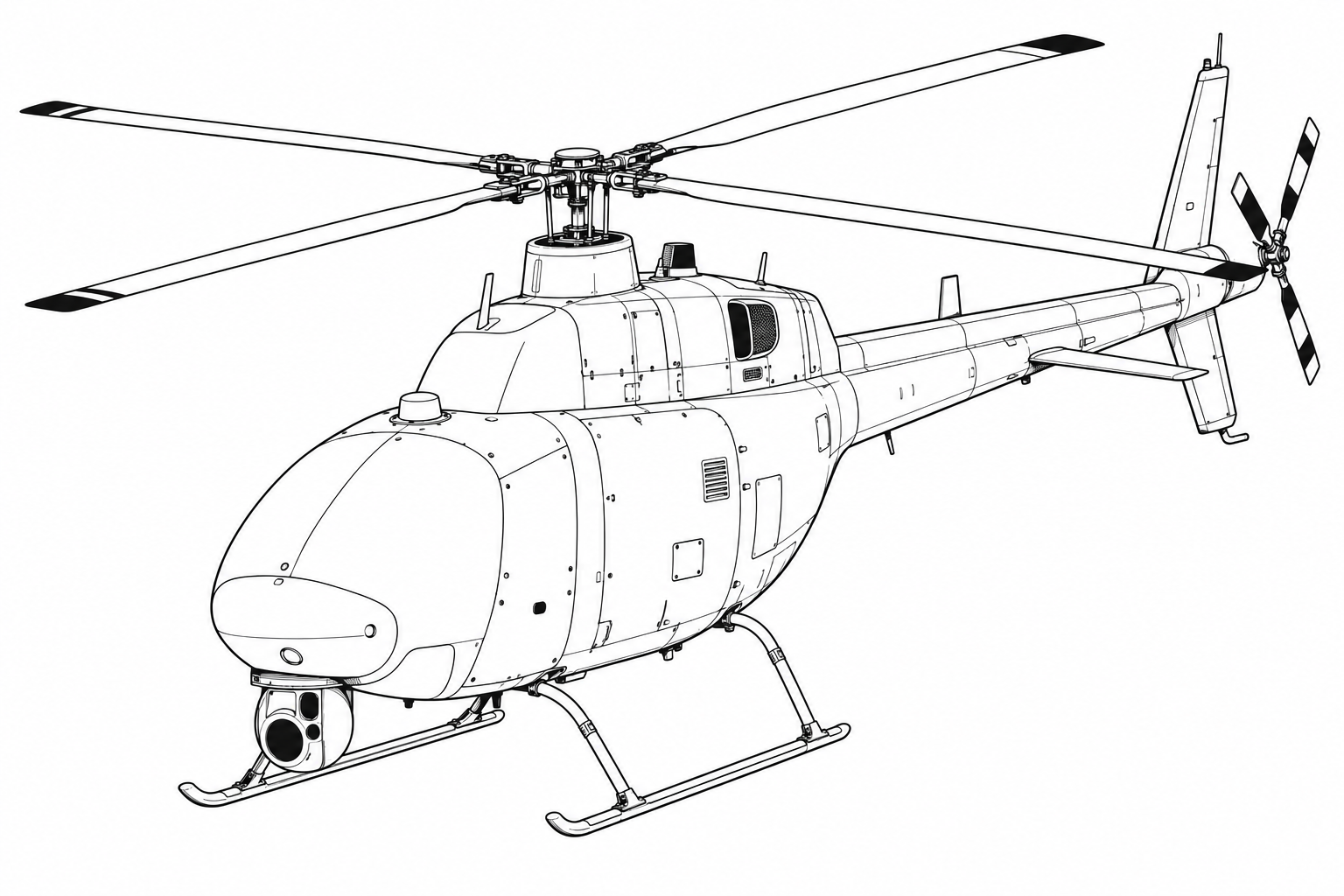
MQ-8C Fire Scout overview
MQ-8C Fire Scout is the U.S. Navy's unmanned vertical-takeoff aircraft for maritime ISR, targeting support, communications relay, and logistics assistance. It can launch and recover from a ship without a runway, allowing a surface combatant to add persistent airborne sensing while preserving crewed helicopters for missions that require people aboard. The aircraft is operated as part of a shipboard mission system rather than as an independent armed drone.
Northrop Grumman and Bell describe the MQ-8C as a militarized Bell 407-derived aircraft. Manufacturer-reported figures include up to 10 hours of endurance, 150 knots speed, 150 nautical miles range, 20,000-foot ceiling, 272-kg payload, and 1,430-kg MTOW. Payload, weather, ship motion, and mission equipment affect actual performance; a standardized weapon load is Not publicly disclosed.
The MQ-8C first flew in 2013 and reached U.S. Navy initial operational capability in 2019. Shipboard deployments and testing established its naval role, but the Navy's future unmanned aviation force structure and retirement timing continue to evolve. Through September 2026 it remains a documented U.S. naval system; no confirmed export operator is included here.
Armament
Mission payloads including surface-search and targeting sensors; weapon fit Not publicly disclosed
Development and operational timeline
- MQ-8C conducts its first flight as the larger Bell 407-based Fire Scout variant
- U.S. Navy begins formal flight-test and mission-system evaluation of MQ-8C
- MQ-8C reaches initial operational capability with the U.S. Navy
- MQ-8C conducts shipboard operational deployment and maritime mission work from a U.S. Navy combatant
- The U.S. Navy remains the documented operator; future retirement and force-structure timing are not publicly settled