Air system · Autonomous Cargo Resupply UAS
JTAARS
Logistics / Autonomous Resupply / CASEVAC Support
Also known as: Joint Tactical Autonomous Aerial Resupply System / Army autonomous cargo drone
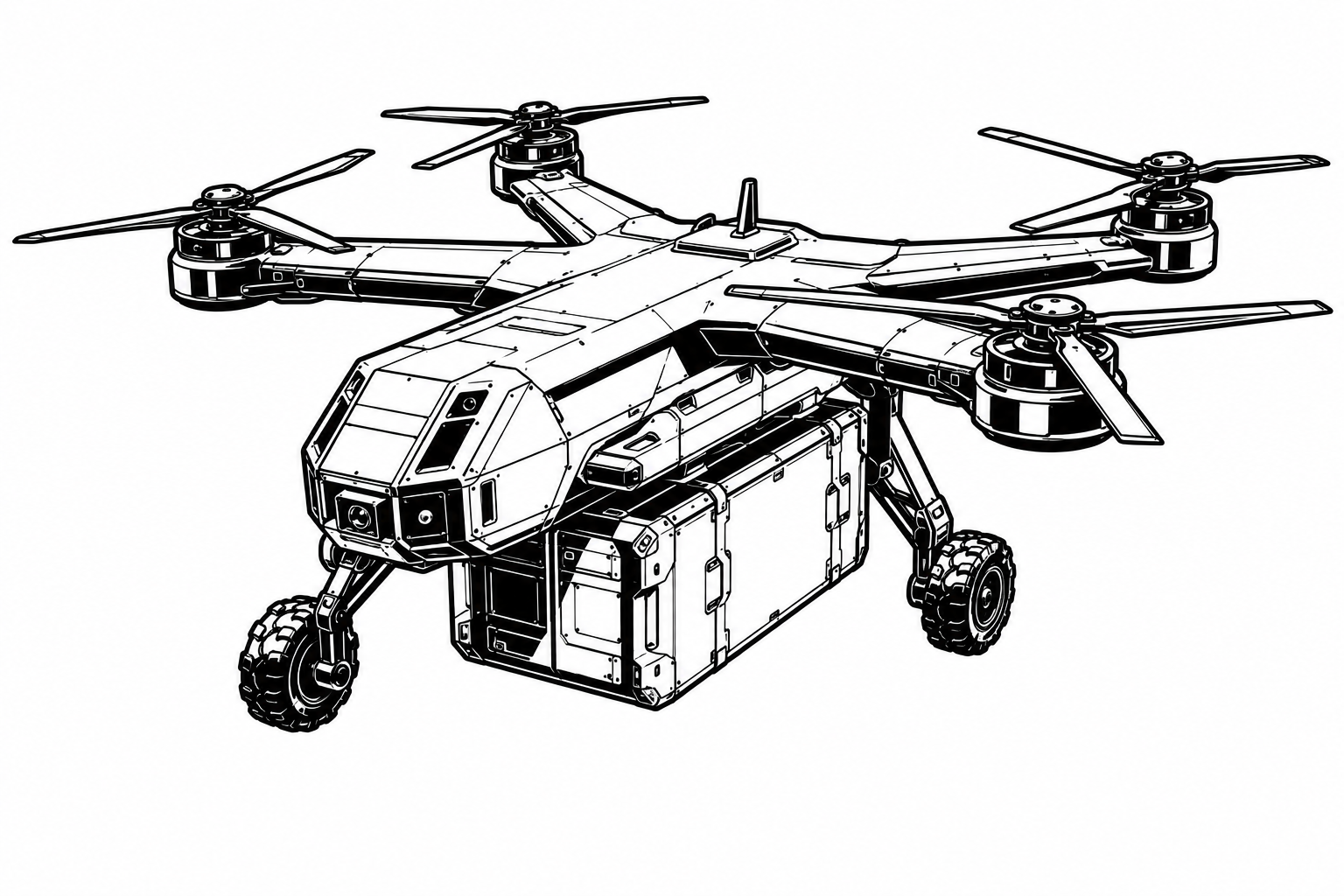
JTAARS overview
The Joint Tactical Autonomous Aerial Resupply System (JTAARS) addresses one of the most lethal logistics challenges of modern warfare: delivering ammunition, water, blood, and medical supplies to forward troops under fire, and extracting casualties back to safety, without risking the lives of pilots. In every modern conflict from Afghanistan to Ukraine, resupply helicopters have been among the most vulnerable aircraft in the inventory — their low-speed approach profiles, predictable flight paths, and need to descend into landing zones make them high-value targets for man-portable air defense systems. JTAARS is designed to make this dangerous mission unmanned.
Operating under an AI-driven flight management system, JTAARS can autonomously route from a logistics base to a forward position, select a landing zone, execute a precision approach, deliver its cargo, and return — all while continuously re-routing around detected threats and obstacles. It is large enough to carry a meaningful resupply load (approximately 450 kg), yet designed for autonomous operation from logistics points that do not require aviation infrastructure. The system integrates with Army command and control networks so ground units can request resupply through the same digital systems they use for fire support and medevac, with JTAARS automatically prioritizing and routing missions.
The U.S. Army awarded a production contract for JTAARS in May 2026, reflecting the service's assessment that autonomous resupply is a near-term operational requirement rather than a future aspiration. The contract followed multiple brigade-level exercises in which JTAARS prototypes demonstrated the ability to conduct resupply missions through contested airspace under AI routing while human operators supervised multiple simultaneous missions from a rear command post. The Army's accelerated timeline for JTAARS procurement reflected lessons from Ukraine, where both sides found that logistics was frequently the decisive constraint on sustained offensive operations.
Armament
None (logistics platform)
Development and operational timeline
- U.S. Army issues requirements for Joint Tactical Autonomous Aerial Resupply System; industry solicitation released
- Multiple contractors begin JTAARS prototype development; Joby Aviation and Shield AI among contenders
- First JTAARS prototype flights; autonomous loading, routing, and delivery profile demonstrated
- Army Logistics Modernization Program integrates JTAARS concept; resupply request interface standardized
- JTAARS prototype deployed in Joint Warfighter Assessment exercise; conducts 40 autonomous resupply sorties over two weeks
- Threat-avoidance routing demonstrated; JTAARS re-routes autonomously around simulated MANPADS threat zones
- CASEVAC capability tested; JTAARS adapted to carry litter patient in pressurized pod configuration
- Army down-selects JTAARS contractor; low-rate initial production contract awarded
- LRIP units evaluated by 1st Cavalry Division in Europe; realistic combat logistics exercise completed
- Army awards JTAARS full-rate production contract; system declared ready for operational fielding
- First JTAARS units fielded with forward-deployed Army units in Europe and Indo-Pacific