Air system · Group 3 FPV Strike Drone
Fury
Precision Strike / Low-Cost Attritable Attack
Also known as: Textron Fury FPV / Group 3 strike drone / Textron low-cost attritable
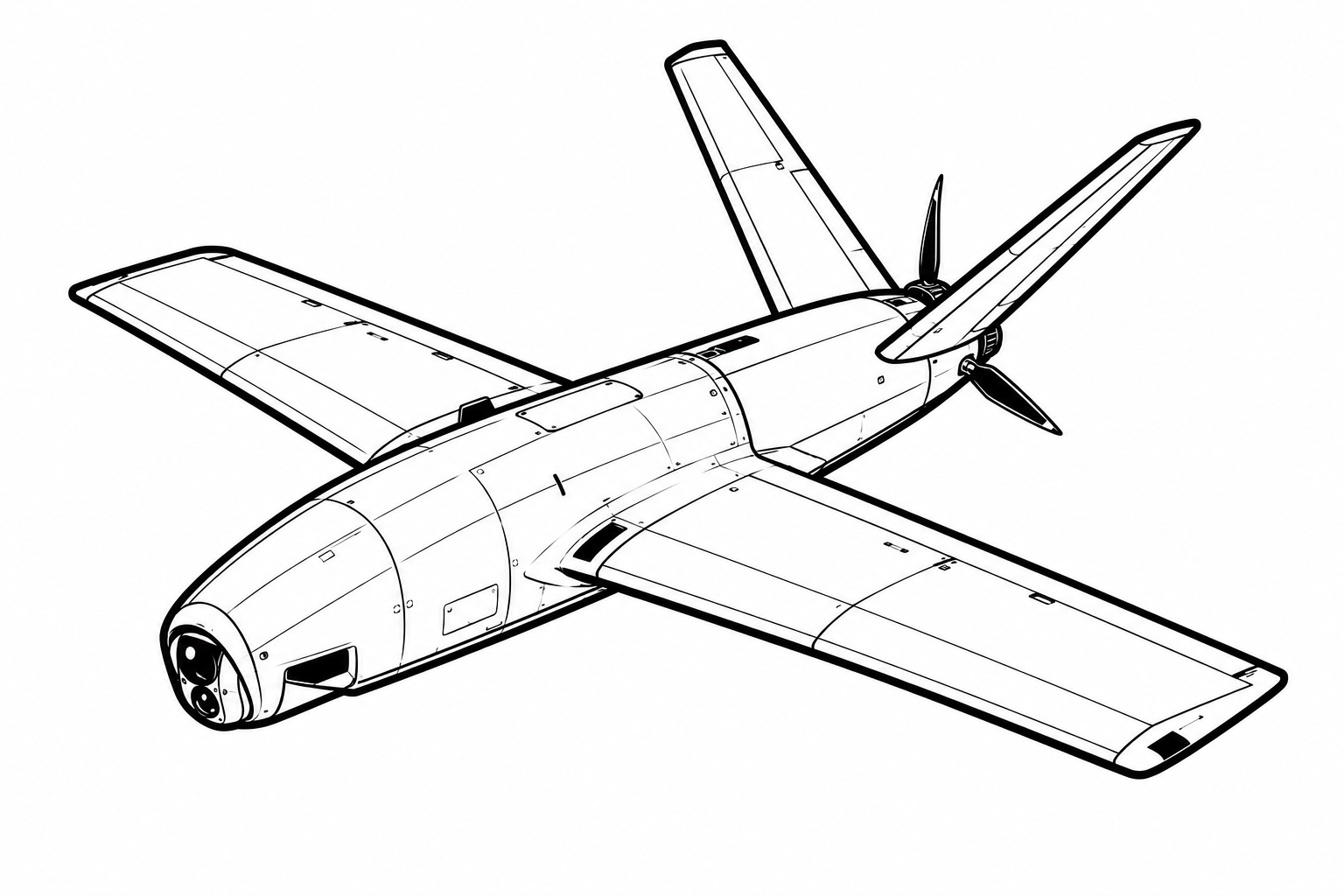
Fury overview
Textron Systems' Fury is a departure for a company best known for large, sophisticated, and expensive unmanned systems — it represents the defense prime contractor's response to the FPV strike drone revolution that transformed tactical warfare in Ukraine. Where Textron's traditional products like the Aerosonde and Shadow operate at the upper end of the small UAS performance and cost spectrum, the Fury is designed for the opposite end: low-cost, mass-producible, and expendable. The transition from artisanal to industrial production at this cost point requires a fundamentally different engineering philosophy — one optimized for manufacturability, logistics simplicity, and supply chain reliability over maximum technical performance.
The Fury's classification as a Group 3 system (up to 1,320 lbs MTOW, up to 18,000 ft altitude, up to 250 knots speed) is somewhat misleading in terms of what the platform actually looks like — it is a relatively small, quad or hexacopter FPV platform rather than a fixed-wing aircraft, but its capability profile occupies the Group 3 mission space in terms of what it can accomplish. The military-grade encrypted digital datalink and NDAA-compliant component sourcing are its primary competitive advantages over the commercial racing drone components that currently dominate the improvised FPV market, providing reliability and security that operators in sophisticated military units need.
Textron's entry into the FPV strike market gave the DoD procurement apparatus a familiar prime contractor through which to channel large-quantity FPV acquisitions — important because the OTA (Other Transaction Authority) and rapid acquisition pathways that defense startups typically use are not always suited to the scale of procurement that DoD ultimately needs for a stockpile of hundreds of thousands of expendable weapons. Textron's manufacturing infrastructure, established supplier relationships, and experience managing large defense production contracts provided assurance that the Fury could scale to the quantities that would be needed in a major conflict scenario. The 2026 low-cost attritable drone program coverage highlighted Fury as a key element of that industrial scale-up strategy.
Armament
Shaped-charge or fragmentation warhead; autonomous or FPV-guided single-use attack profile
Development and operational timeline
- Textron Systems begins Fury development in response to DoD FPV drone industrial base initiative
- Fury prototype completed; military-grade encrypted link and NDAA-compliant components validated
- Army evaluation; Fury demonstrated against infantry and vehicle targets at Dugway Proving Ground
- USMC evaluation; Fury demonstrated in combined-arms exercise at Twentynine Palms
- DoD competitive evaluation of FPV candidates; Fury advances alongside Neros Archer and Firestorm
- Initial production contract awarded; Textron ramps Fury manufacturing
- EW resilience testing; Fury digital link maintains integrity through contested spectrum exercise
- Full-rate production contract; Textron begins large-quantity delivery for Army and Marine Corps units
- Fury featured in low-cost attritable drone procurement briefing to Congress; scale production on track