Air system · Consumer / Prosumer Quadcopter
DJI Mavic 4 Pro
Aerial Photography / Reconnaissance / Commercial Mapping
Also known as: Mavic 4 Pro / DJI flagship 2025 / Hasselblad quadcopter
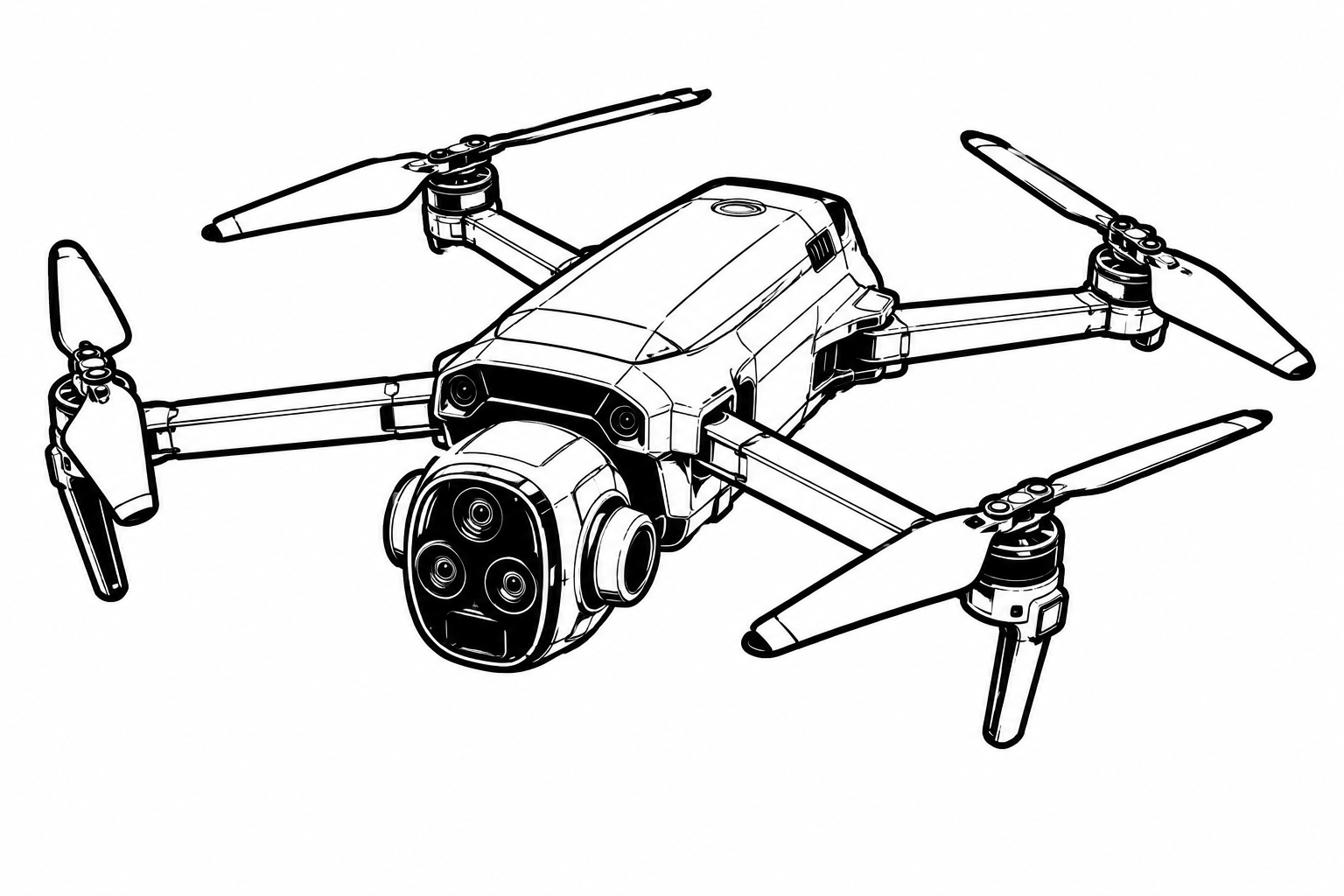
DJI Mavic 4 Pro overview
The DJI Mavic 4 Pro is the pinnacle of DJI's consumer folding drone line, equipped with a Hasselblad-tuned triple-camera system that delivers professional aerial imaging previously requiring much larger and more expensive platforms. Its 100MP main sensor with 4/3-inch CMOS, paired with a 1/1.3-inch telephoto and wide-angle secondary cameras, allows operators to capture broadcast-quality video and survey-grade still imagery from a platform small enough to fit in a jacket pocket. Battery swapping technology allows near-continuous operation without returning to base, and the controller's long-range OcuSync transmission system provides a stable HD video link at distances that dwarf those of competing systems.
Like all DJI products shipped since 2022, the Mavic 4 Pro includes geofencing software that restricts flight in designated no-fly zones — airports, government buildings, conflict zones — and Remote ID broadcasting that transmits the aircraft's position and operator location to authorities in real time. In consumer markets these features are entirely uncontroversial. In conflict zones they present an obvious problem, and Ukrainian and Russian drone operators alike have developed methods to disable or circumvent them: custom firmware flashes that strip the DJI firmware entirely, hardware modifications to the Remote ID module, and flight controllers that replace DJI's proprietary software with open-source alternatives like Betaflight or ArduPilot that have no geofencing restrictions.
The Mavic 4 Pro's combination of telephoto range and flight time makes it particularly effective as an artillery observation platform — the role in which commercial DJI drones have most dramatically changed battlefield practice. Artillery observers using Mavic 4 Pros can remain 5-8 km behind the front line, operate the drone from a concealed position, observe fire corrections through its telephoto camera in real time, and report adjustments via radio without ever exposing themselves to direct fire. This capability, previously requiring specially-trained military reconnaissance teams with dedicated equipment, is now accessible to any artillery battery that can purchase a consumer drone from an online retailer.
Armament
None (commercial); frequently battlefield-modified with drop mechanisms for grenades or ammunition
Development and operational timeline
- DJI announces Mavic 4 Pro; triple-camera Hasselblad system and extended battery life unveiled
- Global consumer launch; immediate high purchase volume across professional photography and cinematography markets
- U.S. government reviews DJI Mavic 4 Pro under national security assessment framework; sale to federal agencies restricted
- Mavic 4 Pro confirmed in use by Ukrainian artillery units for fire observation; modified firmware removes geofencing
- Russian forces also documented using Mavic 4 Pro; both sides exploit identical hardware for opposite purposes
- DJI releases geofencing update attempting to restrict use near Russo-Ukrainian conflict zone; circumvention methods published within weeks
- Mavic 4 Pro becomes top-searched drone worldwide; consumer demand drives DJI to accelerate production
- Multiple NATO militaries issue guidance on Mavic 4 Pro use; NDAA restrictions complicate direct military procurement
- Mavic 4 Pro remains top-selling prosumer drone globally; battlefield adaptation documentation continues to circulate