Naval ·
Voltaic Marine Enhances Robotic Ship with Advanced Weaponry
Voltaic Marine has successfully tested its AEU39 uncrewed surface vessel equipped with a remote weapon turret, showcasing advancements in naval unmanned systems.
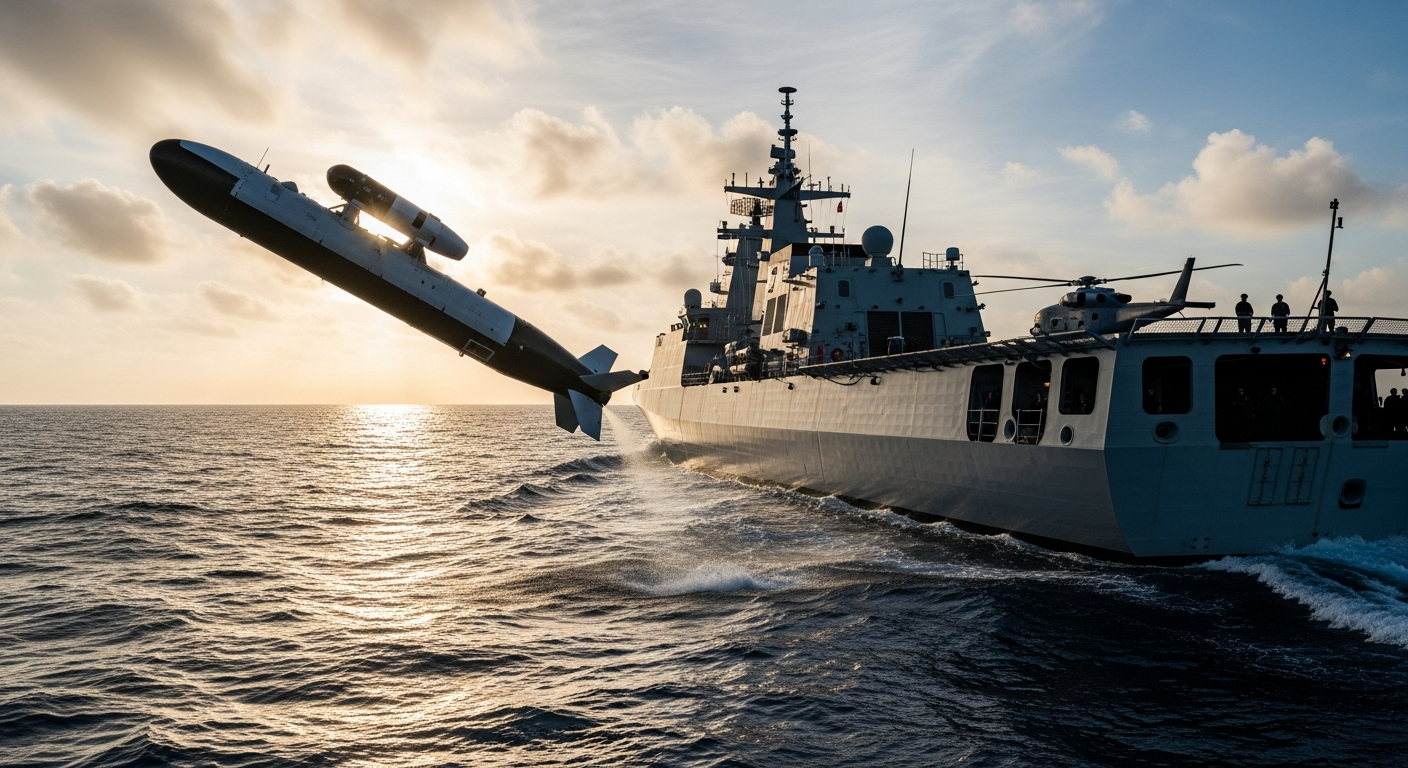
In a significant leap for naval unmanned systems, Voltaic Marine has completed successful live trials of its AEU39 uncrewed surface vessel (USV) integrated with a Moog Space and Defense RIwP remote weapon turret. This development not only showcases the versatility of robotic ships but also underscores the increasing role of automation in maritime security operations.
The AEU39, which is powered by a 300 kilowatt-hour battery bank, demonstrated its capability to operate autonomously while effectively coordinating with the turret during trials. This integration allows the vessel to engage potential threats without the need for onboard personnel, which could be critical for operations in high-risk environments where human safety is a concern.
As naval threats evolve, the need for advanced unmanned systems that can perform a variety of roles—from surveillance to direct engagement—has become paramount. Voltaic Marine's approach to equipping the AEU39 with a remote weapon system represents a strategic response to these challenges, allowing for enhanced operational flexibility and rapid response capabilities in contested waters. This could also pave the way for more extensive use of USVs in future naval operations.
The integration of weaponry onto USVs reflects a broader trend within military forces to utilize unmanned platforms for combat roles. Countries around the globe are exploring the potential of uncrewed systems to supplement traditional naval assets, providing cost-effective and low-risk alternatives for various missions. As the technology continues to advance, we may see more naval forces adopting similar platforms to modernize their fleets.
In summary, Voltaic Marine's successful trials with the AEU39 and its weapon turret illustrate a promising future for unmanned surface vessels in military applications. This advancement not only enhances the capabilities of naval forces but also pushes the boundaries of what unmanned systems can achieve in maritime warfare, potentially reshaping naval engagements in the years to come.