Land ·
US Marine Corps Expands Unmanned Missile-Launching Fleet to Counter Naval Threats
The U.S. Marine Corps has announced a significant expansion of its unmanned missile-launching capabilities, acquiring additional ROGUE-Fires carriers to enhance its anti-ship operations in the Pacific.
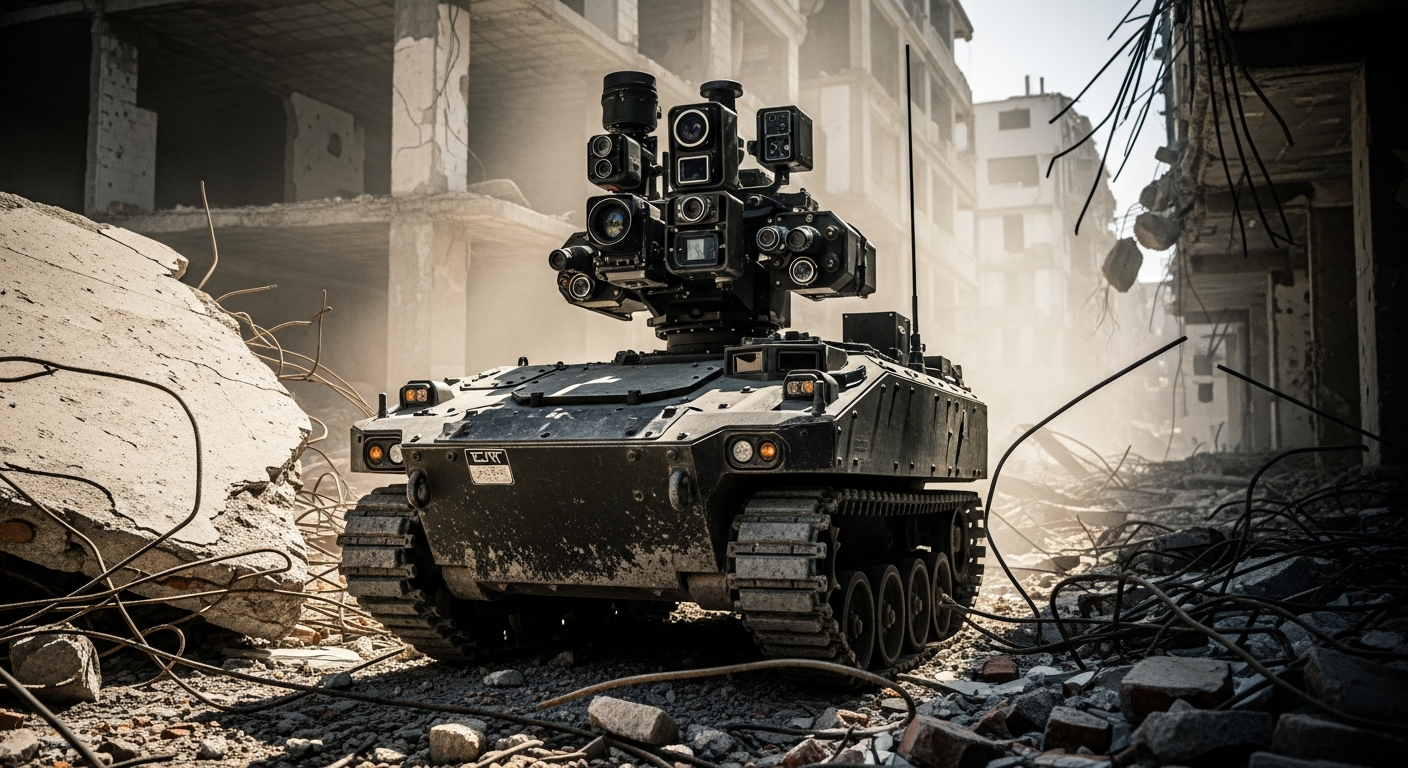
In a strategic move to bolster its maritime capabilities, the U.S. Marine Corps has awarded a $70.6 million contract to Oshkosh Defense for more ROGUE-Fires carriers. These unmanned ground vehicles are designed to launch anti-ship missiles from remote locations, allowing for stealthy and effective maritime strike capabilities against potential adversaries, particularly in the Pacific region. The ROGUE-Fires system represents a shift toward unmanned, mobile platforms that can be rapidly deployed on islands and coastal areas, enhancing the Marines' operational flexibility.
The ROGUE-Fires carriers are part of a broader strategy to develop asymmetric warfare capabilities that can challenge larger fleets, such as that of China. By utilizing unmanned systems, the Marine Corps can decrease risks to personnel while increasing the lethality and reach of its forces. The carriers can be quickly repositioned, making them difficult targets for enemy forces and providing the U.S. military with a significant advantage in contested environments.
This expansion is also indicative of a larger trend within the U.S. military to adopt unmanned systems across various domains, including land, air, and sea. The integration of unmanned systems allows for enhanced reconnaissance and strike capabilities, enabling U.S. forces to respond more effectively to emerging threats. The ROGUE-Fires program is particularly noteworthy as it demonstrates a commitment to leveraging technology in ways that traditional platforms cannot match.
As the geopolitical landscape continues to evolve, the Marine Corps’ investment in unmanned systems like the ROGUE-Fires underscores the importance of maintaining a technological edge over adversaries. Future operations will likely see increased reliance on these systems, not just for missile strikes, but also for intelligence, surveillance, and reconnaissance missions. The transition toward unmanned operations is crucial for adapting to modern warfare challenges and ensuring mission success in a rapidly changing environment.