Land ·
Uncrewed Truck with Anti-Drone Laser Showcased at AUSA 2026
The Association of the U.S. Army (AUSA) 2026 featured a groundbreaking uncrewed truck equipped with a powerful anti-drone laser system, highlighting the military's ongoing efforts to address the growing threat of drone warfare.
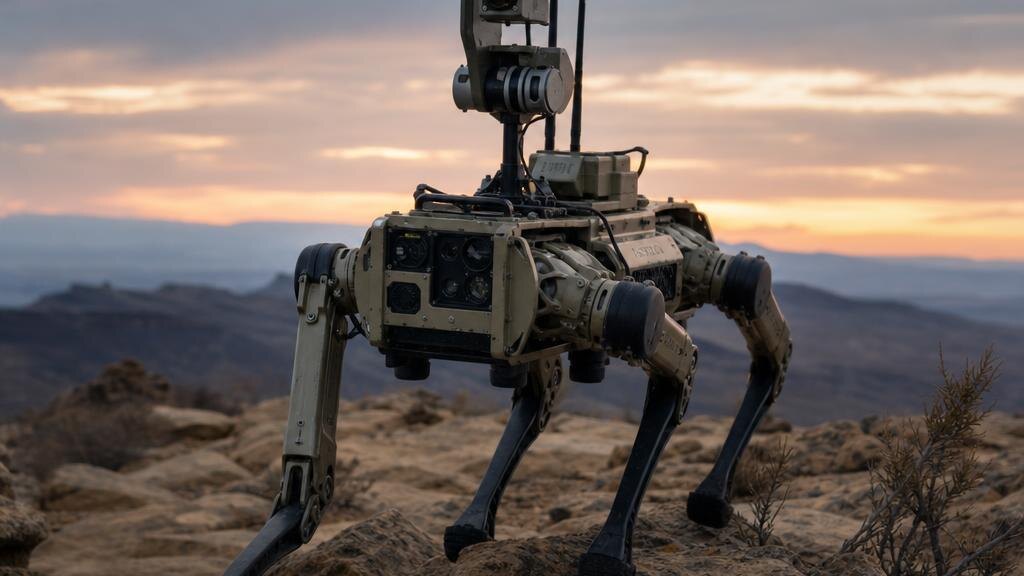
The recent unveiling of an uncrewed hybrid truck equipped with a 30-kilowatt laser system at the Association of the U.S. Army (AUSA) 2026 underscores a significant advancement in ground-based counter-drone technology. Developed by California's Harbinger, the vehicle, named Praesidia, is designed to provide mobile and flexible defense against the increasing number of unmanned aerial vehicles (UAVs) that pose threats on the modern battlefield. This innovative approach represents a strategic pivot toward integrating advanced technologies into ground operations, aimed at enhancing the U.S. military's defensive capabilities against hostile drones.
The Praesidia truck is showcased powering an AeroVironment counter-drone laser system, which has been engineered to engage and neutralize drones at various ranges. The integration of such high-energy laser systems into uncrewed vehicles signifies a trend toward automating air defense operations, allowing for rapid responses to drone threats without risking human lives. The use of lasers for counter-drone measures is particularly appealing due to their precision, low cost per shot, and the ability to engage multiple targets in quick succession. This capability is crucial in a battlefield where drones can swarm and overwhelm traditional defenses.
As drone warfare evolves, so too do the tactics and technologies employed to counteract these threats. The proliferation of drones among both state and non-state actors necessitates a versatile and robust defense strategy. The Praesidia vehicle is intended to be deployed in various operational environments, providing a mobile solution for ground forces facing drone incursions. By leveraging uncrewed systems, military planners can enhance situational awareness and responsiveness, crucial factors in modern combat scenarios. This adaptability is vital as military engagements increasingly occur in urban settings, where traditional air defense systems may be less effective.
The strategic significance of deploying uncrewed vehicles like Praesidia lies in their ability to operate in contested environments where traditional manned vehicles might be at risk. The U.S. Army's increasing focus on unmanned systems aligns with a broader trend in military modernization, aimed at improving operational efficiency while reducing the risk to personnel. As adversaries continue to develop and deploy increasingly sophisticated UAVs, the need for agile and effective countermeasures becomes paramount. The ability to deploy a laser-equipped uncrewed vehicle allows for a rethinking of how ground forces can protect themselves from aerial threats, potentially transforming defensive strategies.
Despite the promising capabilities of laser systems, there are inherent challenges and limitations associated with their deployment. Factors such as weather conditions, atmospheric disturbances, and the need for precise targeting can affect the effectiveness of laser systems in the field. For instance, rain, fog, or dust can scatter the laser beam, diminishing its effectiveness. Moreover, the logistics of maintaining and operating such advanced technologies in a combat environment present additional hurdles that military planners must address. This includes ensuring that power supplies are reliable and that the systems can be repaired or replaced in the field without extensive downtime.
The Praesidia vehicle also raises questions regarding the future of unmanned ground vehicles (UGVs) in military operations. As the Army continues to invest in robotics and automation, the role of UGVs in support and combat operations will likely expand. However, the integration of these systems into existing military frameworks will require careful consideration of operational protocols, command structures, and training requirements. The transition to a more automated battlefield will necessitate new tactics and strategies, as well as a reevaluation of how human operators interact with these systems.
Additionally, the development and deployment of counter-drone technologies may provoke an arms race in UAV capabilities, as adversaries seek to counteract these defensive measures with enhanced drone technologies. This dynamic could lead to a continual cycle of innovation and counter-innovation, complicating the strategic landscape for military planners. As drones become more sophisticated, incorporating features such as stealth technology or advanced maneuverability, the effectiveness of counter-drone systems like the one mounted on Praesidia will need to be continually assessed and improved.
Furthermore, the implications of deploying such technologies extend beyond immediate battlefield applications. The use of uncrewed vehicles and laser systems may influence geopolitical dynamics, as nations observe and respond to advancements in military technology. Countries may feel compelled to accelerate their own research and development in counter-drone technologies or seek to acquire similar capabilities, potentially leading to shifts in military alliances and defense postures.
In conclusion, the introduction of the Praesidia uncrewed truck at AUSA 2026 illustrates the U.S. Army's commitment to advancing unmanned systems and counter-drone capabilities. As military engagements increasingly involve UAVs, the ability to deploy versatile and effective countermeasures will play a critical role in ensuring operational success. The ongoing development of such technologies will shape the future of ground combat and air defense, raising important questions about the evolving nature of warfare. The integration of advanced technologies like those showcased at AUSA will not only enhance the U.S. military's capabilities but also redefine the parameters of modern conflict.