Land ·
Ukrainian Medics Share Ground Robot Rescue Lessons with Sweden
Ukrainian frontline medics are imparting valuable lessons on the use of ground robots for medical evacuations, highlighting the evolving role of unmanned systems in combat scenarios.
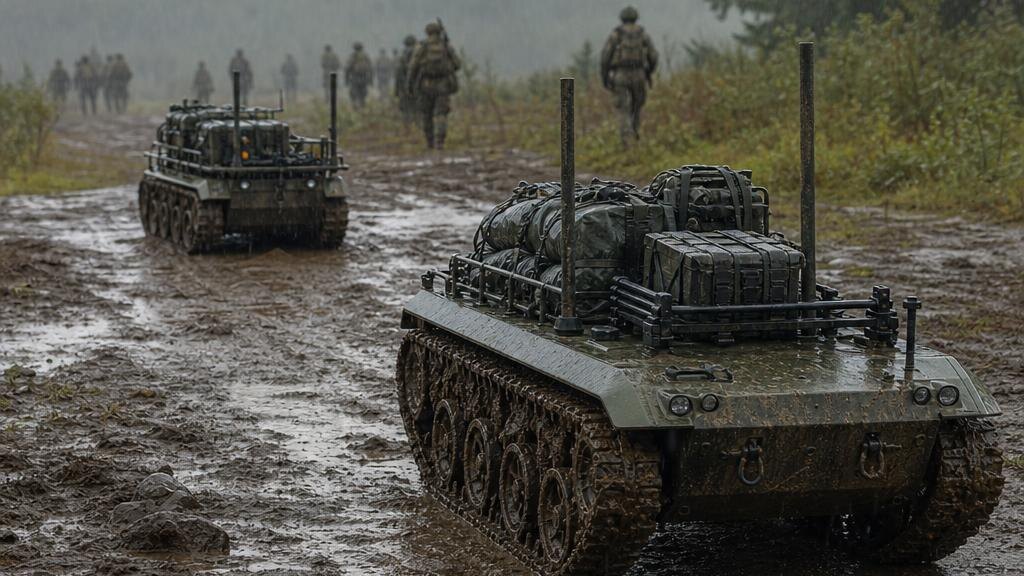
In a recent exchange of knowledge, combat medics from Ukraine’s 1st Separate Medical Battalion traveled to Sweden to share their experiences in evacuating wounded soldiers under the threat of drone attacks. This collaboration underscores the growing importance of unmanned ground vehicles (UGVs) in modern warfare, particularly in operational environments where traditional evacuation methods may be compromised by aerial threats. The ongoing conflict in Ukraine has provided a unique testing ground for these technologies, as the necessity for rapid and safe medical evacuations has become increasingly critical in the face of evolving battlefield dynamics.
The Ukrainian medics showcased the use of a specialized ground robot designed to assist in medical evacuations. This robot, developed by a Ukrainian company, can navigate hazardous environments where human medics may face significant risks from enemy fire or drone surveillance. The deployment of such technology represents a shift in battlefield tactics, where unmanned systems augment human capabilities and enhance operational safety. By utilizing UGVs, medics can perform life-saving operations with reduced exposure to danger, allowing for more efficient and effective responses to casualties on the front lines.
The lessons learned by these medics are particularly relevant given the ongoing conflict in Ukraine, where the integration of drones and robotic systems has become a focal point of military strategy. The use of drones for reconnaissance and direct engagement has increased the complexity of battlefield dynamics, necessitating new approaches to casualty management. By employing UGVs, Ukrainian forces have been able to mitigate risks associated with evacuating injured personnel from the front lines, thereby improving survival rates and operational efficiency. This innovative approach not only saves lives but also allows for a more agile response in high-stakes situations, where every second counts.
Sweden’s Life Guards regiment, engaged in this knowledge exchange, is also exploring the potential of UGVs in their operations. As NATO member states reassess their defense strategies in light of the Ukrainian conflict, the sharing of these experiences could catalyze wider adoption of robotic systems across allied forces. The Swedish military is particularly interested in how these technologies can enhance their capabilities in urban warfare and peacekeeping missions, where traditional evacuation methods may be less effective. The integration of UGVs could potentially streamline operations in complex environments, where the risks to personnel are heightened.
The collaboration highlights not only the operational benefits of UGVs but also the strategic significance of international military partnerships. By learning from Ukraine's battlefield innovations, Sweden and other NATO allies can better prepare for future conflicts where unmanned systems play a central role. This cooperative approach could lead to the development of standardized protocols for using UGVs in medical evacuations, ultimately fostering greater interoperability among allied forces. Such interoperability is crucial in a rapidly evolving security landscape, where joint operations may become increasingly common.
Despite the promising capabilities of ground robots, several challenges remain. The integration of UGVs into military operations requires substantial investment in training, maintenance, and infrastructure. Military personnel must be adequately trained not only to operate these systems but also to maintain them under combat conditions. Additionally, there is the question of how these systems will be managed in real-time combat scenarios, especially when faced with evolving threats from adversaries who may also employ similar technologies. Ensuring that UGVs can operate effectively in dynamic environments is critical to their success on the battlefield.
Moreover, the ethical implications of relying on unmanned systems for medical evacuations must be considered. The use of robots in life-and-death situations raises questions about accountability and the potential for malfunction during critical missions. As military organizations increasingly adopt UGVs, developing robust frameworks to address these concerns will be essential to maintaining trust among soldiers and the public. The balance between technological advancement and ethical responsibility will be a key consideration as militaries navigate the complexities of modern warfare.
In conclusion, the knowledge exchange between Ukrainian medics and Swedish military personnel exemplifies the transformative impact of unmanned ground vehicles in modern warfare. As militaries around the world adapt to the lessons learned from the ongoing conflict in Ukraine, the integration of UGVs into tactical operations is likely to expand, reshaping the landscape of medical evacuations and battlefield strategies. The collaboration not only enhances the capabilities of participating forces but also contributes to a broader understanding of how unmanned systems can be effectively employed in combat environments.
As the situation evolves, further research and development will be necessary to optimize the design and functionality of UGVs, ensuring they meet the demanding requirements of contemporary and future warfare. The continued evolution of UGV technology will likely play a pivotal role in shaping not only medical evacuation strategies but also the overall approach to military operations in an increasingly complex and technologically advanced battlefield.