Air ·
Ukrainian Forces Demonstrate Precision Strikes with New Heavy Drone
A newly unveiled heavy quadcopter drone by Ukrainian engineers provides advanced capabilities for precision strikes and logistics resupply, significantly enhancing Ukraine's operational flexibility.
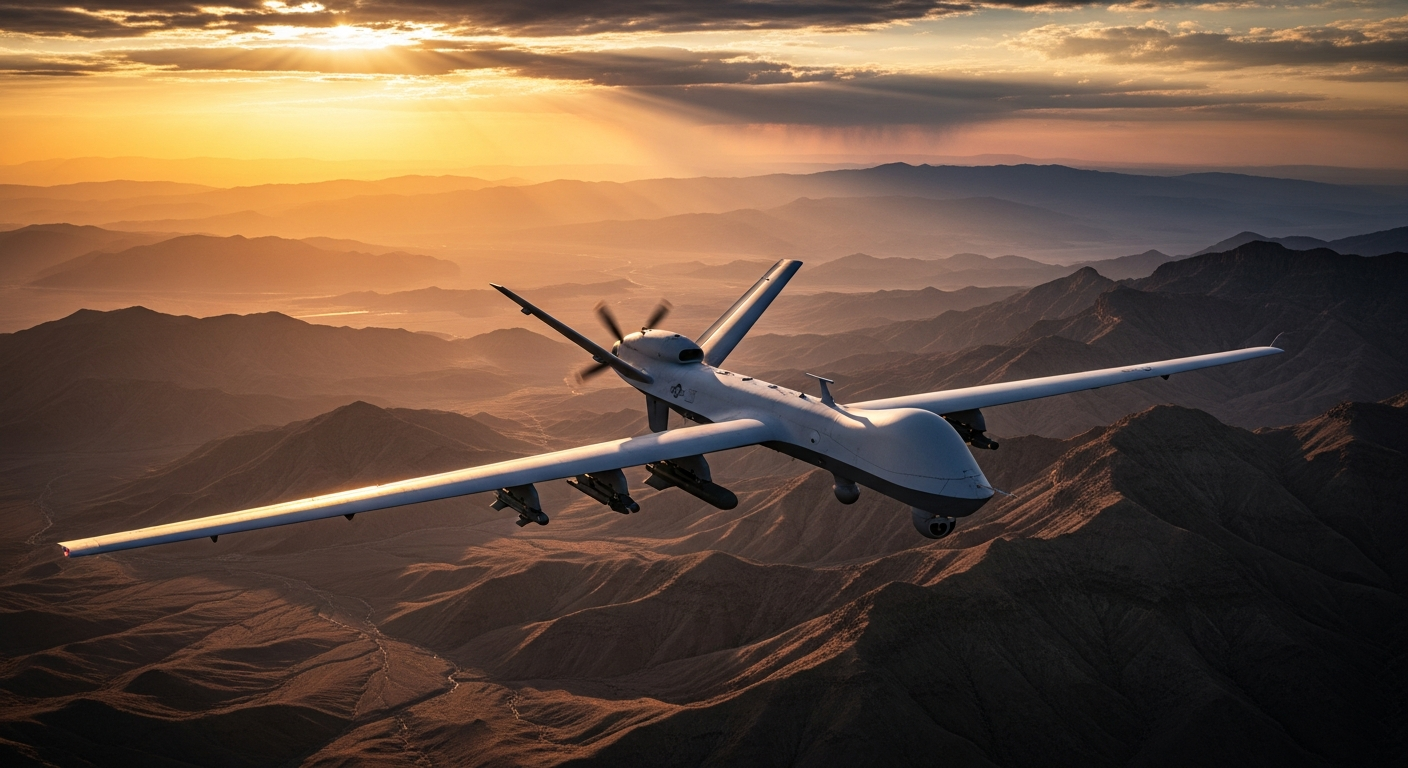
In a significant advancement for its defense capabilities, Ukraine has introduced a heavy quadcopter drone designed for satellite-controlled operations. This drone is intended for precision strikes, logistics resupply, and minelaying, enabling Ukrainian forces to operate beyond the constraints of traditional radio-controlled systems. With the ongoing conflict with Russia, this technological leap could provide a critical edge in utilizing unmanned systems more effectively across the battlefield.
The heavy drone's ability to be controlled via satellite means that it can operate from virtually anywhere, extending its operational range significantly. Conventional drones often face limitations in range and control, especially in contested environments. This new design aims to address those challenges, allowing operators to conduct missions from safer distances and enhancing overall mission success rates.
Ukrainian defense technology firms have been rapidly innovating in response to the battlefield needs, and this drone exemplifies that adaptive approach. As the conflict continues, the integration of advanced unmanned systems reflects a broader trend where traditional warfare tactics evolve to incorporate drone technology, making them central to modern combat strategies.
The implications of such advancements are profound, not just for Ukraine but for global military strategies. The use of drones for logistics and precision strikes may force adversaries to reconsider their own operational tactics and defenses. As other nations observe Ukraine's approach, there may be a shift in how unmanned aerial vehicles (UAVs) are utilized in conflicts worldwide, potentially leading to a new paradigm in warfare.
Overall, this heavy drone not only enhances Ukraine's military capabilities but also signals a continuing trend where unmanned systems play a pivotal role in contemporary military operations. The ongoing development and deployment of such technologies will likely shape the future of warfare, emphasizing the need for rapid adaptation and innovation in defense strategies.