Naval ·
U.S. Navy's GARC Completes Successful Live-Fire Training Exercise
The U.S. Navy's Global Autonomous Reconnaissance Craft (GARC) has successfully completed its first live-fire training exercise, showcasing advancements in unmanned maritime technology.
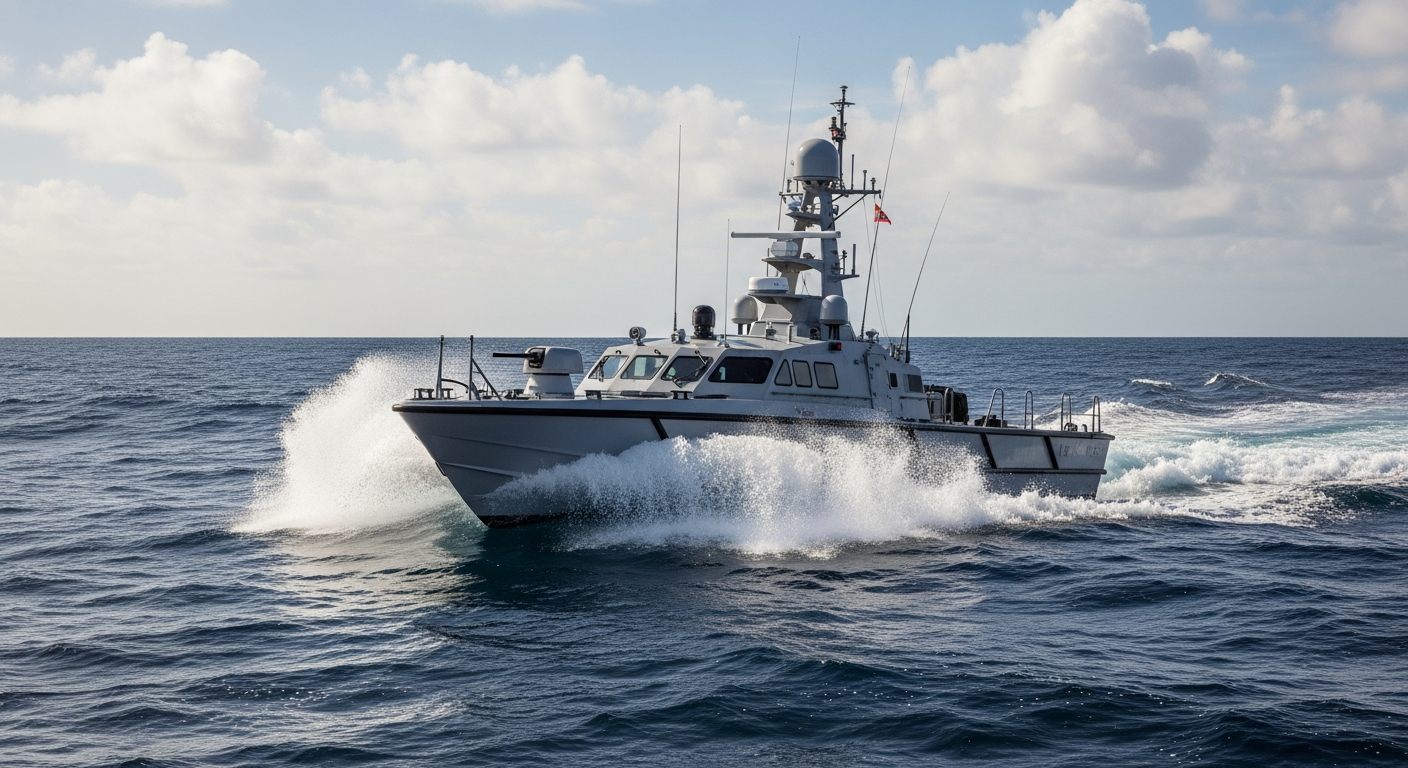
In a significant milestone for the U.S. Navy, the Global Autonomous Reconnaissance Craft (GARC) has participated in its inaugural live-fire training exercise. This event marks a critical step in validating the capabilities of this uncrewed surface vessel as part of the Navy's expanding unmanned systems portfolio. The training involved real-time tactical scenarios, enabling operators to assess the GARC's performance in live operational conditions.
The GARC is designed for a range of missions, including intelligence gathering, surveillance, and reconnaissance, offering a versatile platform for naval operations. Its ability to operate autonomously or under remote control allows for enhanced operational flexibility, making it an attractive asset in both peacetime and combat scenarios. The successful execution of live-fire exercises demonstrates the GARC's readiness to support complex missions and provides valuable data for future enhancements.
Live-fire training is essential for unmanned systems as it helps crews understand how these technologies can be integrated into existing naval tactics and strategies. Observations from this exercise will inform future development and operational guidelines for the GARC, ensuring that it meets the Navy's evolving requirements. The feedback loop created by these exercises is crucial for refining the operational capabilities of autonomous systems.
As the U.S. Navy continues to invest in unmanned maritime platforms, the GARC represents a significant advancement in naval technology. Its successful performance in live-fire scenarios underscores the potential for USVs to operate alongside traditional manned vessels, enhancing the Navy's overall combat effectiveness. The integration of such technologies will likely shape the future of naval warfare, where unmanned systems play an increasingly vital role.
The Navy's commitment to testing and deploying advanced unmanned systems like the GARC reflects a broader trend within military organizations to leverage automation and artificial intelligence. As the operational environment becomes more complex, the GARC and similar platforms will be essential in maintaining maritime security and ensuring mission success in contested waters.