Naval ·
U.S. Marine Corps Accepts First Ancillary Surface Craft Prototype
The Marine Corps has received its initial prototype of the Ancillary Surface Craft, advancing its naval unmanned systems capabilities.
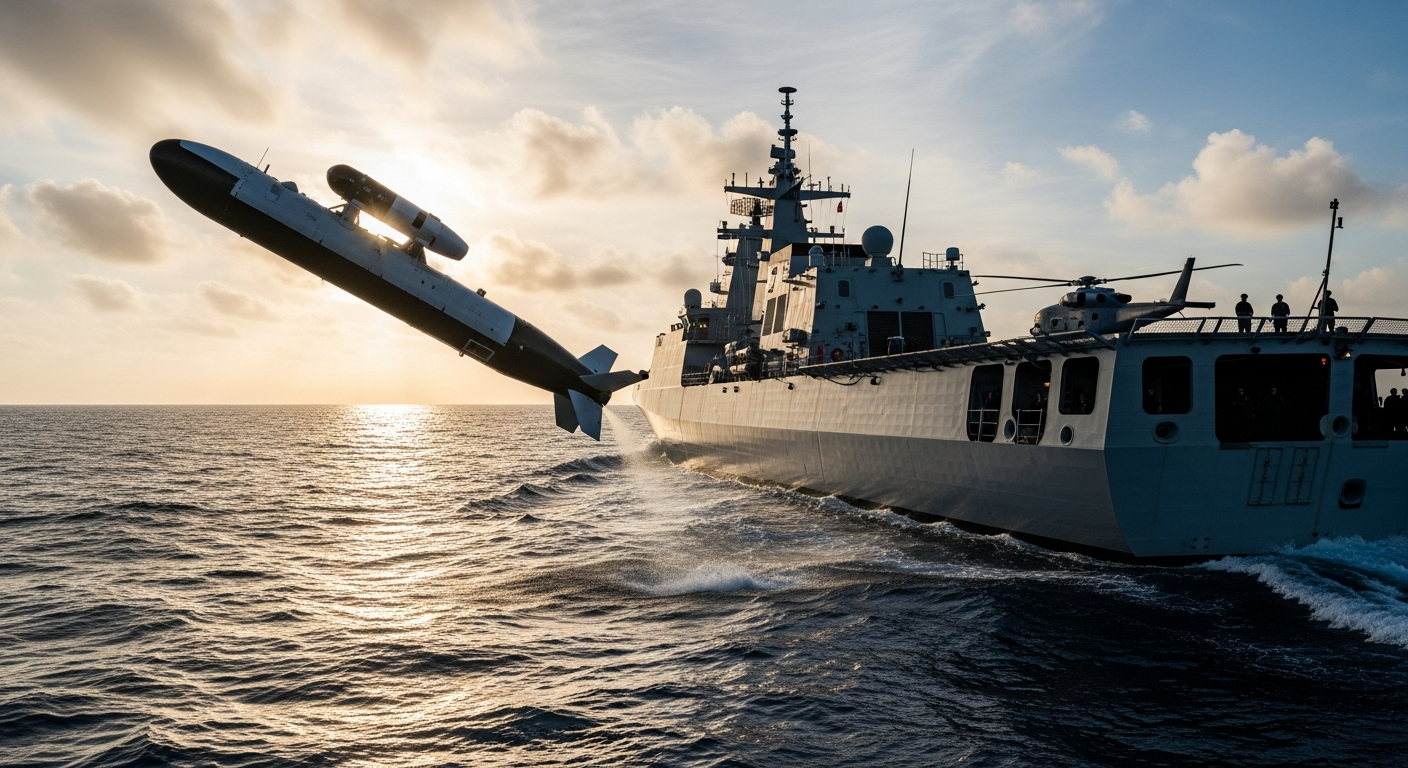
The U.S. Marine Corps Warfighting Laboratory has recently completed the technical acceptance of the first prototype of the Ancillary Surface Craft (ASC). This innovative vessel, measuring approximately 150 feet, is designed to enhance the Marine Corps' operational capabilities in various maritime environments. The ASC is envisioned as a roll-on/roll-off landing craft, which allows for versatile operations and improved logistics support in amphibious missions.
The deployment of the ASC prototype marks a significant milestone in the Marine Corps' efforts to integrate unmanned systems into their operational framework. By providing a platform that can transport equipment and personnel while minimizing risk to crewed vessels, the ASC is poised to revolutionize how the Marine Corps approaches amphibious assaults and resupply missions. This capability is especially relevant given the increasing complexity of modern naval operations.
As the Marine Corps continues to embrace unmanned technologies, the ASC represents an important step towards enhancing force protection and operational efficiency. The craft's design is focused on adaptability, allowing it to operate in various roles, including logistics support, reconnaissance, and even potential combat scenarios. This flexibility will enable the Marine Corps to respond rapidly to evolving threats in maritime environments.
Testing of the ASC prototype at Quantico, Virginia, will provide valuable insights into performance and operational effectiveness. The data gathered during this phase will inform future iterations of the craft, ensuring that it meets the stringent requirements of Marine Corps operations. As unmanned systems become more integral to military strategy, the success of the ASC will influence the development of similar platforms in other branches of the U.S. armed forces.
In conclusion, the introduction of the Ancillary Surface Craft represents a forward-thinking approach to modern warfare, where unmanned capabilities play an increasingly essential role. By leveraging innovative designs and advanced technologies, the Marine Corps stands to enhance its operational readiness and effectiveness in maritime operations, paving the way for future advancements in unmanned naval systems.