Land ·
U.S. Army Evaluates Drone Mothership Capabilities During Scarlet Dragon 26-3
The U.S. Army's XVIII Airborne Corps recently tested an innovative drone mothership designed to launch and control swarms of smaller UAVs, showcasing a significant advancement in unmanned systems technology.
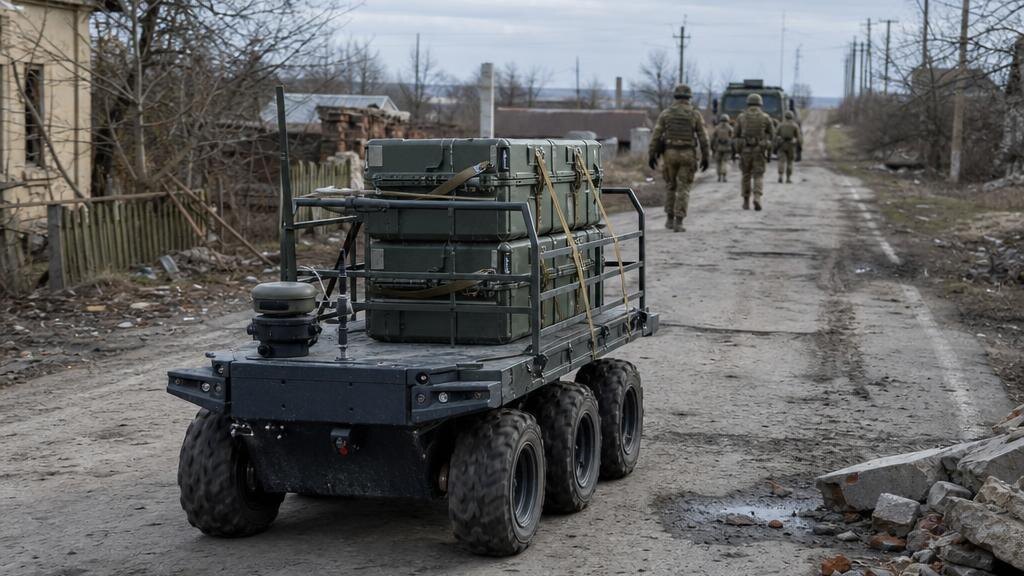
In mid-September 2026, the U.S. Army's XVIII Airborne Corps conducted an evaluation of a novel drone mothership during the Scarlet Dragon 26-3 experimentation exercise at Fort Bragg, North Carolina. This test involved the Autonomous Swarm Mothership, developed by Modalic, which is designed to launch smaller drones while in flight. This capability represents a leap forward in the Army's unmanned systems strategy, enabling more flexible and dynamic operations on the battlefield.
The concept of a drone mothership is rooted in the need for increased operational efficiency and effectiveness in reconnaissance and combat scenarios. Traditional methods often involve deploying individual drones, which can be limited in their operational scope and require extensive logistical support. The Autonomous Swarm Mothership aims to address these challenges by acting as a mobile command platform that can deploy a swarm of smaller drones to cover larger areas or engage multiple targets simultaneously. This capability could significantly reduce the time required to gather intelligence or respond to threats, thereby enhancing the overall responsiveness of military operations.
During the Scarlet Dragon exercise, soldiers evaluated the mothership's ability to launch and control its daughter drones while maintaining situational awareness of their operations. This involved testing the network's capability to track both the parent aircraft and the smaller drones, assessing the effectiveness of the communication systems and the integration of various technologies. Such capabilities could dramatically enhance the Army's reconnaissance, surveillance, and strike capabilities in future conflicts. The seamless interaction between the mothership and its drones is crucial for ensuring that commanders have a comprehensive view of the battlefield, which can be pivotal in high-stakes scenarios.
The implications of successfully integrating a drone mothership into military operations are significant. It could allow for real-time data collection from various perspectives, enabling commanders to make informed decisions quickly. Additionally, the ability to deploy swarms of drones could overwhelm enemy defenses, creating opportunities for ground forces to maneuver more effectively. This tactic could also minimize the risk to personnel, as drones can be deployed in high-threat environments where human soldiers would face greater danger. The potential for drones to conduct operations in contested environments without risking lives underscores the strategic advantage they could provide.
However, the development of such systems is not without its challenges. The integration of multiple drones into a cohesive operational framework requires advanced algorithms and robust communication networks to ensure reliable performance. Moreover, the systems must be resilient against potential cyber threats, as adversaries may seek to disrupt communications or hijack drone operations. As drone swarms become more prevalent, adversaries may develop countermeasures to disrupt these operations, necessitating continuous innovation and adaptation from military planners. The arms race in drone technology could lead to an escalation in the complexity of aerial engagements, requiring military forces to constantly evolve their strategies.
Furthermore, there are ethical and legal considerations surrounding the use of autonomous swarms in combat. The potential for these systems to operate independently raises questions about accountability and the decision-making processes involved in lethal engagements. As military forces around the world explore the use of drone swarms, these discussions will become increasingly important in shaping policy and operational guidelines. The implications of autonomous decision-making in warfare could challenge existing frameworks of international law and military ethics, necessitating a reevaluation of how conflicts are conducted in the modern age.
The test of the Autonomous Swarm Mothership is part of a broader trend within the U.S. military to explore the potential of unmanned systems in various capacities. As the technology matures, the Army envisions a future where drone swarms could be integral to not just reconnaissance, but also direct combat operations, logistics, and even search and rescue missions. This multifaceted approach to drone utilization reflects a strategic shift towards integrating advanced technologies into all aspects of military operations, potentially transforming the nature of warfare.
In addition to the immediate tactical advantages, the operational deployment of drone motherships could also influence strategic military doctrines. The ability to conduct operations with a high degree of autonomy and coordination among multiple drones may lead to new operational concepts that prioritize speed and flexibility over traditional force-on-force engagements. This shift could redefine how military planners approach mission objectives, emphasizing the importance of technology in achieving operational success.
In conclusion, the evaluation of the drone mothership during Scarlet Dragon 26-3 marks a pivotal moment in the U.S. Army's approach to unmanned systems. As the Army continues to refine these technologies, the potential applications in modern warfare could redefine tactical operations on the battlefield, creating new opportunities and challenges for military planners and policymakers alike. The success of such systems will depend on overcoming technical hurdles, addressing ethical concerns, and continuously adapting to the evolving landscape of warfare. The ongoing development and testing of drone technologies will likely shape the future of military engagement, making it imperative for defense analysts and strategists to closely monitor advancements in this field.