Air ·
U.S. Army Adapts to Countering Drone Swarms with New Training Techniques
The U.S. Army is enhancing its training methods to better prepare soldiers for the challenges posed by drone swarms in a rapidly evolving battlefield.
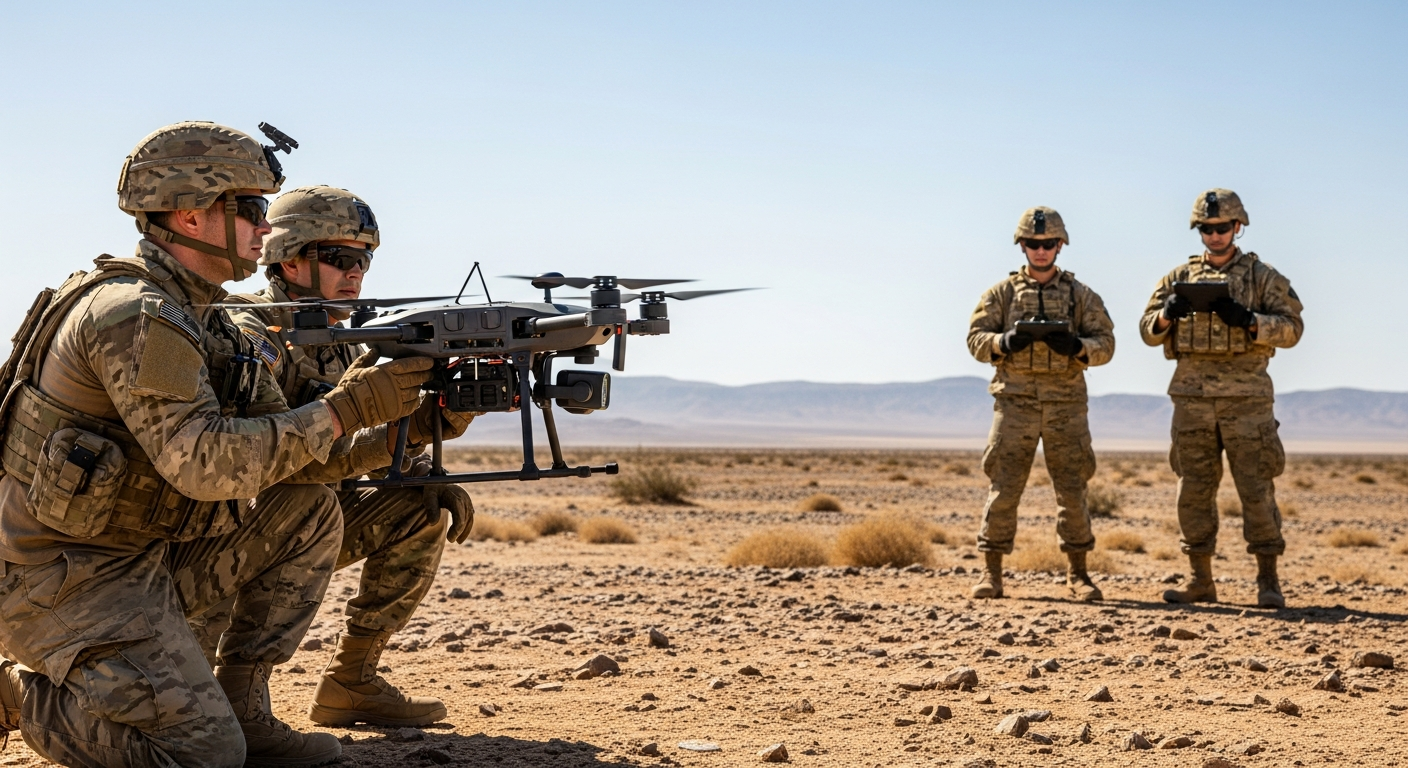
As drone technology continues to evolve, the U.S. Army is shifting its focus from combating individual drone threats to developing strategies for dealing with swarms of unmanned aerial vehicles (UAVs). This new approach is essential as the Army recognizes that future conflicts may involve large numbers of drones operating simultaneously, creating a saturated airspace that complicates traditional air defense tactics.
To address this challenge, the Army is implementing training programs that equip soldiers with the skills to identify and respond to multiple drone threats at once. These exercises will involve real-time simulations of drone swarm attacks, allowing soldiers to practice their responses under pressure. The initiative not only aims to improve reaction times but also to foster collaborative tactics among units to effectively neutralize drone swarms.
The Army's new training protocols are part of a broader effort to integrate advanced technology and enhance situational awareness among troops. By training soldiers to detect and analyze drone swarm patterns, the Army hopes to develop more effective countermeasures, including electronic warfare tactics and kinetic interceptors. This proactive stance is critical as adversaries increasingly adopt drone swarms as a means of asymmetric warfare.
Moreover, the lessons learned from these training exercises will inform future equipment acquisitions and technological innovations. The Army is likely to seek partnerships with defense contractors specializing in drone countermeasures and advanced surveillance systems. As the threat landscape evolves, staying ahead of potential adversaries will require a multifaceted approach that combines training, technology, and strategy.
In conclusion, the U.S. Army's shift towards preparing for drone swarms reflects the changing dynamics of modern warfare. By investing in training and technology, the Army aims to maintain its operational superiority and safeguard its forces against emerging threats in the airspace of the future.