Naval ·
U.S. and U.K. Successfully Test Torpedo Launch from Uncrewed Submarine: AUKUS Initiative Progresses
The recent successful test of a U.S. Mk 48 torpedo launched from the Royal Navy's uncrewed underwater vehicle marks a significant milestone for the AUKUS partnership, highlighting advancements in unmanned maritime systems.
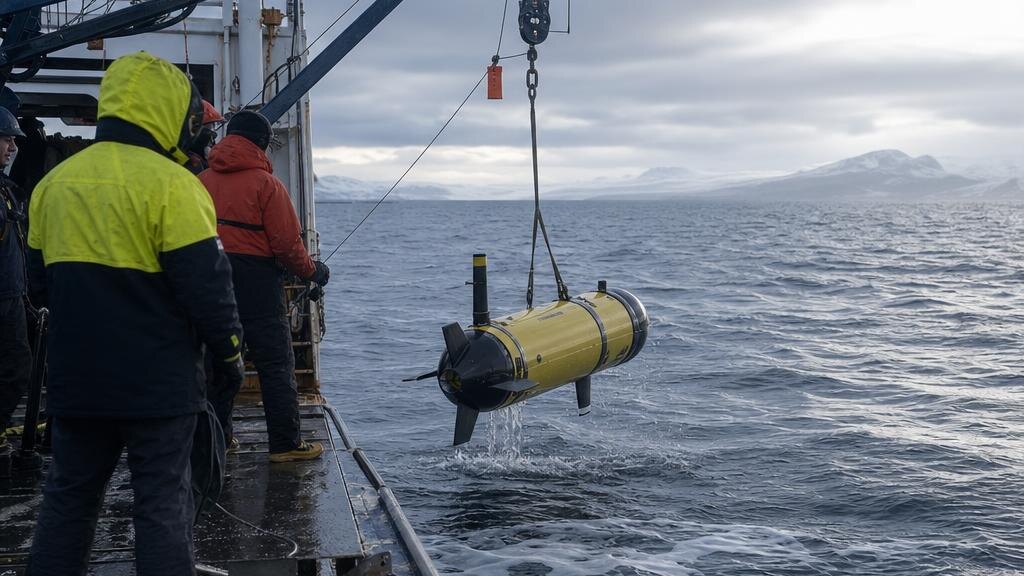
In a significant development for the AUKUS defense partnership, the U.S. Navy announced that a torpedo was successfully launched from the Royal Navy's extra-large unmanned underwater vehicle (XLUUV), XV Excalibur, during a proof-of-concept trial on September 13, 2026. Conducted at the British Underwater Test & Evaluation Centre in Scotland, this milestone is part of Project Broadsword and Trial Iron, initiatives aimed at enhancing integrated capabilities between the U.S. and U.K. naval forces. This event not only marks a technological achievement but also reflects the broader strategic collaboration envisioned under the AUKUS pact, which seeks to bolster defense ties among allies in the face of evolving global threats.
The successful launch of the U.S. Mk 48 Heavyweight Torpedo from an uncrewed platform represents a critical step forward in the operational versatility of unmanned systems in contemporary naval warfare. The Mk 48 torpedo, a staple of U.S. submarine warfare, is designed to engage a variety of underwater threats, making it an effective tool for both traditional and asymmetric naval engagements. This test not only validates the technical feasibility of launching heavy munitions from unmanned platforms but also underscores the strategic shift towards integrating unmanned systems into conventional naval operations. The ability to deploy such advanced munitions from an uncrewed vehicle could redefine engagement strategies, allowing for more nuanced and flexible responses to maritime threats.
The XV Excalibur itself is part of a broader trend in the naval domain where uncrewed underwater vehicles (UUVs) are gaining prominence. These platforms are being developed to conduct a range of missions, from intelligence, surveillance, and reconnaissance (ISR) to anti-submarine warfare (ASW) and mine countermeasures. The ability to deploy torpedoes from such platforms expands the operational envelope of naval forces, allowing for more flexible and survivable mission profiles, particularly in contested environments where traditional manned platforms may be at greater risk. This capability could prove vital in scenarios where stealth and reduced risk to personnel are paramount, suggesting a shift in how naval engagements may be conducted in the future.
While the test is a promising indicator of future capabilities, it also raises several operational considerations. The integration of unmanned systems into existing naval frameworks poses challenges in terms of command and control, sensor fusion, and real-time decision-making. The ability to effectively manage unmanned assets alongside manned platforms requires robust communications and operational protocols to ensure that both can operate cohesively in complex maritime scenarios. This integration will necessitate new approaches to training and operational planning, as naval forces must develop the capacity to coordinate between traditional and unmanned systems seamlessly.
Moreover, the reliance on unmanned systems necessitates a reevaluation of training, tactics, and strategies within naval forces. As unmanned platforms become more prevalent, naval personnel must adapt to new operational paradigms that leverage the strengths of these technologies while mitigating their limitations. This includes developing new tactics for deploying UUVs in conjunction with traditional submarines and surface vessels, as well as ensuring that crews are adequately trained to operate these systems effectively. The transition to incorporating unmanned systems into naval operations will require significant investment in personnel training and the development of new operational doctrines.
The strategic significance of this development extends beyond immediate operational capabilities. The successful launch of a torpedo from an uncrewed platform underscores the increasing importance of unmanned systems in future naval conflicts, particularly in the context of the Indo-Pacific region, where tensions and competition among major powers are escalating. By advancing unmanned warfare capabilities, the U.S. and U.K. are positioning themselves to maintain a technological edge over potential adversaries. The ability to deploy effective strike capabilities from unmanned platforms could serve as a deterrent against hostile actions, reinforcing the strategic posture of allied forces in contested waters.
However, there are constraints to consider. The development and operational deployment of UUVs and other unmanned systems require significant investment in research and development, as well as in the associated infrastructure for maintenance and support. Additionally, ensuring cybersecurity and protecting these systems from adversarial countermeasures will be vital as they become integral to naval operations. As unmanned systems become more sophisticated, the potential for adversaries to develop countermeasures grows, necessitating ongoing innovation and adaptation within U.S. and U.K. naval strategies.
As AUKUS continues to evolve, the implications of these tests will be closely monitored by allies and adversaries alike. The success of the XV Excalibur in launching a torpedo may set a precedent for other nations to explore similar capabilities, potentially leading to an arms race in unmanned underwater warfare technologies. This competitive dynamic could drive further advancements in UUV capabilities across global naval forces, as nations seek to enhance their operational effectiveness in an increasingly complex maritime environment.
In conclusion, the successful torpedo launch from the XV Excalibur is a landmark achievement for the AUKUS partnership and highlights the evolving landscape of naval warfare. As unmanned systems become increasingly central to maritime strategy, the lessons learned from these trials will inform future operational concepts and capabilities for both the U.S. and U.K. navies, paving the way for a new era of naval engagement. The ongoing collaboration under AUKUS not only strengthens the defense capabilities of its member nations but also sets the stage for a transformative approach to maritime security in the years to come.