Land ·
Spanish Tracked Carrier Transforms into Heavy Drone Hunter at Atlas 26 Exercise
Spain's General Dynamics ASCOD carrier showcases its new capabilities as a mobile drone interceptor during the Atlas 26 counter-drone exercise, marking a significant development in unmanned ground vehicle operations.
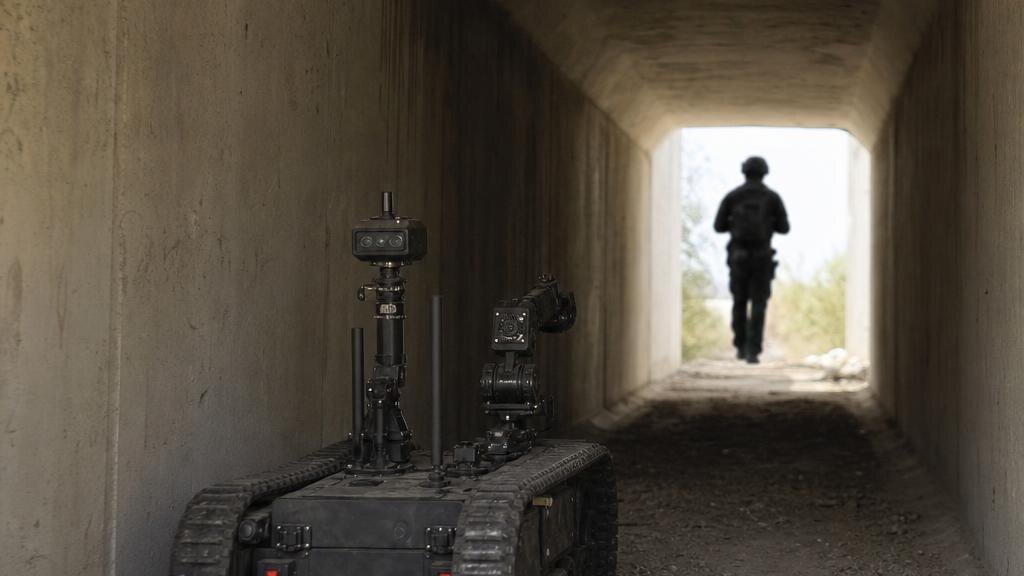
In an impressive demonstration of adaptability and innovation, Spain's General Dynamics European Land Systems has showcased its ASCOD armored carrier as a mobile drone hunter at the Atlas 26 counter-drone exercise. This transformation underscores the growing emphasis on counter-unmanned aerial vehicle (UAV) capabilities within military operations, particularly in response to the increasing threat posed by drones in modern warfare. The integration of such capabilities into existing platforms reflects a broader trend of militaries worldwide seeking to enhance their operational readiness in the face of evolving threats.
The ASCOD carrier, traditionally designed for troop transport and logistical support, has been fitted with launch containers for ARMMO's Bandit-X interceptor drones. These modifications allow the ASCOD to not only transport personnel and supplies but also actively engage and neutralize aerial threats. The integration of drone interception capabilities into a ground vehicle highlights a strategic shift in how militaries are adapting existing platforms to meet new challenges presented by UAVs. This approach not only maximizes the utility of current assets but also reduces the need for entirely new systems, which can be costly and time-consuming to develop.
The Atlas 26 exercise, conducted by the Spanish military, serves as a critical training ground for testing and refining counter-drone tactics. With the rise of drone warfare, especially noted in conflicts such as the ongoing conflict in Ukraine, the need for effective countermeasures has become paramount. The ASCOD's new role as a mobile drone interceptor aligns with the broader defense strategy of enhancing ground forces' capabilities to operate in contested environments where air superiority is increasingly challenged by adversaries deploying commercial and military drones. This evolution is indicative of a larger shift in military doctrine, where adaptability and rapid response are becoming essential components of operational success.
The Bandit-X drones, designed for interception, represent a shift towards more dynamic and responsive air defense systems. Unlike traditional anti-aircraft systems that may require significant infrastructure and time to deploy, the ASCOD can engage threats quickly and from a mobile platform. This mobility allows for greater flexibility on the battlefield, enabling forces to reposition rapidly in response to evolving threats. The ability to launch interceptors from a ground vehicle also minimizes the risk of exposing critical air defense assets to enemy fire, thereby enhancing overall mission survivability.
Operationally, the ASCOD's transformation into a drone hunter addresses several tactical needs. With the capability to launch Bandit-X drones at hostile UAVs, the ASCOD can provide a protective umbrella for ground troops and critical assets, enhancing their survivability. As drone swarms become more prevalent, the ability to intercept multiple aerial threats simultaneously is becoming a vital requirement for ground forces. This capability is particularly relevant in scenarios where enemy forces utilize swarming tactics to overwhelm defensive systems, necessitating a robust and agile response from ground units.
However, the integration of drone interception capabilities into existing ground platforms is not without its challenges. The effectiveness of the Bandit-X drones depends on their operational range, payload capacity, and the speed at which they can be deployed. Additionally, the ASCOD's performance in various terrain types and combat scenarios will be critical to its success as a mobile drone hunter. The military must ensure that these systems are reliable and can operate effectively under adverse conditions. Moreover, the training of personnel to operate these advanced systems will be essential to maximize their effectiveness in real-world operations.
Furthermore, the cost implications of retrofitting existing vehicles with new technologies could pose a budgetary constraint. As militaries worldwide grapple with funding for modernization efforts, the decision to invest in such adaptations will require careful consideration of operational benefits versus financial viability. Budgetary pressures may also influence the pace of adoption and integration of these advanced systems, potentially leading to disparities in capabilities among allied forces.
Strategically, Spain's development of the ASCOD as a counter-drone platform reflects broader trends in military modernization across Europe. As NATO countries increasingly recognize the threat posed by drones, there is a concerted effort to enhance collective defense capabilities against aerial threats. Spain's initiative could serve as a model for other nations seeking to bolster their defenses against UAVs. This collaborative approach may lead to shared technologies and strategies, fostering a more unified response to the challenges posed by drone warfare.
Looking ahead, the integration of drone interception capabilities into ground vehicles like the ASCOD raises important questions. How will these systems be integrated into existing military doctrines? What training will be required for personnel to operate these new capabilities effectively? As the landscape of warfare continues to evolve, the answers to these questions will play a crucial role in shaping the future of ground combat operations. The success of such initiatives will depend not only on technological advancements but also on the ability of military organizations to adapt their strategies and tactics accordingly.
In conclusion, the ASCOD's transformation into a mobile drone interceptor during the Atlas 26 exercise highlights the innovative approaches military forces are taking to address emerging threats. As drone warfare becomes more sophisticated, the ability to adapt existing systems will be essential for maintaining operational effectiveness on the battlefield. The ongoing evolution of military capabilities in response to UAV threats underscores the importance of continuous investment in research, development, and training to ensure that armed forces remain prepared for the complexities of modern warfare.