Naval ·
Royal Australian Navy’s Ghost Shark UUVs Will Have Minelaying, UAV Payloads
The Royal Australian Navy is set to enhance its capabilities with the integration of minelaying and unmanned aerial vehicle (UAV) payloads into its Ghost Shark unmanned underwater vehicles (UUVs), reflecting a strategic shift towards advanced maritime operations.
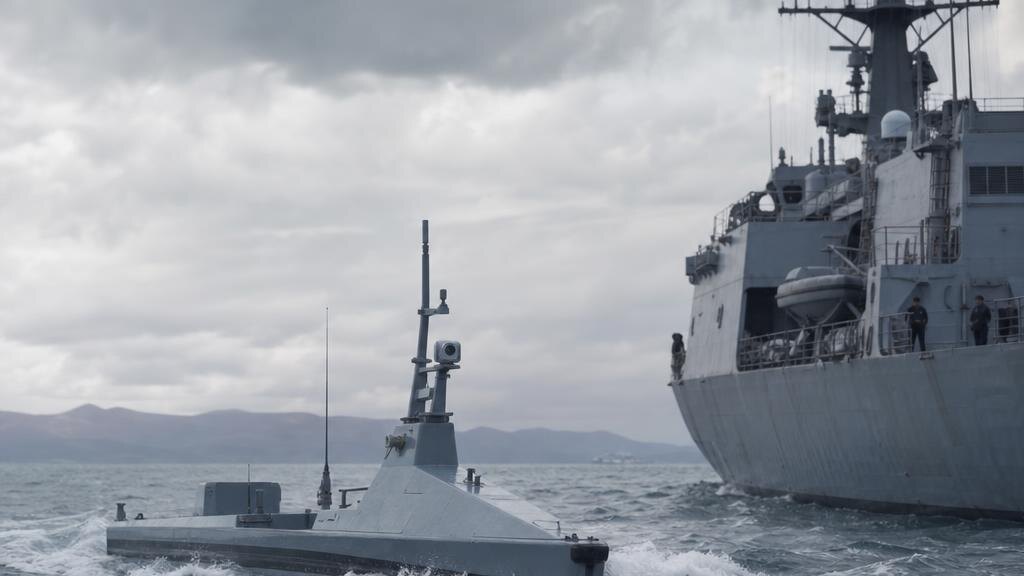
The Royal Australian Navy (RAN) is preparing to significantly enhance its operational capabilities with the integration of advanced payloads into its Ghost Shark unmanned underwater vehicles (UUVs). Defense officials recently announced that these UUVs will be equipped to carry sea mines and unmanned aerial vehicles (UAVs), marking a pivotal development in Australia’s maritime warfare strategy as it seeks to strengthen its deterrence and operational reach in an increasingly complex regional security environment.
The Ghost Shark UUVs, developed by Anduril Australia, are designed for a variety of roles, including reconnaissance, surveillance, and mine warfare. The inclusion of UAV payloads, specifically the Altius 600, allows the Ghost Shark to extend its operational capabilities beyond underwater missions, enabling it to launch aerial drones that can perform tasks such as intelligence gathering and targeting. This dual capability is particularly relevant in the context of modern naval warfare, where multi-domain operations are becoming the norm. The ability to seamlessly transition between underwater and aerial operations positions the RAN to respond more effectively to diverse threats.
The decision to equip the Ghost Shark UUVs with such advanced payloads comes at a time when the RAN is focused on enhancing its deterrent capabilities amid rising tensions in the Indo-Pacific region. The UUVs are expected to play a crucial role in protecting Australia’s maritime interests, especially in light of the increasing assertiveness of regional powers, including China. The ability to deploy mines and aerial drones enhances the RAN’s capacity to conduct area denial operations, which are vital for safeguarding critical maritime chokepoints and ensuring freedom of navigation. This capability is particularly significant given the strategic importance of the South China Sea and other contested waterways in the region.
The integration of these advanced systems was highlighted during the AUKUS Pillar II exercise Maritime Big Play Pacific, where the capabilities of the Ghost Shark UUVs were showcased. This exercise, which involved multiple allied forces, underscores the collaborative efforts among the United States, the United Kingdom, and Australia to enhance maritime security and operational interoperability. The RAN’s investment in UUV technology reflects a broader trend among Western navies to adopt unmanned systems as a means of augmenting traditional naval capabilities. This shift not only enhances individual national capabilities but also strengthens collective defense arrangements among allies.
However, the deployment of such advanced unmanned systems is not without its challenges. The complexities of integrating UAVs and UUVs into existing naval operations require significant investment in training and infrastructure. Furthermore, there are ongoing concerns about the vulnerability of these systems to countermeasures, particularly in contested environments. As adversaries develop more sophisticated anti-access/area-denial (A2/AD) capabilities, the effectiveness of unmanned systems like the Ghost Shark will depend on their ability to operate in high-risk scenarios. This necessitates ongoing research and development to ensure that these systems can adapt to evolving threats.
Moreover, the strategic implications of deploying UUVs armed with mines and UAVs extend beyond immediate operational capabilities. This development signals a shift in naval warfare doctrine, where unmanned systems are increasingly seen as force multipliers that can operate in conjunction with manned vessels. The RAN’s embrace of these technologies may influence regional naval dynamics, prompting neighboring countries to accelerate their own unmanned systems programs to maintain parity. This arms race in unmanned capabilities could lead to heightened tensions and an unpredictable security environment in the Indo-Pacific region.
Additionally, the Ghost Shark program demonstrates the importance of partnerships with the private sector in advancing military technology. Anduril Australia’s role in developing the Ghost Shark UUVs exemplifies how defense companies are becoming integral to national security efforts, providing innovative solutions to meet emerging threats. As the RAN continues to evolve its unmanned capabilities, collaboration with industry will be crucial in ensuring that these systems remain at the forefront of technological advancement. Such partnerships can also facilitate the rapid prototyping and deployment of new technologies, allowing the RAN to stay ahead of potential adversaries.
Looking ahead, the integration of the minelaying and UAV payloads into the Ghost Shark UUVs raises several questions regarding future operational scenarios. How will these systems be incorporated into broader naval strategies, and what role will they play in joint operations with allied forces? As the RAN continues to develop its unmanned capabilities, the answers to these questions will be critical in shaping the future of maritime warfare in the Indo-Pacific region. The successful integration of these systems will require not only technological advancements but also a comprehensive understanding of operational concepts and strategic objectives.
In conclusion, the Royal Australian Navy’s investment in the Ghost Shark UUVs, equipped with advanced minelaying and UAV capabilities, marks a significant step forward in modern naval warfare. As Australia navigates an increasingly complex security landscape, the ability to leverage unmanned systems will be essential for maintaining maritime security and operational effectiveness in the years to come. The RAN’s proactive approach in adopting these technologies reflects a broader recognition of the need for innovation in defense, ensuring that it remains capable of addressing both current and future challenges in the maritime domain.