Land ·
Norwegian UGV Defence Showcases Autonomous FLEX L12 Heavy Vehicle for Military Applications
The recent demonstration of the FLEX L12 unmanned ground vehicle highlights advancements in autonomous logistics support for military operations, showcasing its capabilities under challenging terrain conditions.
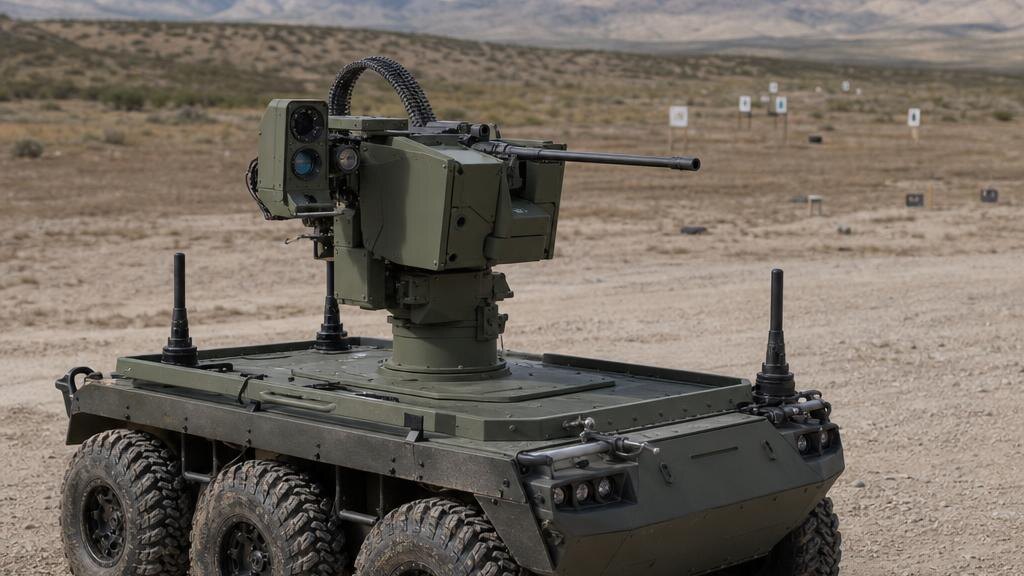
In a significant development for unmanned ground vehicles (UGVs), the Norwegian company UGV Defence successfully demonstrated its FLEX L12 heavy unmanned ground vehicle (UGV) operating autonomously while carrying an impressive load of five metric tons (approximately 11,000 pounds). This milestone was achieved during a recent trial at Camp Rødsmoen in Norway, where the vehicle navigated a 1.7 km (1.1-mile) off-road course. Chief Executive Carl Ivarsson shared details of the demonstration on social media, emphasizing the vehicle's autonomy and logistical capabilities, which are essential for modern military operations.
The FLEX L12 is designed to support a variety of military missions, particularly in logistics and supply chain operations. Its autonomous capabilities allow it to traverse difficult terrains without the need for human operators, making it a valuable asset for transporting supplies, equipment, and personnel in combat zones. This kind of vehicle can significantly reduce the risk to human soldiers by taking over logistics roles that often expose them to enemy fire or hazardous environments. The ability to operate autonomously not only enhances safety but also allows for continuous operation, which is crucial in high-tempo military scenarios.
The growing reliance on UGVs is a response to the evolving nature of warfare, where traditional supply lines can be vulnerable to enemy attacks. By deploying autonomous vehicles like the FLEX L12, military forces can maintain operational efficiency while minimizing risks. The vehicle's ability to carry heavy loads autonomously could be particularly advantageous in scenarios where rapid resupply is critical, such as during sustained engagements or in remote locations where conventional transport methods are impractical. This capability could also facilitate more agile and flexible logistics strategies, enabling forces to adapt to changing battlefield conditions more effectively.
UGV Defence’s demonstration also highlights the ongoing trend among military organizations worldwide to integrate advanced robotics and artificial intelligence into their operations. As the technology matures, UGVs are expected to become more prevalent in military logistics, reconnaissance, and even combat roles. The FLEX L12’s successful demonstration could pave the way for further investments in similar autonomous systems by NATO allies, particularly as they aim to modernize their forces in response to new threats. This modernization effort is not only about enhancing capabilities but also about ensuring that military forces remain competitive in an increasingly technology-driven defense landscape.
However, the integration of UGVs into military operations is not without its challenges. One significant concern is the reliability of autonomous systems in unpredictable environments, where sensor failures or software glitches could lead to mission failures or accidents. The operational environment for military vehicles can be harsh and unpredictable, presenting unique challenges that must be addressed through rigorous testing and validation processes. Additionally, there are broader implications for military strategy and tactics as unmanned systems take on more roles traditionally filled by human soldiers. Commanders will need to adapt their operational plans to account for the unique capabilities and limitations of these systems, ensuring that they complement rather than complicate existing military frameworks.
Moreover, the ethical considerations surrounding the use of autonomous vehicles in combat scenarios continue to be a topic of debate. As UGVs become more autonomous, questions arise regarding accountability for their actions in the event of unintended consequences, such as civilian casualties or collateral damage. Military leaders and policymakers will need to establish clear guidelines and protocols to address these concerns while maximizing the potential benefits of UGV technology. This includes developing frameworks for the ethical use of autonomous systems, ensuring that they operate within the bounds of international law and military ethics.
The FLEX L12 represents a significant step forward in unmanned ground vehicle technology, but it also underscores the necessity for continued research and development in this field. Future iterations of the FLEX series may include enhanced sensor systems, improved navigation algorithms, and better communication capabilities to allow for seamless integration with other military assets, including aerial drones and manned vehicles. This interconnectedness will be vital for creating a cohesive operational picture on the battlefield, where multiple systems can work in tandem to achieve mission objectives.
As military conflicts become increasingly complex, the demand for versatile, reliable, and autonomous systems is likely to grow. The successful demonstration of the FLEX L12 could signal a shift in how military logistics are approached, with a greater emphasis on automation and unmanned systems. While the road ahead may present various challenges, the potential benefits of UGVs like the FLEX L12 in enhancing operational capabilities and reducing risks to personnel are clear. The ability to operate autonomously in challenging environments not only enhances logistical efficiency but also allows for a more strategic allocation of human resources in combat operations.
In conclusion, as UGV Defence prepares to further develop its FLEX L12 and other autonomous vehicles, the military community will be watching closely. The implications of this technology extend beyond just logistics, potentially transforming how ground operations are conducted in the future. The successful integration of UGVs into military operations could lead to a new era of warfare, where autonomy and robotics play pivotal roles in achieving mission success. As nations invest in and adopt these technologies, the landscape of military operations will undoubtedly evolve, necessitating ongoing dialogue about the implications for strategy, ethics, and operational effectiveness.