Air ·
North Korea Expands Drone Production with New Manufacturing Lines
North Korea has revealed new production lines for various domestically developed drones, including a one-way attack drone resembling Israeli designs.
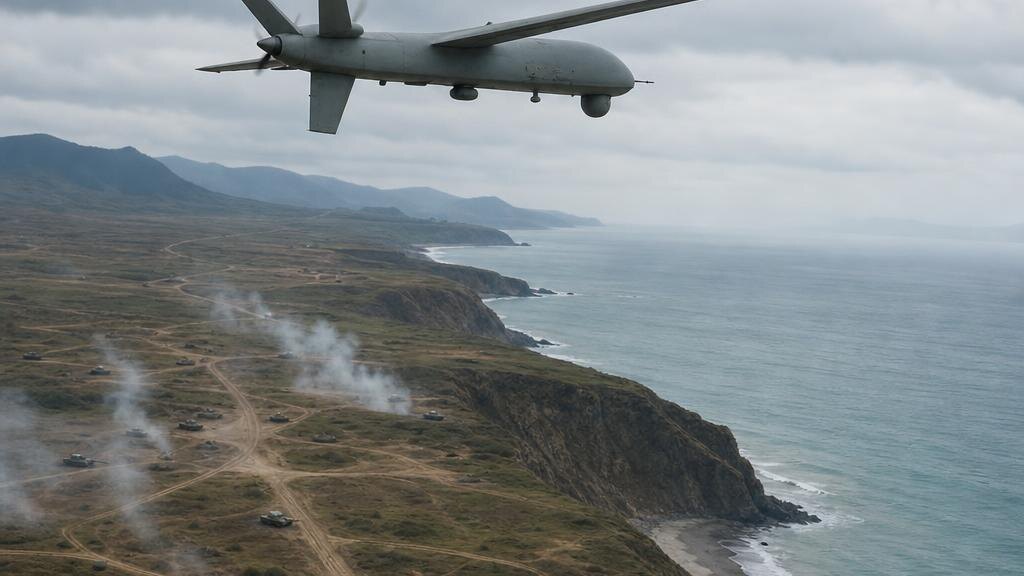
In a significant development, North Korea's state media recently showcased new drone production lines during a factory tour led by leader Kim Jong Un. This revelation aligns with North Korea's ongoing efforts to bolster its military capabilities through domestic manufacturing of unmanned aerial vehicles. Among the new offerings is a one-way attack drone that bears a resemblance to Israeli-designed loitering munitions, highlighting the regime's ambition to modernize its military arsenal.
The emergence of these production lines signals a strategic pivot towards enhancing North Korea's drone capabilities amid increasing geopolitical tensions in the region. The new drones are likely intended for various roles, including surveillance and attack missions, which could be utilized in asymmetric warfare scenarios against South Korea or U.S. forces in the vicinity. This development raises concerns not only for regional security but also for the broader implications of drone proliferation in unstable regions.
North Korea's focus on drone technology reflects a global trend where nations are increasingly recognizing the strategic advantages of unmanned systems. The ability to deploy drones for reconnaissance and combat allows for greater operational flexibility and can significantly enhance a country's military effectiveness. As North Korea continues to invest in advanced technologies, its drone capabilities may evolve, posing new challenges for its adversaries.
Furthermore, the increased production of drones can be seen as a response to international sanctions and military pressures, as North Korea seeks to develop self-sufficiency in its military capabilities. By investing in domestic production, the regime aims to reduce reliance on foreign technologies and improve its operational readiness. This approach could also lead to advancements in drone designs and capabilities over time, as North Korean engineers refine their technologies based on emerging threats.
As North Korea unveils its new drone manufacturing capabilities, the international community must closely monitor these developments. The proliferation of drone technologies in the hands of a regime known for aggressive posturing adds a new layer of complexity to regional security dynamics. The implications of enhanced drone capabilities could extend beyond the Korean Peninsula, influencing the military strategies of neighboring countries and altering the balance of power in the region.