Naval ·
Hellenic Navy Tests SARONIC’s Corsair USV Ahead of Major Order
The Hellenic Navy is advancing its unmanned maritime capabilities by testing the Corsair unmanned surface vessel (USV) in anticipation of a significant procurement.
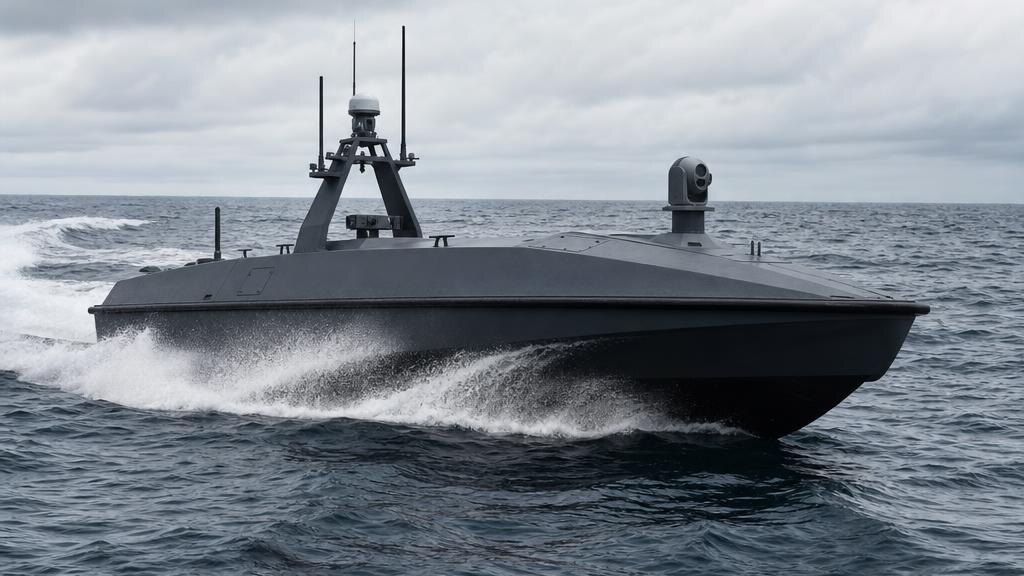
The Hellenic Navy has recently conducted tests on the Corsair unmanned surface vessel (USV), developed by SARONIC Technologies, as part of its efforts to enhance its maritime capabilities. This initiative aligns with Greece's broader strategy to modernize its naval forces amid heightened tensions in the Eastern Mediterranean. The tests, which took place in early October 2026, were attended by Greek Minister of National Defence Nikos Dendias, indicating the importance of this program to national defense priorities.
The Corsair USV is designed to perform a variety of missions, including surveillance, reconnaissance, and potentially offensive operations. Its development is particularly timely, as the Hellenic Navy seeks to bolster its capabilities against perceived threats from regional adversaries, notably Turkey. The vessel's autonomous features allow it to operate with minimal human intervention, thereby reducing risk to personnel while expanding operational reach. This characteristic is particularly valuable in the context of the Eastern Mediterranean, where maritime operations can be fraught with danger and unpredictability.
In the context of modern naval warfare, unmanned systems like the Corsair are increasingly seen as essential components of a multi-domain approach to defense. The ability to deploy USVs for intelligence-gathering or as a forward presence can significantly enhance situational awareness and deterrence. Furthermore, the integration of such platforms into naval operations represents a shift towards more flexible and responsive maritime strategies in an unpredictable geopolitical climate. The Corsair's capabilities could allow the Hellenic Navy to conduct operations that were previously too risky or logistically challenging for manned vessels.
Greece's ongoing tensions with Turkey, particularly over territorial claims in the Aegean Sea and the Eastern Mediterranean, underscore the strategic necessity of enhancing naval capabilities. The Corsair USV will allow the Hellenic Navy to maintain a persistent presence in contested areas, thereby enabling better monitoring of maritime activities and potential threats. This shift towards unmanned systems is not unique to Greece; many navies around the world are similarly investing in USVs to complement traditional manned vessels and expand operational capabilities. The growing trend reflects a broader recognition of the need for navies to adapt to evolving threats in a complex maritime environment.
The operational testing of the Corsair is just one part of a larger procurement strategy. The Hellenic Navy has submitted a Letter of Request (LOR) to the United States for the acquisition of at least 30 Corsair vessels, indicating a significant commitment to unmanned maritime systems. This procurement is expected to modernize the Greek fleet and enhance interoperability with allied forces, particularly those of NATO, which is increasingly focused on integrating unmanned systems into joint operations. Such interoperability is crucial as it allows for coordinated responses to threats and enhances collective security in the region.
However, the integration of USVs into existing naval frameworks is not without challenges. There are concerns regarding the operational reliability of these systems, particularly in contested environments where electronic warfare and cyber threats are prevalent. The Hellenic Navy will need to address these challenges to ensure that the Corsair can operate effectively alongside traditional vessels and in coordination with manned aircraft and other naval assets. This may involve developing robust countermeasures against potential adversarial tactics aimed at disrupting unmanned operations.
Another significant consideration is the training and development of personnel to operate and maintain these unmanned systems. As navies adopt more advanced technologies, the need for specialized training programs becomes paramount. The Hellenic Navy must ensure that its personnel are adequately prepared to leverage the capabilities of the Corsair, particularly in terms of mission planning, control, and data analysis. This training will be essential not only for the effective operation of the USVs but also for integrating them into broader naval strategies and tactics.
The Corsair's potential applications extend beyond traditional naval operations. Its ability to gather intelligence and conduct surveillance can be instrumental in humanitarian missions or environmental monitoring, which are increasingly relevant in today's geopolitical landscape. As climate change continues to affect maritime boundaries and resources, the Corsair could play a role in monitoring and protecting these vital interests. This versatility enhances the value of the USV as a multi-functional asset in the Hellenic Navy's arsenal.
In conclusion, the testing of the Corsair USV by the Hellenic Navy marks a significant step towards enhancing Greece's maritime capabilities in a complex security environment. As the navy moves forward with its plans to procure a fleet of these vessels, it will need to navigate operational, technical, and training challenges to fully realize the potential of unmanned systems in its naval strategy. The evolving nature of maritime threats will continue to shape the development and deployment of USVs, making them a critical focus for modern naval forces. The successful implementation of the Corsair could set a precedent for future advancements in unmanned maritime technology within the Hellenic Navy and beyond.