Naval ·
Hanwha and Magnet Defense to Develop New Maritime Uncrewed Surface Vehicle
South Korean defense firms Hanwha and Magnet Defense announce plans to begin construction of a new Maritime Uncrewed Surface Vehicle (MUSV) this fall.
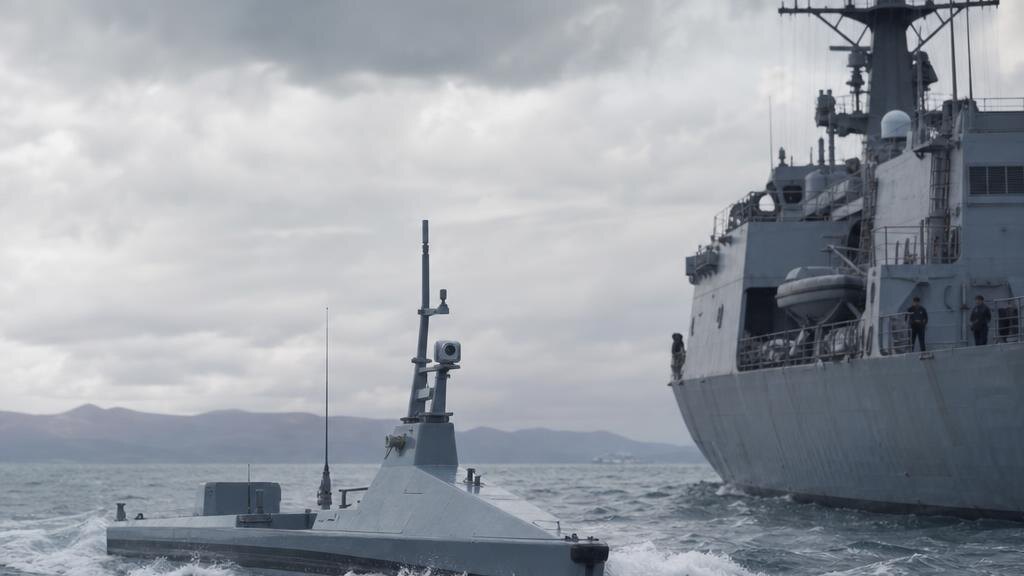
In a collaborative effort to enhance naval capabilities, South Korean defense contractors Hanwha and Magnet Defense have announced plans to start construction on a new Maritime Uncrewed Surface Vehicle (MUSV) this fall, with testing anticipated for the following year. This development comes at a time when the global maritime landscape is increasingly characterized by the integration of unmanned systems for surveillance, reconnaissance, and combat operations. The MUSV will aim to bolster the operational capabilities of naval forces by providing enhanced situational awareness and support.
The decision to develop this MUSV aligns with the growing trend among navies worldwide to incorporate unmanned surface vessels into their fleets. These platforms are particularly advantageous for conducting missions in contested environments, where traditional manned vessels may be at a higher risk. The MUSV is expected to offer a range of functionalities, from ISR (Intelligence, Surveillance, and Reconnaissance) operations to potential offensive capabilities in maritime combat scenarios.
As tensions in various regions continue to rise, the need for innovative naval solutions is more pressing than ever. The integration of unmanned systems like the MUSV can enhance maritime security and provide a strategic advantage by enabling more flexible and responsive operations. Furthermore, the new MUSV could serve as a force multiplier, allowing existing naval assets to be deployed more effectively while also reducing risks to human personnel.
Hanwha and Magnet Defense's partnership signifies a commitment to advancing maritime defense technologies, addressing modern naval challenges through innovative solutions. This collaboration could also lead to further advancements in the sector, as other nations look to replicate similar projects to bolster their own naval capabilities.
In conclusion, the construction of the new MUSV represents a significant step forward for South Korea's maritime defense strategy. As global naval operations increasingly leverage unmanned systems, the successful development and deployment of such vehicles will play a crucial role in shaping the future of naval warfare.