Land ·
Georgia Tech to Lead Army's CAML Program for Autonomous Mobility
The U.S. Army has awarded a $33 million contract to Georgia Tech to serve as the lead weapons integrator for the Autonomous Mobility Applique System (CAML).
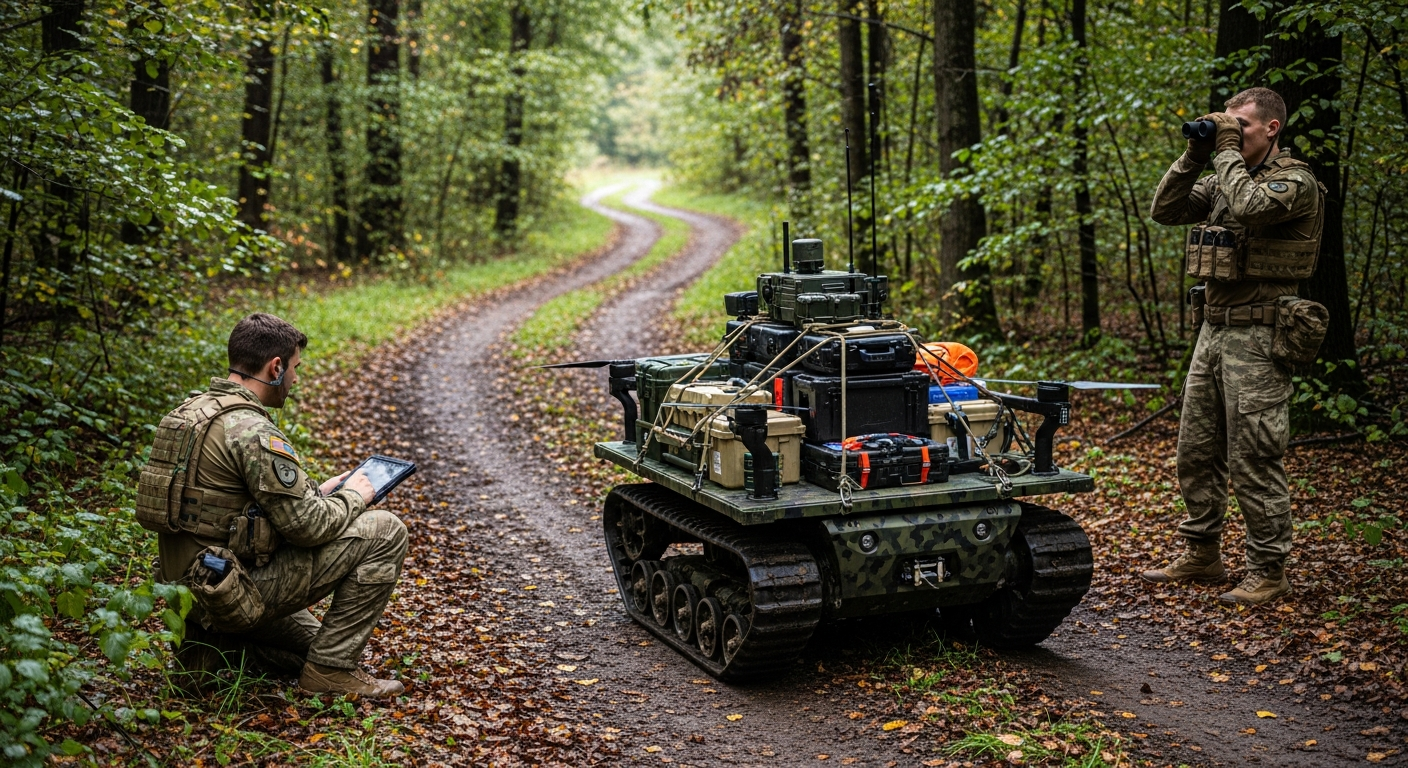
The U.S. Army has taken a significant step forward in enhancing its unmanned ground vehicle (UGV) capabilities by awarding a $33 million contract to Georgia Tech. This partnership will focus on the Autonomous Mobility Applique System (CAML), which aims to integrate autonomous mobility platforms with modular munitions pallets. By leveraging Georgia Tech's expertise in robotics and automation, the Army seeks to optimize the deployment of unmanned systems in combat operations.
CAML is designed to improve the Army's operational efficiency by enabling ground vehicles to operate autonomously in various environments. This system will allow for increased mission flexibility and a reduction in the need for human operators in potentially hazardous situations. The integration of modular munitions pallets will further enhance the combat effectiveness of these autonomous platforms, allowing them to deliver precision strikes while minimizing risk to personnel.
As the military explores the potential of unmanned systems, the emphasis on autonomous capabilities is becoming increasingly important. The Army's investment in CAML reflects a broader trend within defense forces worldwide, where UGVs are being integrated into traditional military operations. The ability to deploy unmanned systems for logistics and combat missions could significantly alter the landscape of modern warfare.
Moreover, the collaboration with Georgia Tech presents an opportunity for the Army to tap into cutting-edge research and development in robotics. This partnership may lead to advancements in artificial intelligence and machine learning applications in military operations, ultimately resulting in more sophisticated and capable unmanned systems. As the Army continues to innovate, the future of unmanned ground vehicles looks promising, with potential implications for force structure and battlefield strategy.