Air ·
DARPA's Lift Challenge Approaches Breakthrough in Drone Weight Lifting
DARPA's recent Lift Challenge is nearing a breakthrough with drones capable of lifting four times their own weight.
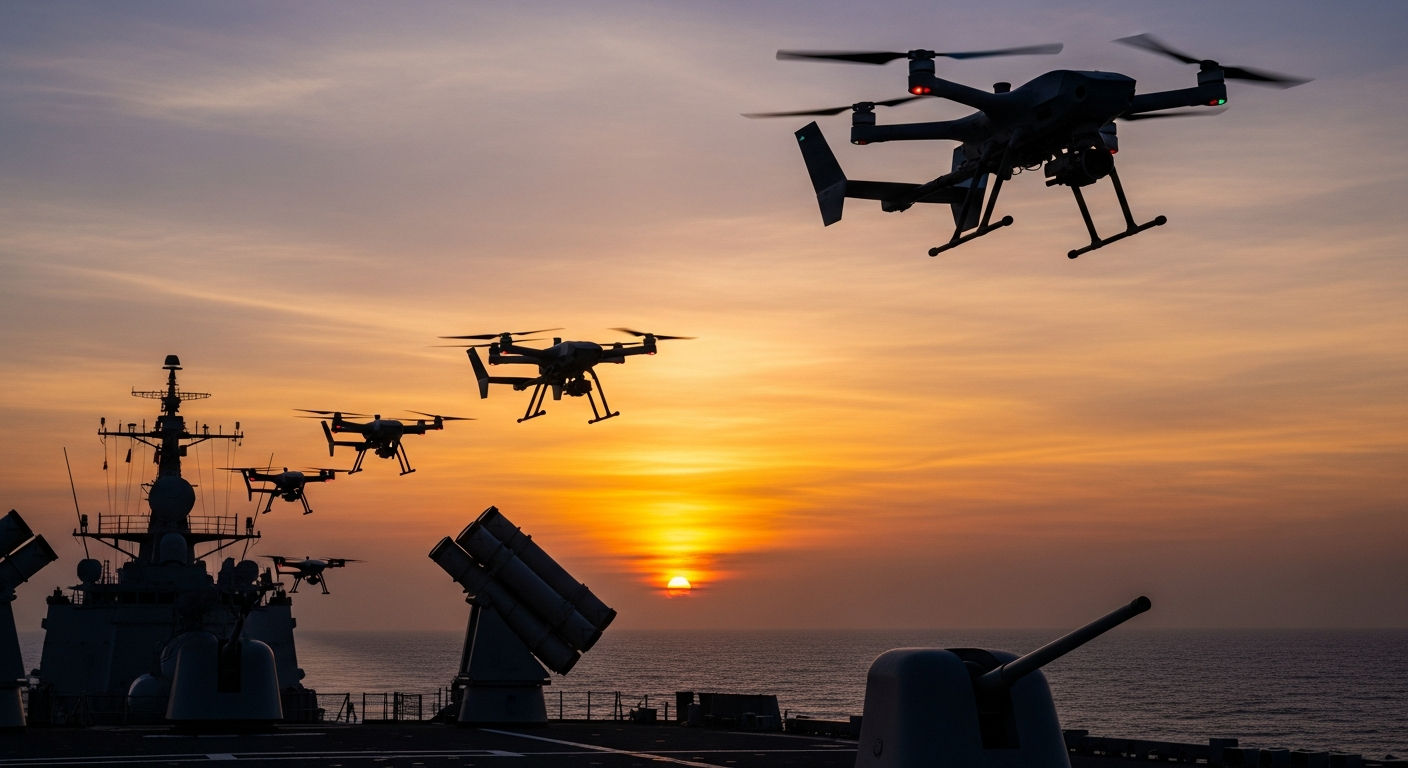
In a remarkable development for the field of unmanned systems, the Defense Advanced Research Projects Agency (DARPA) has come close to achieving a drone capable of lifting four times its own weight through its recent Lift Challenge. This initiative, aimed at exploring the limits of drone capabilities in vertical lift, has attracted significant interest from various manufacturers and researchers. The implications of such advancements could redefine the operational capabilities of military drones, particularly in logistics and transport roles.
The ability to lift such substantial weights would enhance the operational versatility of drones, allowing them to carry heavy payloads over longer distances. This capability could be particularly useful for a range of military applications, including resupply missions in challenging environments, search and rescue operations, and even the deployment of additional unmanned vehicles or equipment to remote locations. As military operations increasingly rely on unmanned systems, innovations in lifting capabilities will prove essential for maintaining logistical support in the field.
One of the key challenges in achieving these lifting capabilities lies in the engineering of lightweight materials combined with powerful propulsion systems. DARPA's Lift Challenge has encouraged competitors to explore novel designs and technologies that could lead to breakthroughs in drone performance. The ongoing research not only emphasizes the importance of payload capacity but also the potential for increased energy efficiency and reduced operational costs.
As the challenge progresses, the findings and technologies developed could potentially feed into future military programs, paving the way for next-generation drones that can operate more efficiently and effectively. DARPA's efforts underline the critical role that innovative research plays in advancing military capabilities, and the agency's commitment to pushing the boundaries of what unmanned systems can achieve in the future.