Air ·
CACI Secures $500M Contract for Non-Kinetic Counter-UAS Solutions
The Joint Interagency Task Force 401 (JIATF-401) has awarded CACI a significant contract to enhance its counter-unmanned aerial systems (cUAS) capabilities.
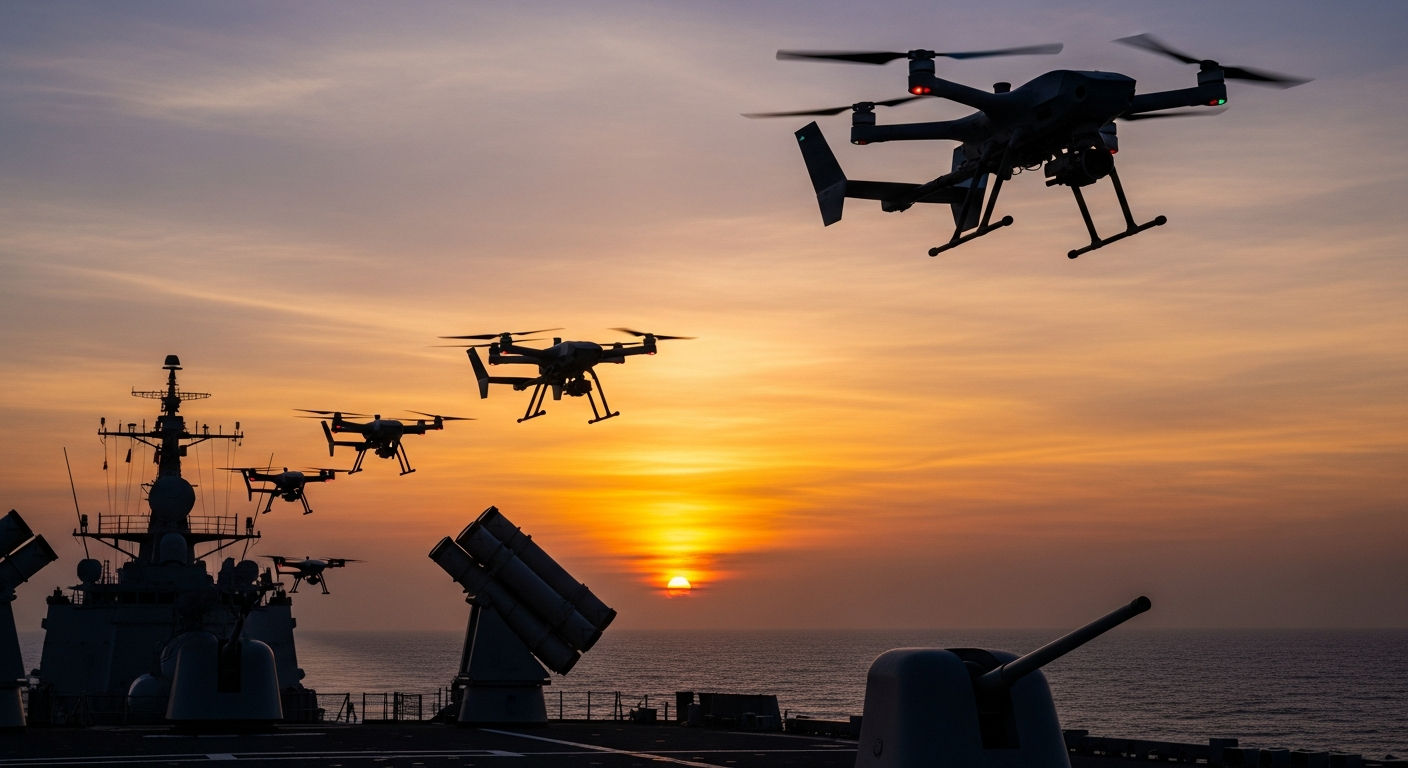
The Joint Interagency Task Force 401 (JIATF-401) has announced a substantial $500 million contract awarded to CACI to bolster its non-kinetic counter-unmanned aerial systems (cUAS) capabilities. This contract marks a pivotal investment as military forces continue to adapt to the growing threats posed by small drones in modern conflict scenarios. CACI's expertise in developing advanced technological solutions will be instrumental in countering these aerial threats without the need for kinetic responses, which can sometimes escalate conflicts.
This contract comes on the heels of a similar award given to AeroVironment earlier this month, also valued at $500 million. The dual investments reflect a robust commitment from JIATF-401 to enhance the U.S. military's operational capabilities against low-cost, high-volume drone threats. Both CACI and AeroVironment have been at the forefront of developing sophisticated systems that integrate artificial intelligence and machine learning to identify and neutralize drone threats effectively.
The non-kinetic approach focuses on disrupting the operational capabilities of hostile drones through electronic warfare or cyber capabilities rather than physical destruction. This is particularly important in dense urban environments where the collateral damage from kinetic strikes could be severe. By investing in advanced cUAS solutions, the military aims to ensure that it can maintain air superiority while minimizing potential civilian casualties and infrastructure damage.
As drone technology continues to evolve, the capabilities of adversarial forces are also improving, necessitating a dynamic response from the U.S. military. The investment in non-kinetic systems aligns with broader defense strategies that emphasize deterrence and de-escalation in multi-domain operations. With this contract, JIATF-401 is positioning itself to lead in the development and deployment of next-generation counter-drone technologies, which will be crucial in future conflicts.
In conclusion, as threats from UAVs proliferate, CACI's contract represents a strategic move to enhance defensive measures through innovative, non-kinetic solutions that will support U.S. military objectives both at home and abroad. The emphasis on technology and adaptability will be vital as military operations increasingly involve complex interactions with unmanned systems in diverse operational theaters.