Land ·
BLADE’s Hunter WOLF Drone Heads to Pentagon Field Trial
BLADE's Hunter WOLF unmanned ground vehicle is set to undergo field trials at a U.S. Department of War demonstration, showcasing the evolving role of robotics in military operations.
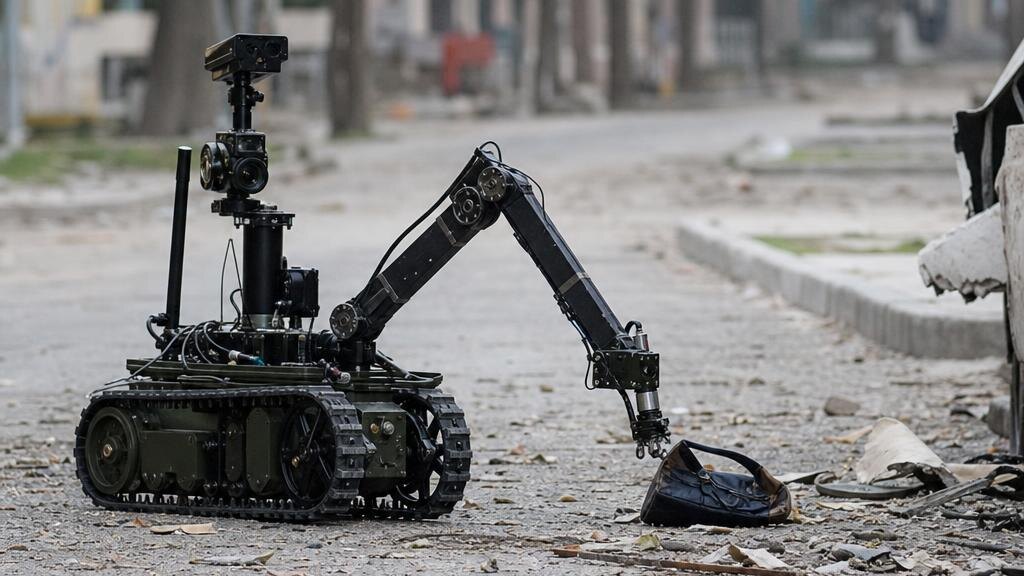
BLADE, a robotics company formerly known as HDT, has announced that its Hunter WOLF unmanned ground vehicle (UGV) will participate in the second phase of GroundBreaker 1, a significant demonstration organized by the U.S. Department of War. This event is scheduled to take place at Camp Grafton, North Dakota, from October 19 to 23, 2026. The Hunter WOLF is designed to enhance the capabilities of ground forces by providing a versatile platform for a variety of missions, including reconnaissance, surveillance, and logistics support.
The Hunter WOLF UGV stands out due to its modular design, allowing for different payloads that can be swapped out based on operational needs. This adaptability is essential in modern warfare, where the battlefield is constantly evolving, and the requirements for ground support can change rapidly. The UGV can be equipped with various sensors, including cameras and communication devices, which enable it to gather intelligence and relay information back to command units in real time. This capability not only enhances situational awareness but also supports decision-making processes by providing commanders with timely and accurate data.
One of the key features of the Hunter WOLF is its capability to operate in harsh environments and navigate challenging terrains. This is particularly relevant given the varied landscapes U.S. forces may encounter in future conflicts. The UGV is designed to traverse rugged terrain, making it suitable for deployment in diverse operational theaters, from urban settings to mountainous regions. Its robust mobility systems are engineered to withstand extreme weather conditions, which is crucial for maintaining operational effectiveness in unpredictable environments.
The upcoming trials at Camp Grafton are part of a broader initiative to integrate advanced robotic systems into the U.S. military's operational framework. As ground forces increasingly face threats from both traditional and asymmetric adversaries, the need for unmanned systems that can perform tasks with minimal risk to human soldiers is paramount. The Hunter WOLF is positioned to address this need by providing a robotic solution that can take on dangerous missions, thereby preserving human life and enhancing operational effectiveness. The trials will assess not only the UGV's performance but also its ability to work alongside human operators in a cohesive manner, which is vital for successful integration into existing military operations.
While the potential benefits of UGVs are significant, there are also challenges and constraints that must be considered. The integration of unmanned systems into existing military structures requires careful planning and coordination. Issues such as interoperability with manned systems, command and control protocols, and the training of personnel to operate and maintain these systems are critical factors that can influence the success of UGV deployments. Furthermore, the technological complexity of these systems necessitates a robust support infrastructure to ensure reliability and effectiveness during missions.
Moreover, the ethical implications of using unmanned systems in combat scenarios must not be overlooked. The increasing reliance on robotics raises questions about accountability and the decision-making processes involved in military operations. As UGVs like the Hunter WOLF become more autonomous, ensuring that they operate within established ethical boundaries will be a vital concern for military leaders and policymakers. The challenge lies in defining the limits of autonomy and ensuring that human oversight remains a fundamental component of military operations, particularly in high-stakes environments.
The Hunter WOLF's participation in the GroundBreaker 1 trials is a significant step towards demonstrating the operational capabilities of UGVs in real-world scenarios. The outcomes of these trials will provide valuable insights into the effectiveness of the Hunter WOLF in various roles and its potential for future integration into U.S. military operations. Observers will be keen to analyze how the UGV performs in tasks such as reconnaissance and logistics, which are critical for maintaining operational tempo in modern warfare.
As the U.S. military continues to explore the potential of unmanned systems, the results from the upcoming field trials will likely inform future investments in robotic technologies. The ongoing development of UGVs like the Hunter WOLF reflects a broader trend toward automation in warfare, where unmanned systems are expected to play an increasingly critical role in enhancing the capabilities of ground forces in the field. This shift towards automation not only aims to improve operational efficiency but also to adapt to the changing nature of threats faced by military forces globally.
In conclusion, the Hunter WOLF represents a significant advancement in unmanned ground vehicle technology, poised to enhance the operational capabilities of U.S. forces. The upcoming trials will not only test its technical performance but also provide insights into the future of robotics in military applications. As the Pentagon continues to adapt to new challenges, the integration of systems like the Hunter WOLF may ultimately redefine how ground operations are conducted in the 21st century. The implications of these developments extend beyond the battlefield, influencing military strategy, resource allocation, and the evolving landscape of defense technology.