Air ·
Australia's Royal Navy Expands Ghost Shark UUV Capabilities with UAV Integration
The Royal Australian Navy is set to enhance its Ghost Shark unmanned underwater vehicles (UUVs) by integrating aerial drone payloads, marking a significant step in multi-domain operations.
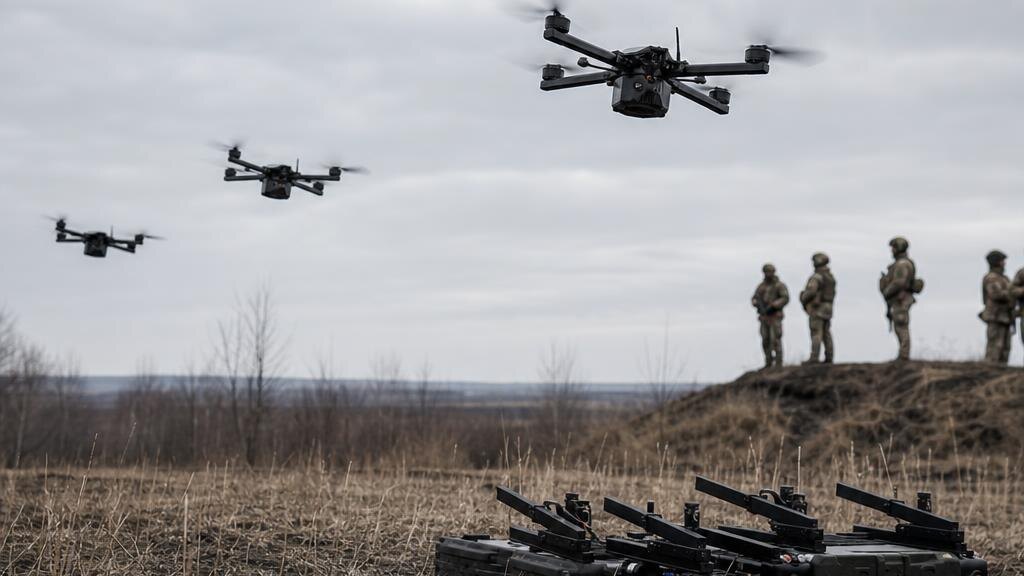
The Royal Australian Navy recently announced that its Ghost Shark unmanned underwater vehicles (UUVs) will be equipped with new capabilities, including minelaying and the deployment of unmanned aerial vehicles (UAVs). This development comes as part of Australia’s broader strategy to enhance its maritime warfare capabilities, particularly in light of evolving threats in the Indo-Pacific region. The integration of aerial drone swarms and supply payloads into these UUVs represents a significant advancement in the way naval forces can operate across multiple domains, including air and underwater operations.
The Ghost Shark UUVs, which are being developed by Anduril Australia, are designed to perform a variety of tasks, including reconnaissance, surveillance, and now, with the new capabilities, offensive and logistical support. This dual-use approach allows the UUVs to not only gather intelligence but also to deliver payloads and engage in direct action against enemy vessels or installations. The addition of Altius 600 UAVs, capable of conducting surveillance and strike missions, significantly expands the operational reach of the Navy's unmanned systems. This capability is particularly relevant as naval forces increasingly face the need to operate in environments where traditional manned platforms may be at risk from advanced anti-access/area denial (A2/AD) systems employed by adversaries.
The announcement was made ahead of the AUKUS Pillar II exercise, dubbed Maritime Big Play Pacific, where these UUV systems are expected to be demonstrated in a joint exercise involving Australian, British, and American naval forces. This exercise underscores the importance of interoperability among allied forces and the increasing reliance on unmanned systems to enhance combat effectiveness. By effectively integrating UUVs and UAVs, the Royal Australian Navy is not only modernizing its fleet but also adapting to the new realities of maritime warfare, where speed and versatility are paramount. The ability to deploy UAVs from UUVs allows for rapid response to emerging threats, as well as the capacity to conduct complex missions without exposing personnel to direct danger.
Strategically, the integration of UAVs with UUVs allows for a more layered defense and offense capability in contested maritime environments. As tensions rise in the South China Sea and around Taiwan, having a fleet capable of conducting operations across air and underwater domains is crucial. This capability not only enhances deterrence but also provides Australia with a tactical advantage, enabling it to respond quickly to threats and to conduct operations in areas where traditional naval assets may be vulnerable. Moreover, the ability to lay mines and deploy drone swarms can create significant challenges for adversaries, complicating their operational planning and response strategies.
However, this ambitious integration of unmanned systems does not come without its challenges. The technical complexities involved in ensuring seamless communication between UUVs and UAVs, as well as the need for advanced command and control systems, must be addressed. Additionally, there are concerns regarding the potential for adversaries to develop countermeasures that could neutralize these capabilities. The successful deployment of these systems will depend on rigorous testing, evaluation, and adaptation to ensure they can operate effectively in real-world scenarios. Ensuring cybersecurity measures are in place to protect these systems from hacking or electronic warfare will also be critical in maintaining operational integrity.
Moreover, the investment in integrating UAVs into UUVs reflects a broader trend in global naval strategies, as nations recognize the need to modernize their fleets in response to evolving threats. The United States, for instance, has been exploring similar concepts with its own unmanned systems, showcasing a growing recognition of the importance of unmanned platforms in naval warfare. As more countries invest in these technologies, the landscape of maritime conflict may shift, leading to new doctrines and strategies that prioritize multi-domain operations. This shift could also encourage greater collaboration among allies, as nations work together to develop interoperable systems and share best practices in unmanned warfare.
The Ghost Shark’s capabilities also raise questions about the ethical implications of using unmanned systems in warfare. As these technologies become more advanced, the potential for autonomous decision-making in combat scenarios could lead to complex ethical dilemmas. Ensuring that human oversight remains integral to operations involving lethal force is critical to maintaining accountability and adherence to international law. The Royal Australian Navy, in developing these systems, must consider the implications of their use in conflict and establish clear rules of engagement that prioritize ethical considerations alongside operational effectiveness.
In conclusion, the Royal Australian Navy's integration of UAV capabilities into its Ghost Shark UUVs marks a significant step forward in modern naval warfare. As these systems are tested and refined, they will likely play a crucial role in Australia's defense strategy, particularly in the context of increasing tensions in the Indo-Pacific region. The success of this initiative will depend on addressing technical challenges, ensuring interoperability with allied forces, and navigating the ethical implications of unmanned warfare. As the Royal Australian Navy continues to innovate and adapt, it will be essential to monitor the effectiveness of these systems in real-world operations and their impact on the evolving dynamics of maritime security.